


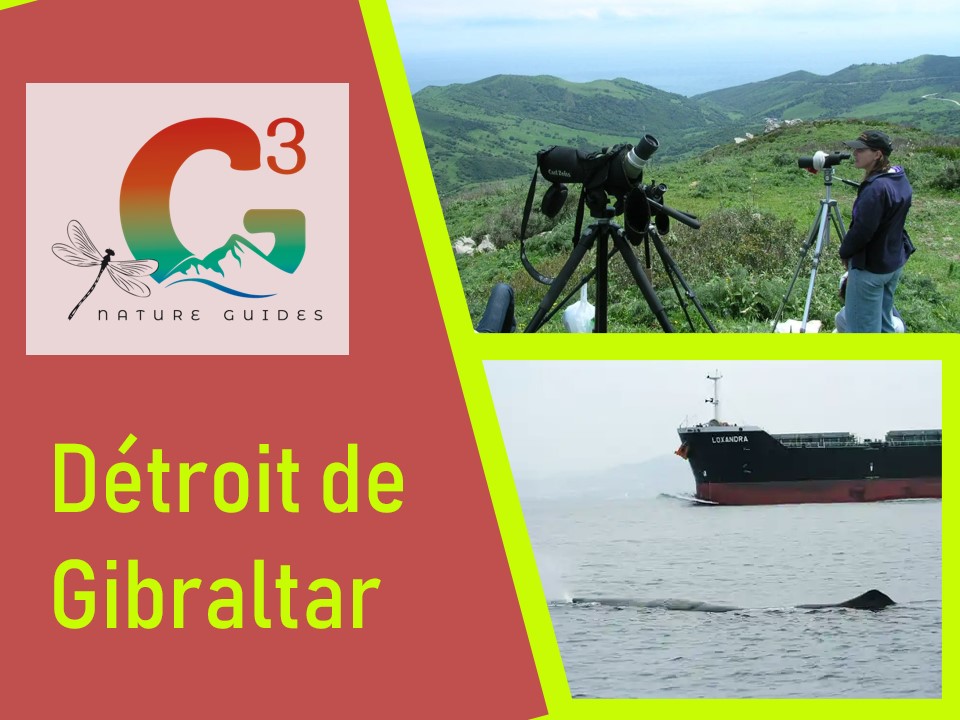
CÁDIZ – One of the best places in the world to observe the migration of gliding birds: raptors and storks.



The Strait of Gibraltar, a crossroads both between Africa and Europe and between the Mediterranean and the Atlantic, is a cosmopolitan melting pot influenced by sailors and ports. The traveler will easily discover one of the densest traffics of supertankers of the world’s merchant marine.

The region of Campo de Gibraltar is a shield that sinks into the sea, a very large area that receives the marine influence as if it were an archipelago of Macaronesia. It is not surprising that the wind, the winds, dominate everything, and decide everything and for everyone on the coast. Gibraltar is the homeland of the god Aeolus, it is a bit like living in the middle of the ocean.
- Migratory birds
- Northern bald ibis (census↓).
- Preserved coastline
- Cetaceans (species guide↓).
- Two continents Two seas
The mythical point for bird migration
The wind blows and disperses the sand. The

Due to its strategic international position, the coastline was massively militarized in the post-war years and was largely inaccessible until recently. Many rusty signs identify the abandoned military area. The combined action of the military and the wind has largely preserved the coastline from developers, which still allows us to enjoy memorable beaches such as Los Lances or other small wild beaches.

This Strait welcomed a hippie community in the 70s and 80s. The spirit of Tarifa, the beach clothes and the festive atmosphere help to maintain a certain lightness. The absolute icon of this state of mind is the presence of “Retintas” cows on the beaches.
Twice a year, Gibraltar is the site of the great bird migrations. great migrations of birds that spend the wintering in Africa and breeding in Europe. It is the main route for White Storks(Ciconia ciconia), Black Storks(Ciconia nigra) and several species of raptors: Black Kite(Milvus migrans), Booted Eagle(Hieraaetus pennatus), Short-toed Eagle(Circaetus gallicus).
To observe the migration, there are several observatories along the coast. Let’s get familiar with the winds, the Levante blowing from the Mediterranean and the Poniente of Atlantic origin. The large gliding birds fly against the wind, thanks to the friction on the leading edge of their wings that generates lift.
Not to be forgotten are the more discrete marine migrations: pelagic birds, gannets(Morus bassanus), shearwaters, bluefin tuna(Thunnus thynnus), sperm whales(Physeter macrocephalus) and the Fin whale(Balaenoptera physalus).
Finally, it is worth mentioning the Flysch, very curious sedimentary rock formations that can be seen all along the coast.

Northern Bald Ibis
The species appears in cave paintings in the province of Cadiz and was reintroduced in the 1990s in the area of La Janda.

Guide to the cetaceans of the Strait of Gibraltar
The most updated information on these species can be found on the FIRMM website.

Sperm whale
> 100 (migration)

Fin whale
< 100 (migration)

Killer whale
+/- 50

Common pilot whale
+/- 250

Common dolphin
? 2.000

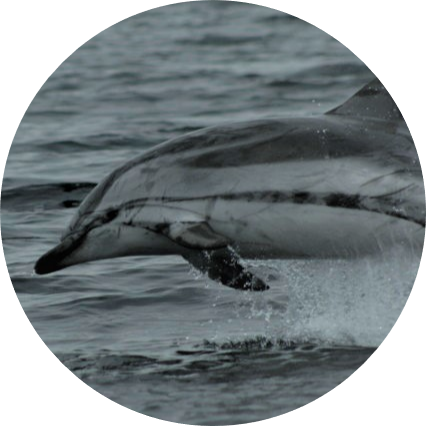
Striped dolphin
? 1.000

Common bottlenose dolphin
? 250
Leave a Reply