


Transition territories between the sea and the continent: contrasting and extreme ecosystems.
The coast is the narrow contact zone between the sea and the continent, a transitional territory that not only passes from the liquid and salty condition to the terrestrial and weak mineralization. It offers a whole range of
intermediate conditions that favor the presence ofspecies adapted and specialized to each of the existingecological niches . Therefore, it is not surprising that the coast is one of the most biodiverse areas.
It is easy to observe at the edge of the sea a succession of microhabitats ordered mainly by the rhythm of the tides. The Atlantic slope has tides of greater amplitude than the Mediterranean. The main differential element is found in the substrate of the coast that receives these tides. We can distinguish rocky coasts and sandy coasts, without forgetting to mention the estuaries (‘water coasts’).
In the sea
INLAND SEA. The submerged rocks serve mainly as a substrate for countless

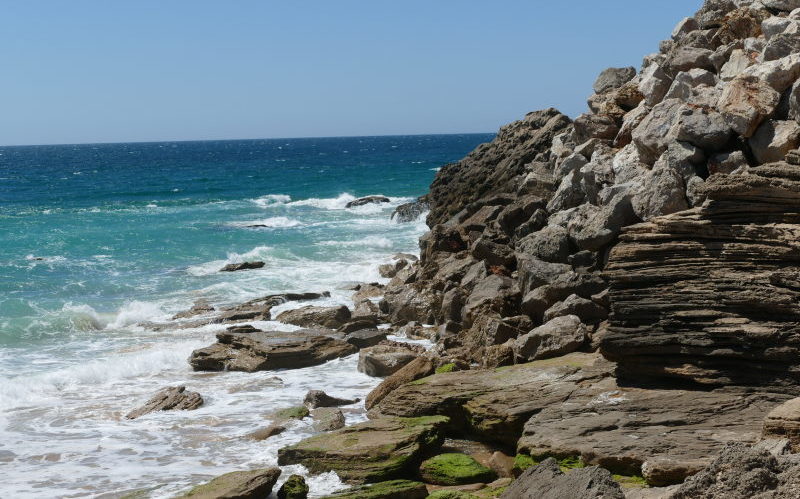
On the EXPOSED ROCKS, in the breaker zone, live invertebrates capable of adapting to the constant changes in water levels from the possibility of being completely submerged to being completely exposed to the sun and air with the tides going out. We find sea acorns, sea scales, limpets, periwinkles, crabs, mussels, chitons, anemones, hermit crabs… Higher up, where the tide does not reach, lichens grow, pioneers that announce the beginning of the terrestrial environment.
The coast
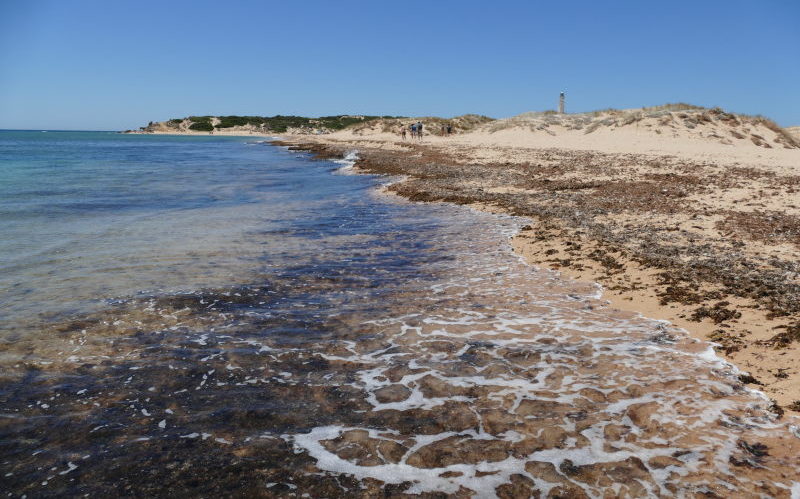
COASTAL SANDBANKS. Long Atlantic beaches and dunes: These are dynamic and complex ecosystems affected by the action of wind and sea currents. They present extreme conditions due to their low capacity to retain water, the scarcity of nutrients, the high surface temperatures, the mobility of the substrate and the concentration of salts.
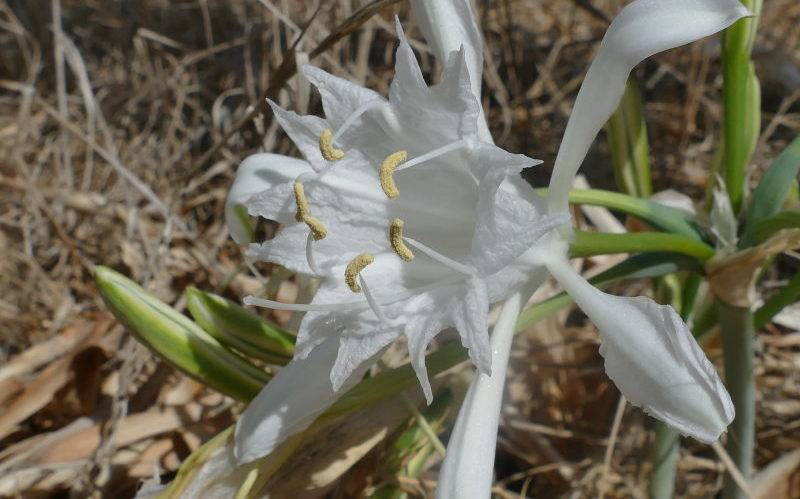
The
A little further inland grow coastal juniper groves of maritime juniper ( Juniperus oxycedrus macrocarpa) and marine juniper (Juniperus phoenicea turbinata) accompanied by shrubs such as Halimium halimifolium,
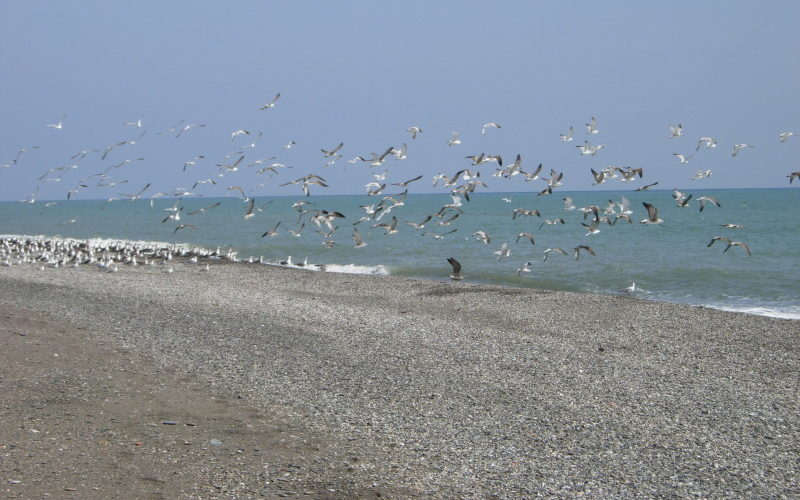
It is not uncommon to observe impressive black beetles, belonging to the Families Tenebrionidae(Pimelia), Carabidae(Scarites occidentalis) or Scarabaeidae(Scarabaeus). Shorebirds par excellence are the gulls and terns, although the privileged position of the cliffs also allows you to easily observe other seabirds and waders.
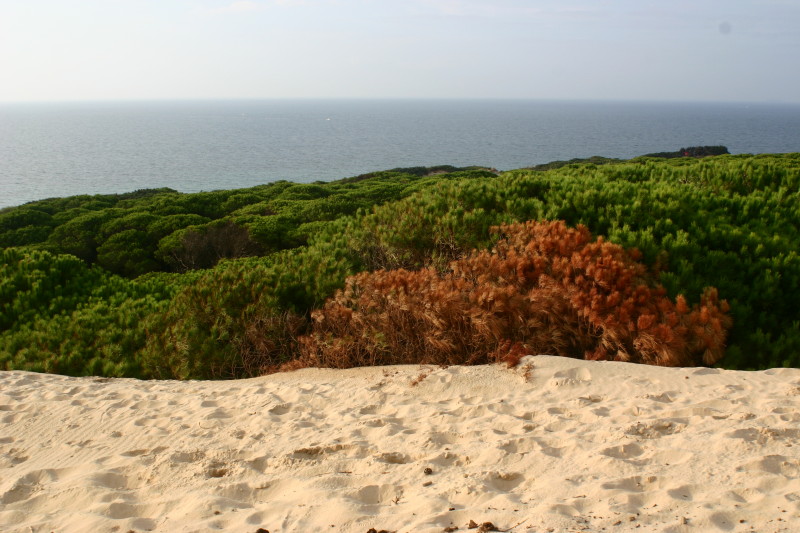
Finally, it is worth mentioning the dunes of the coast of the province of Huelva and the Doñana area, with a length of about 100 km that make up the most important dune system in Europe. As for coastal cliffs, let us mention the Breña de Barbate, near the famous Cape Trafalgar and Cerro Maro Gordo in Malaga near the coast of Granada.
Tajo de Barbate, the most spectacular cliffs
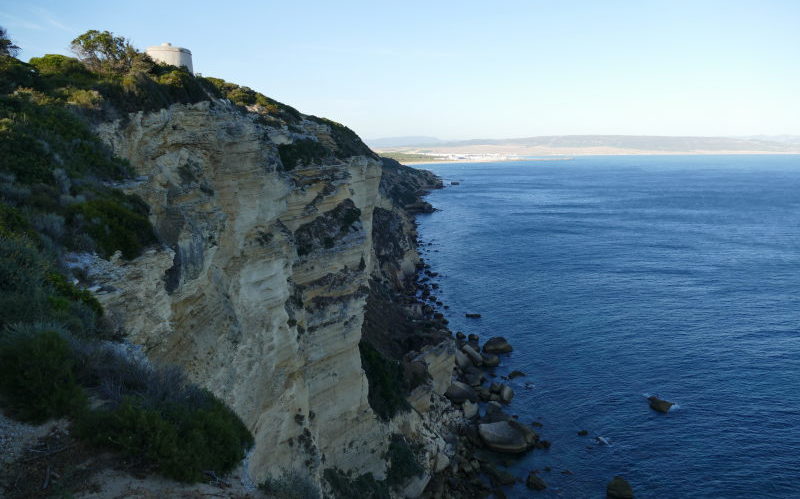
The highest sea cliff in Andalusia, with its 106 meters above sea level, is formed by calcarenites (compacted limestone sands). In the background looms the observation tower (‘Torre del Tajo’) that reminds us of the past presence of pirates on the Spanish coast. More curiously, the Tajo is home to a unique colony of Little Egret.
I love birding, but I don’t look for rarities … although I understand their appeal to some birders. That said, I am happy to have seen a small flock of Black Terns off the coast of Huelva.
Leave a Reply