


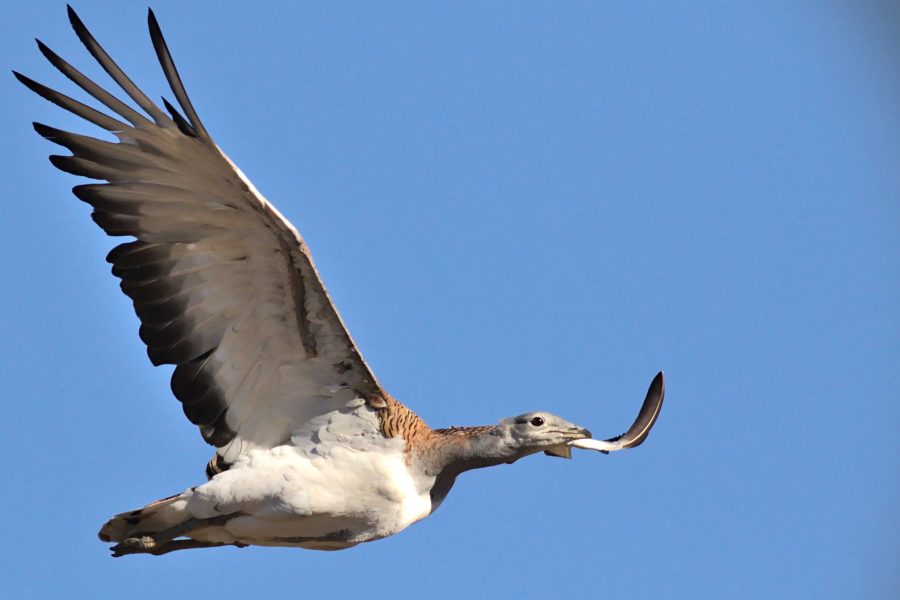
In the immense dry cereal fields that still dot the Spanish geography, a group of extraordinary birds struggles to survive. They are the steppe birds, specialists evolved to exploit the great open plains.
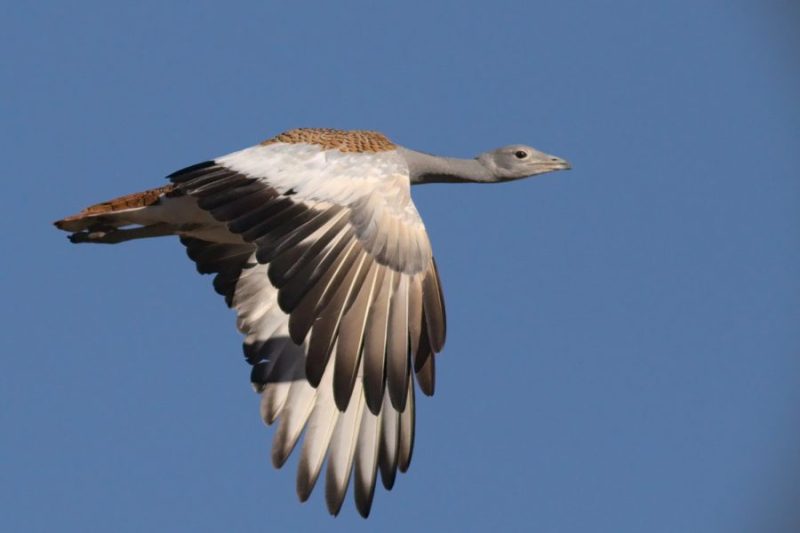
On this page you will learn about: 1) The steppes of Andalusia, 2) What are the steppe birds, 3) The adaptations of these birds to survive, 4) Where are the best Andalusian steppes, 5) Where and when to come and 5) FAQ & tips.
In Spain, and specifically in Andalusia, some 25 species of steppe birds almost exclusively occupy open, treeless steppe ecosystems.
These habitats tend to be, to a large extent, extensions of cereal crops, although not exclusively. Because of this close relationship, these birds can also be considered and associated as agricultural birds or birds of agricultural environments.
The steppe species are the great victims of modern European agriculture, whose populations have plummeted dramatically in recent decades. While the traditional crops that supported them disappear under intensive irrigation, fruit orchards and super-intensive olive groves, these emblematic species – such as the majestic Great Bustard, the elusive Little Bustard or the unique Iberian Pin-tailed Sandgrouse – see their habitat reduced to mere fragments.
Andalusia, once one of its strongholds, still preserves some crucial, but increasingly threatened, strongholds where these birds resist as living witnesses of a vanishing agricultural landscape.
The “steppes” in Andalusia
A steppe is a flat, open and arid ecosystem, dominated by low herbaceous vegetation, with hardly any trees, and subjected to extreme climates of cold and heat. In Western Europe, the largest extensions are found in Spain: the two plateaus, Extremadura and the Guadalquivir valley.
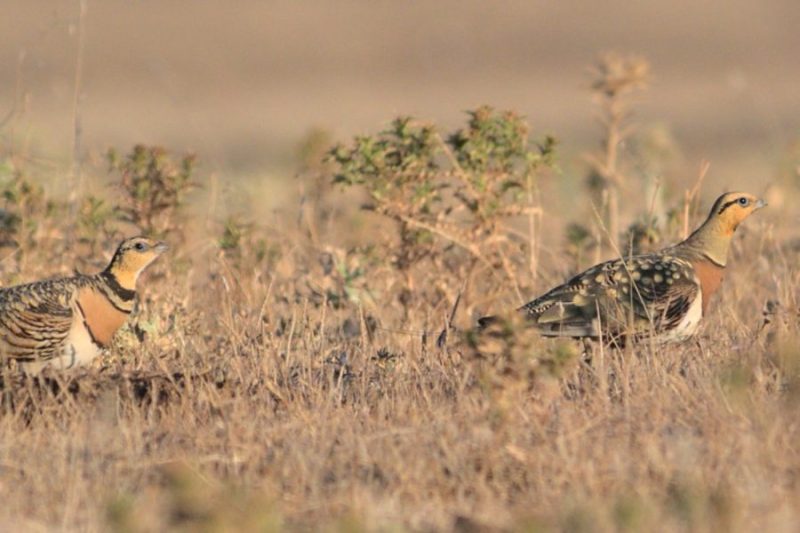
Steppe birds: birds of herbaceous crops and cereal pseudosteppes.
Steppe birds in Andalusia are defined as those species linked to open environments dominated by rainfed arable crops, large expanses of grassland and peripheral salt marshes, such as those associated with Doñana. The arid woody environments of the southeastern Iberian Peninsula are excluded (espartales, tomillares, cushion scrub), which form a distinct ornithological community and are not strictly speaking steppe-like.
The absence of natural steppes in Andalucía
In Andalusia there are no natural steppes as such. The steppe character derives from traditional agricultural and livestock uses that have created open and treeless landscapes. Only small enclaves with natural stipa vegetation are found in areas of relief, which are not usually favorable for “walking” steppe birds.
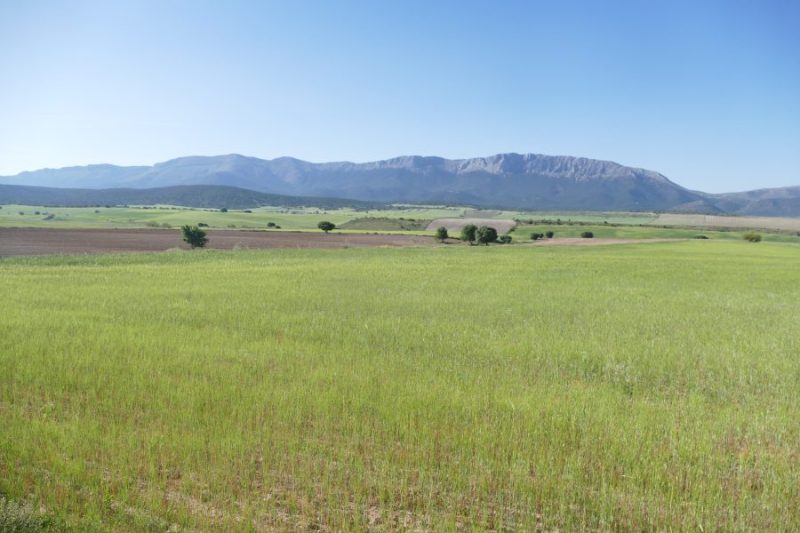
Andalusian cereal pseudo-steppes
The Andalusian cereal steppes are agricultural landscapes, the result of centuries of human activity, dominated by rainfed crops (wheat, barley, oats), with the presence of fallow land, borders and pastures. They have a gentle relief and little tree cover, which favors nesting on the ground and foraging in open spaces.
They are mainly located in the Guadalquivir Valley (Seville, Cordoba, Jaen, Cadiz), the countryside of Huelva and inland areas of Granada. In the eastern provinces (Almería, Granada) they are scarcer and more fragmented due to the expansion of olive groves and irrigation.
These pseudosteppes are home to a unique ornithological community, with species threatened on a European scale. They also serve as wintering areas for migratory birds from northern Europe.
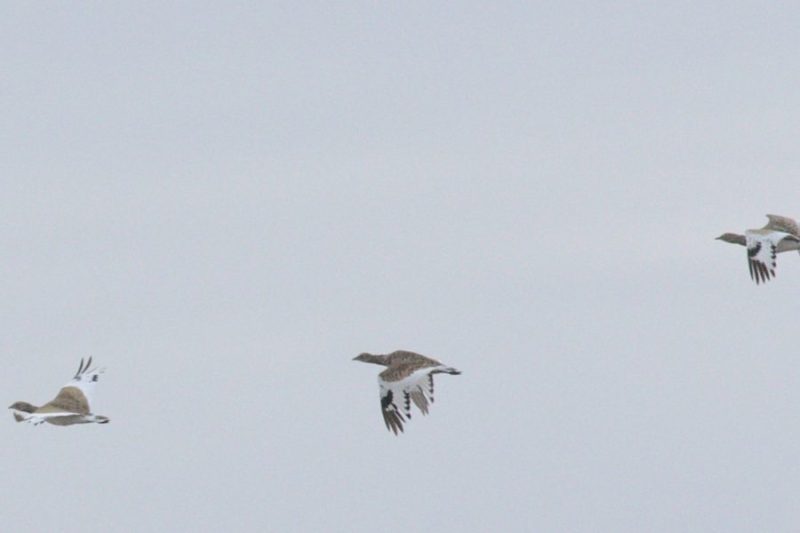
Guide to Andalusian steppe birds
This guide introduces you to the species that inhabit the cereal pseudosteppes of the Guadalquivir valley and the arid scrublands of the Iberian southeast, from the majestic Great Bustard – Europe’s heaviest flying bird – to the elusive Eurasian Skylark, a passerine as rare as it is specialized.
RESIDENT STEPPE BIRDS IN ANDALUSIA
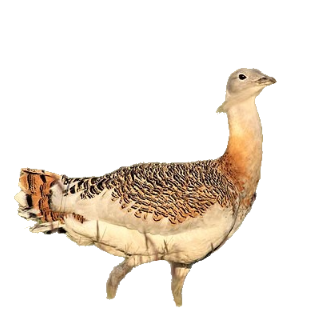
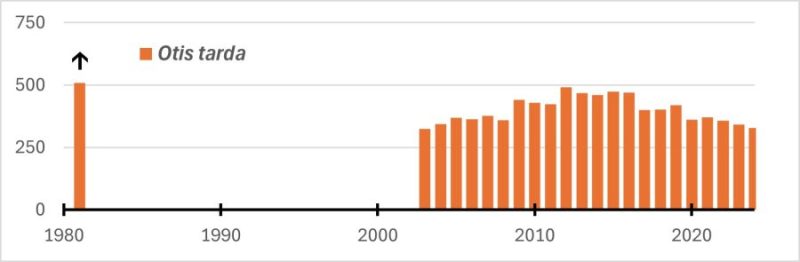
Great Bustard(Otis tarda)
In danger of extinction. Emblematic bird of the great cereal plains. The Andalusian population does not exceed 350 individuals. Its main threat is agricultural intensification and habitat transformation, which reduce the availability of insects for nestlings.
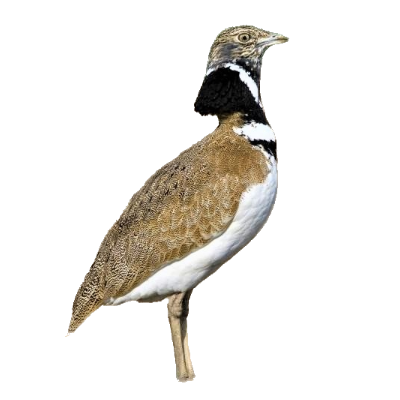
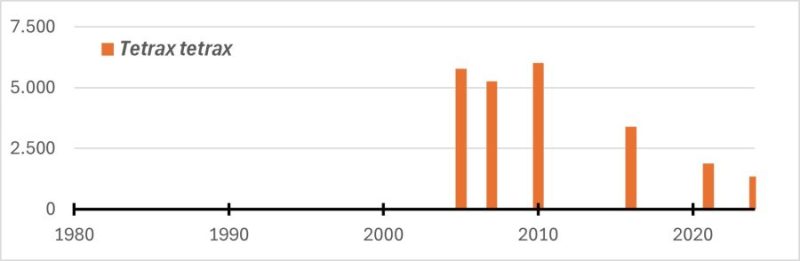
Little Bustard(Tetrax tetrax)
In danger of extinction. It inhabits rainfed crops, pastures and cleared pastures. Its decline is pronounced due to the conversion of cereal crops to irrigated land and olive groves, as well as illegal hunting and collisions with power lines.

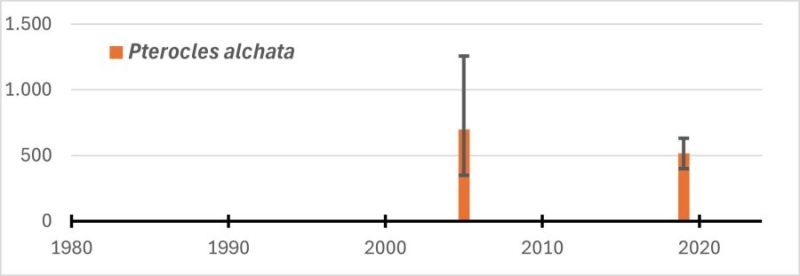
Iberian Pin-tailed Sandgrouse(Pterocles alchata)
Vulnerable. Characteristic bird of sandbanks, salt marshes and salt marshes, with its main nucleus in Doñana. Gregarious species, sensitive to habitat loss and illegal hunting. Its Andalusian population is stable but very localized.

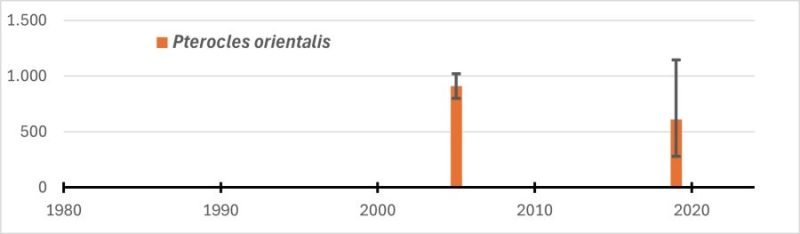
Pin-tailed Sandgrouse(Pterocles orientalis)
Vulnerable. It occupies cereal and woody steppes. It requires areas with spatial heterogeneity and water points. In clear decline due to the transformation of its habitat to olive groves, irrigation and reforestation, especially in Jaén and Granada.

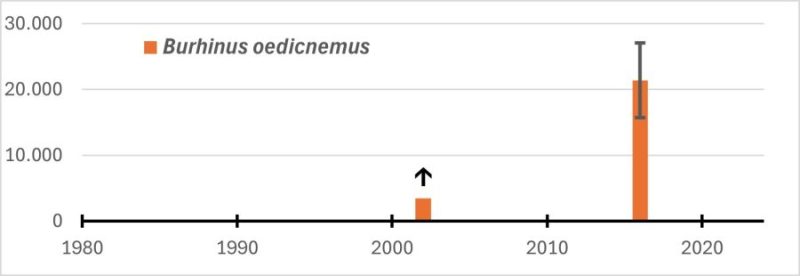
Stone Curlew(Burhinus oedicnemus)
Vulnerable. Bird of open environments, both cereal fields and pastures and meadows. More adaptable than other steppe birds, it tolerates a certain presence of trees. Its decline is mainly due to agricultural intensification and disappearance of boundaries.
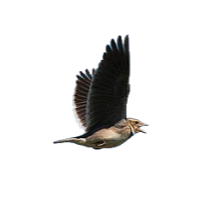
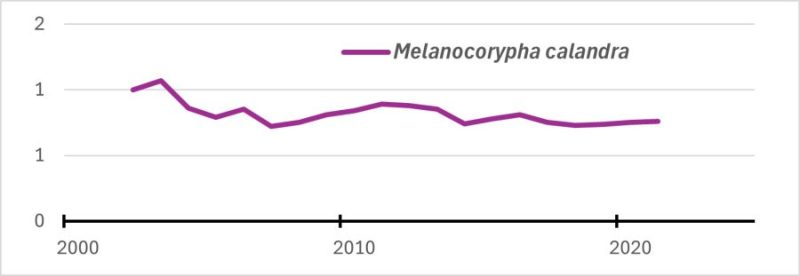
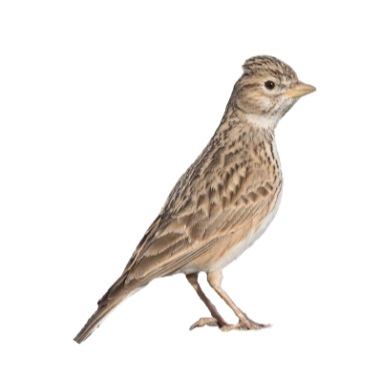
Calandra Lark(Melanocorypha calandra)
One of the largest aukids. Abundant in cereal steppes, where it is usually dominant in the community. In regression due to the loss of fallow land and the use of agrochemicals.
Lesser Short-toed Lark(Calandrella rufescens)
Near threatened. Small aludid of coastal and marsh steppes. It forms lax colonies in soils with sparse vegetation. Its regression is remarkable in the Almeria coast due to the expansion of greenhouses and urban pressure.
MIGRATORY STEPPE BIRDS IN SPAIN
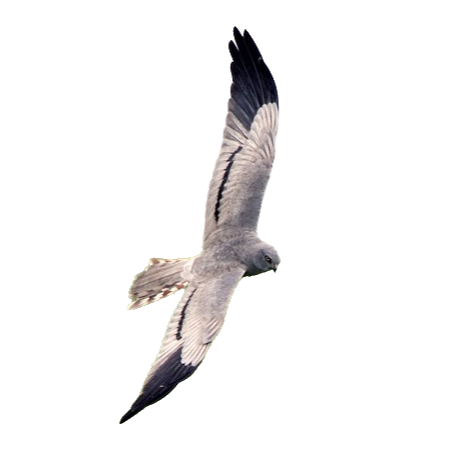
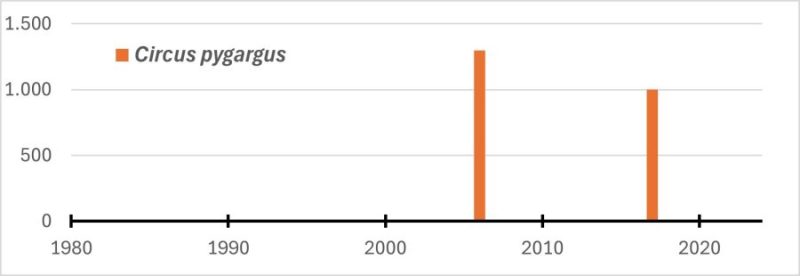
Montagu’s Harrier(Circus pygargus)
Vulnerable. Raptor that nests on the ground in cereal fields. Its main threat is early mowing, which destroys nests. Marking and nestling rescue programs have improved breeding success in some areas.

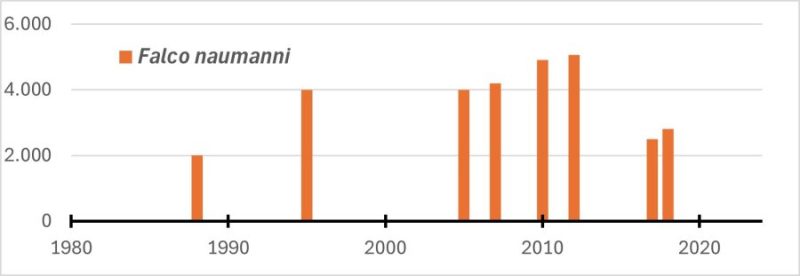
Lesser Kestrel (Falco naumanni)
Near threatened. Small colonial falcon that breeds in rural and historic buildings. Its population has stabilized thanks to reintroduction programs, installation of nest boxes and conservation measures in architectural restorations.

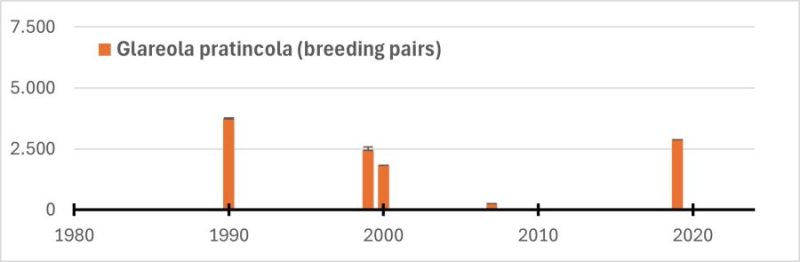
CollaredPratincole (Glareed Pratincole)
Wader that nests in bare soils peripheral to wetlands. Colonial and summer visitor. Very sensitive to nest predation and water fluctuations. Its main Andalusian nucleus is in the Guadalquivir marshes.
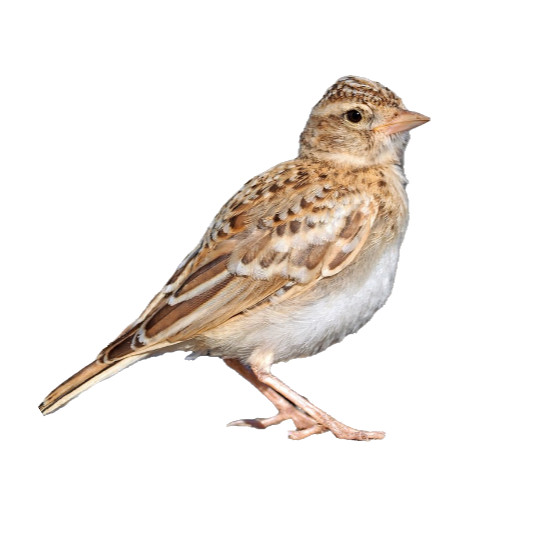
Greater Short-toed Lark(Calandrella brachydactyla)
Small aukid closely related to rainfed crops and pastures. Together with the Calandra Lark, dominant in cereal steppes. Decline associated with agricultural intensification and disappearance of boundaries.
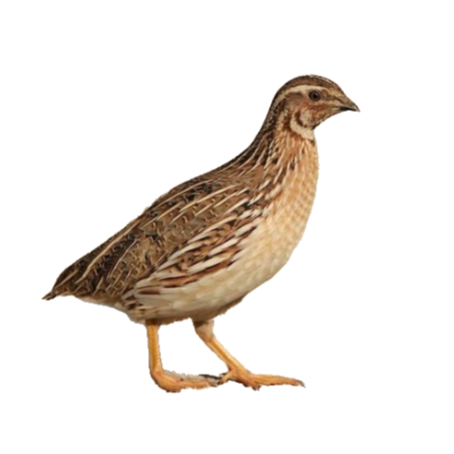
Common Quail(Coturnix coturnix)
Migratory bird that breeds in herbaceous crops. Populations fluctuate considerably. Threatened by early mowing, pesticides and intensive hunting. Key species in the diet of steppe predators.
WINTERING BIRDS, COMMON IN AGRICULTURAL ENVIRONMENTS

Common Crane(Grus grus)
Large bird that winters in pastures and meadows in the north of Córdoba and Jaén. Its roosts in reservoirs and wetlands are of great importance. Sensitive to disturbance and habitat transformation.
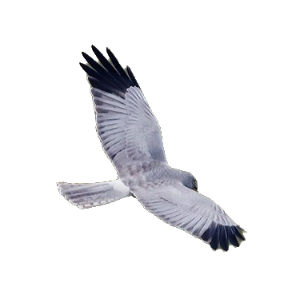
Hen Harrier(Circus cyaneus)
Common wintering raptor in cereal steppes and marshes. It uses these open spaces to hunt small mammals and birds. Its winter presence adds value to these habitats.
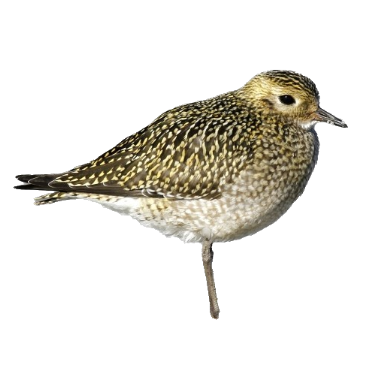
European Golden Plover(Pluvialis apricaria)
Wintering wader in wet grasslands and marshes. Forms numerous flocks. Depends on the conservation of wetlands and traditional livestock management that maintains open pastures.
OTHER COMMON BIRDS IN ANDALUSIAN AGRICULTURAL ENVIRONMENTS
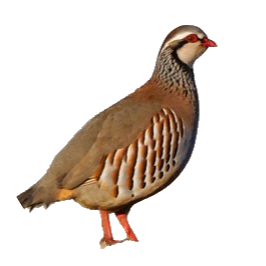
Red-legged Partridge(Alectoris rufa)
A common game species in agricultural and scrubland environments. Although not threatened, its populations have declined due to changes in agricultural management, overhunting and loss of boundaries. Indicator of steppe habitat quality.
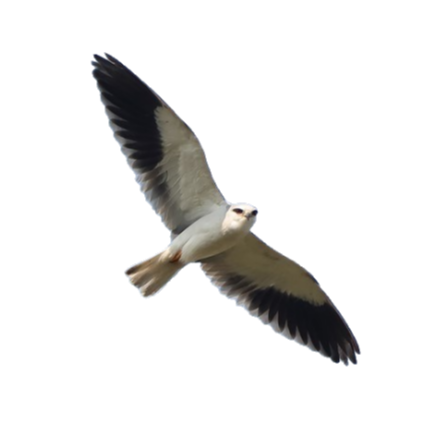
Black-shouldered Kite(Elanus caeruleus)
Small unmistakable raptor with pale gray plumage, immaculate white and characteristic black spot on the shoulder, with intense red eyes. Although not strictly steppe, it frequents open environments with scattered trees such as pastures and countryside, where it hunts on the prowl. Infrequent, but expanding.
Avifauna of the low scrublands of the southeastern Iberian Peninsula
Southeastern Andalusia is home to some of the most arid relief and mountain ranges in Europe, a landscape marked by extreme water scarcity and intense sunshine. On poor and poorly developed soils, the vegetation is reduced to a sparse herbaceous cover, giving rise to extensive formations of low scrub and the dominant presence of gullies and “badlands” – eroded land and furrowed by ravines – that define a unique ecosystem of great ecological fragility.
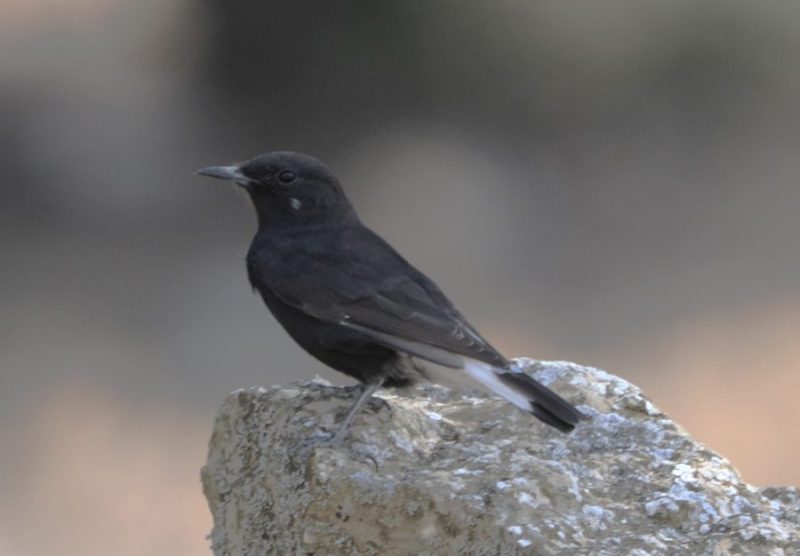
Habitat characterization
Environments dominated by low scrubland (espartales, tomillares, aulagares), with poor soils, scarce herbaceous cover and presence of badlands. Typical of the provinces of Almeria, Granada and east of Malaga.
Eurasian Skylark ricotí
Emblematic species and bioindicator of the health of the Iberian steppe ecosystems.
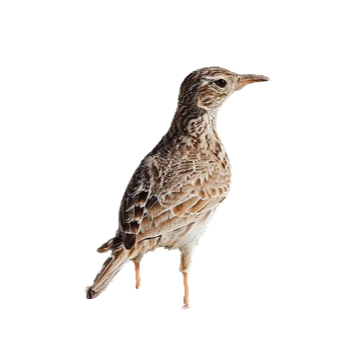
Eurasian Skylark(Chersophilus duponti)
Endangered. Resident and very sedentary bird that nests exclusively in grasslands and low shrublands in arid steppe zones. Its populations are very small and in steep decline. Threatened by the transformation and fragmentation of its habitat (reforestation, intensive crops, infrastructure) and by the abandonment of extensive grazing.
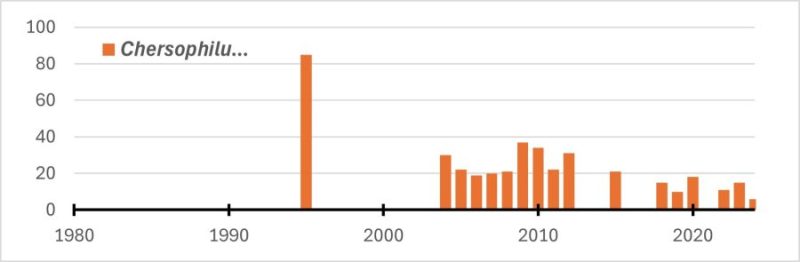
Avifauna of the low and arid scrublands.
Representative species: Black Wheatear, Spectacled Warbler, Trumpeter Finch, Pin-tailed Sandgrouse (in its woody facet). They present adaptations to aridity and a remarkable biogeographic singularity.
Specific conservation problems
Threatened by reforestation, the establishment of crops under plastic, overgrazing, nest predation and the development of energy infrastructures (wind farms).
Adaptations of steppe birds
In the grassy plains, open and arid environments, life faces extreme conditions: scarce and dispersed resources -especially water-, lack of shelter for resting or nesting, and constant vulnerability to predation.
Highly specialized adaptations
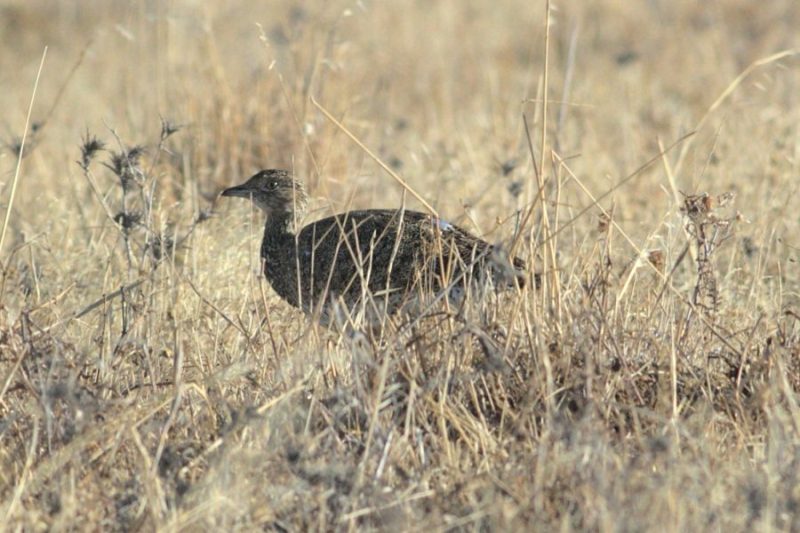
Steppe birds have developed a unique set of morphological and physiological adaptations to survive in open and arid environments. Their cryptic plumage mimics the ground and low vegetation, essential for species such as Great Bustards, Little Bustards and ground-nesting auklets. The stout legs of birds such as Great Bustard and Stone Curlew are adapted for walking long distances on flat terrain, while Pin-tailed Sandgrouse (Iberian and Ortega) have specialized ventral feathers with a fluffy structure that allow them to transport water to their chicks, a unique adaptation to aridity. Species such as the Trumpeter Finch Eurasian Bullfinch have developed an efficient metabolism that allows them to survive with little water, selecting seeds with high lipid content whose metabolism generates metabolic water. Steppe passerines (Eurasian Skylarks, terrestrials) preferentially orient their nests to the north to minimize direct insolation during the hottest hours of the day, reducing thermal stress on nestlings. These integrated mechanisms allow them to exploit structurally simple but ecologically demanding environments, although current anthropogenic transformations often exceed their adaptive capacity.
The danger of predation
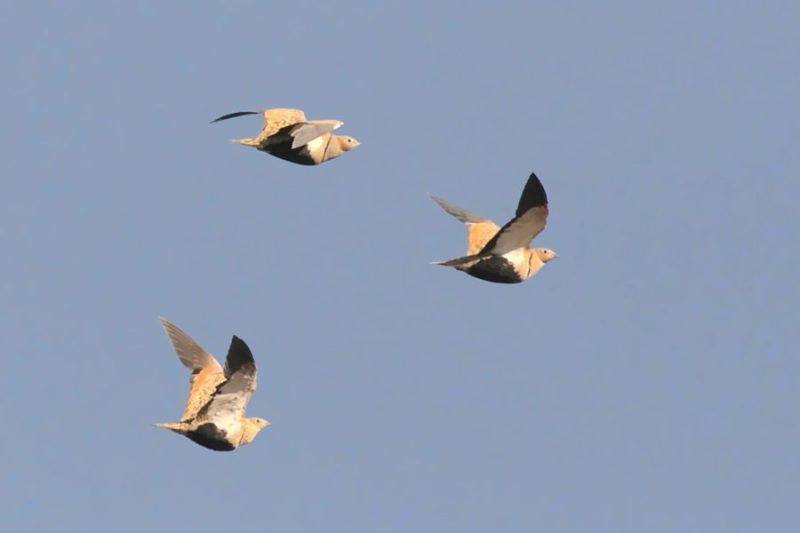
Ground nesting, common in most steppe birds, carries a high risk of predation that has shaped their reproductive strategies. To compensate for this vulnerability, they have evolved evolutionary mechanisms such as frequent replacement clutches, short incubation periods and nestlings that leave the nest quickly after hatching. Outside the breeding season, many species exhibit gregarious behavior, forming flocks that favor collective detection of predators. These birds also develop anti-predator vigilance strategies based on living in groups and alternating between feeding and alert periods. Despite these adaptations, nest predation remains one of the main causes of reproductive failure, especially in simplified agricultural environments where opportunistic predators find few food alternatives.
Food and living space
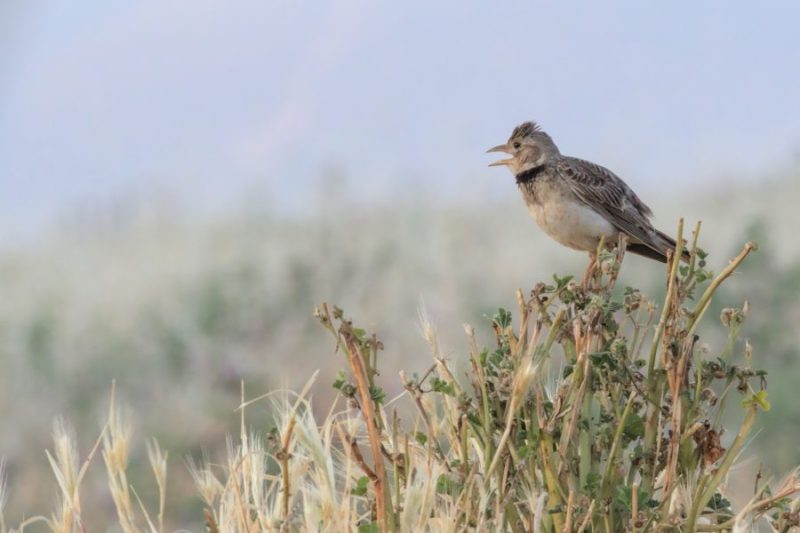
Steppe birds have a generalist diet that includes seeds, insects and plant matter, which allows them to take advantage of seasonally variable resources. However, during their first weeks of life, nestlings are mainly insectivorous, depending critically on the availability of insects for their development. These birds make large daily movements between feeding, roosting and watering areas, using efficient navigation systems in open spaces without prominent visual landmarks. Their space use strategy is based on the exploitation of dispersed and variable resources, requiring extensive areas to satisfy their ecological needs. This feeding and movement pattern allows them to survive in landscapes where resources are scarce and unpredictable, although the fragmentation and reduction of their current habitat threatens this life strategy based on mobility and trophic flexibility.
The three challenges for observing steppe birds in the plains
1. Irregular distribution in immensities
They move in extensive and open environments, with low densities and often in small groups. This makes their presence dispersed and unpredictable, forcing a systematic and conscious search of the territory, without obvious reference points.
2. Extreme camouflage
Their cryptic plumage blends in with the ground, dry grasses and arid soil, making them virtually invisible when standing still, even at close range. Observation requires trained eyes and magnifying equipment.
3. Evasive and suspicious behavior.
They are extremely wary birds, maintaining long safety distances and fleeing or hiding at the first sign of human presence or suspicious movement. Their lowland ecology – without tree cover or nearby refuges – has made them experts at avoiding being seen.
Overall, the ecology of the plains turns the observation of steppe birds into a technical and perceptual challenge, which requires patience, method and a deep knowledge of their behaviors and habitats.
The two Andalusian steppes
Andalusia presents two biogeographical realities clearly differentiated by its mountains and plains, which configure equally distinct landscapes and steppe bird communities.
Western Andalusia: The cereal pseudo-steppes of the Guadalquivir
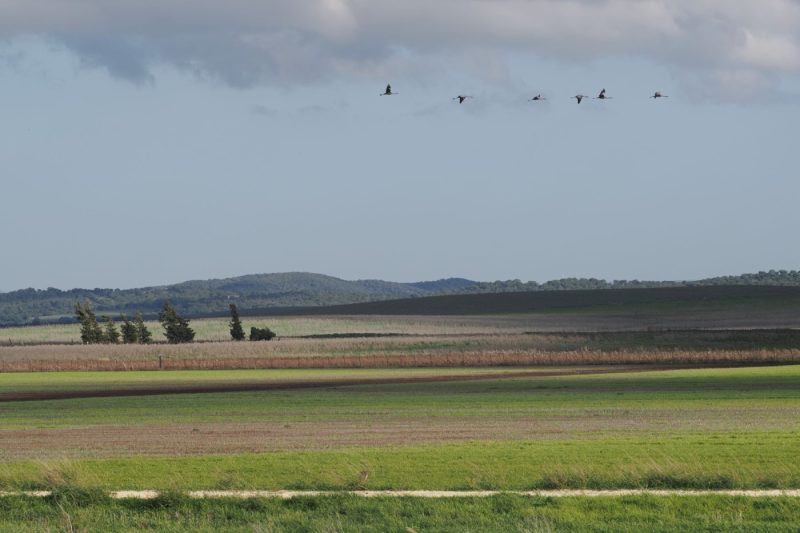
Dominated by the broad plains of the Guadalquivir valley, this region is home to the main cereal pseudosteppes of Andalusia: the Campiñas of Cordoba and Seville (Utrera-Las Cabezas, Osuna), La Janda and the periphery of Doñana. These are agricultural landscapes of rainfed arable crops, fallow land and pastures, which also include the salt marshes on the periphery of Doñana. Here are concentrated the most relevant populations of steppe birds of open environments, such as the Great Bustard, the Little Bustard and the Iberian Pin-tailed Sandgrouse, as well as dense populations of Montagu’s Harrier and Lesser Kestrel. It is the area with the greatest richness of agricultural steppe birds and an important wintering area for species such as the Crane.
Eastern Andalusia: High plains and arid woody environments.
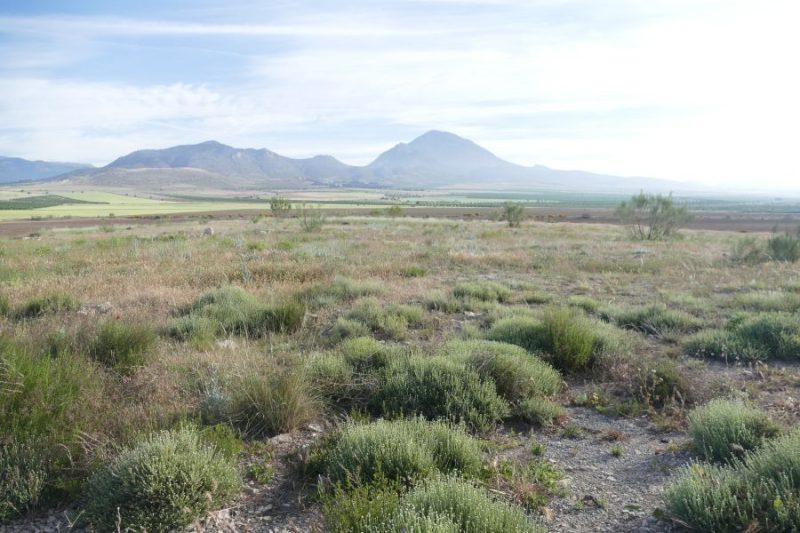
Characterized by the mountainous orography of the Sierras Beticas, this region presents a mosaic of high plateaus, plains and slopes with a more arid climate: Altiplano de Granada, Baza, Guadix, Hoya de Guadix, Tabernas. The cereal pseudosteppes are scarce and fragmented, coexisting with extensive areas of low open scrub (espartales, tomillares, badlands). It is home to a specialized and unique avifauna, adapted to arid conditions, such as the Eurasian Skylark, the Trumpeter Finch and the Little Bustard, together with residual populations of Little Bustard. This community, typical of arid woody environments, faces threats such as the abandonment of grazing, greenhouses and reforestation.

| Feature | Western Andalusia (Guadalquivir Valley) | Eastern Andalucía (Sierras Béticas) |
|---|---|---|
| Predominant landscape | Extensive alluvial plains, open countryside. | High plateaus, pits, mountains, broken landscapes. |
| Main habitat | Cereal pseudosteppes (rainfed herbaceous crops). | Arid woody environments (esparto grasslands, tomillares, badlands). |
| Key poultry community | Birds of large grassy plains (Great Bustard, Little Bustard, Iberian Pin-tailed Sandgrouse). | Birds of arid scrub and rocky environments (Eurasian Skylark, Black Wheatear, Trumpeter Finch). |
| State of conservation | Nuclear populations, but in regression due to intensification. | Small, isolated populations at serious risk (especially the ricotí). |
| Main threats | Agricultural intensification, irrigation, intensive olive groves. | Abandonment of grazing, reforestation, greenhouses, wind farms. |
Important Areas for Steppe Birds in Andalucía
The technical documents defining and describing the ZIAE were prepared in 2005, within the framework of the “Program for the Conservation of Steppe Birds in Andalusia” (Programa de Conservación de las Aves Esteparias en Andalucía).
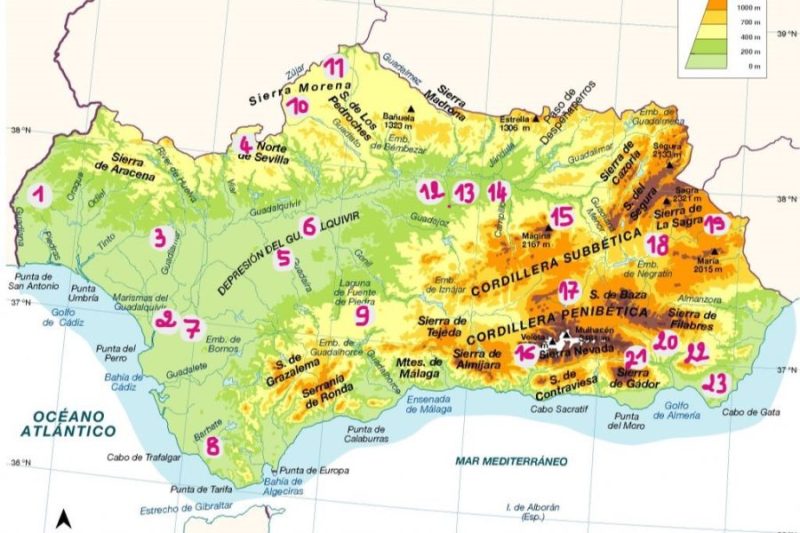
Important Steppe Bird Areas (ISAB) are not a legal figure of protection, but may coincide with protected areas. They correspond to hot spots for steppe birds and arid environments.
The network comprises 24 areas totaling more than 500,000 hectares spread over the eight Andalusian provinces. It has been a pioneering diagnosis that continues to be the fundamental reference for any conservation initiative in this area.
1. Andevalo
Area: 15,500 ha. Area located south of Villanueva de los Castillejos, a territory that precedes the Sierra Morena, with steppe vegetation of grassland mixed with rockroses and small crops. It is home to a hybrid community of steppe birds such as Great Bustard and Ortega, along with forest birds of prey such as the Golden Eagle and the Cinereous Vulture.
2. Dry marshes of Doñana
Surface area: 107,660 ha of the terrestrial domain. In addition to wetlands and Mediterranean scrub, Doñana is home to the best representation of dune steppes in Andalusia and hosts most of the region’s breeding Iberian Pin-tailed Sandgrouse.
3. Camps de Tejada (Aznácollar – Gerena)
Surface area: 15,000 ha. On the border of the western provinces, close to the first foothills of Sierra Morena. Small population of Great Bustards accompanied by representative species of the western steppes, especially Montagu’s Harriers.
4. Guadalcanal Plains
Area: 5,000 ha. Small extension in the contact between Sierra Norte and the southern edge of the Meseta. Unique combination of herbaceous steppes for grazing, cereal crops, pastures and broom. It stands out for the presence of the scarce ortega in Western Andalusia.
5. Countryside of Carmona-Arahal
Surface area: 12,000 ha. Typical cereal plain with the presence of endorheic lagoons. Area known for its Great Bustards population, with a breeding population of around 10% of the Andalusian total. Notable for its Montagu’s Harrier population.
6. Countryside of Osuna-Écija
Surface area: 40,000 ha. Cereal fields with endorheic character. Main Great Bustard breeding center in Andalusia, with more than 25 adult males and about 100 individuals. One of the two most important localities for the Pin-tailed Sandgrouse in the western region.
7. Jérez-Lebrija Countryside
Area: 10,000 ha. Cereal fields very close to the marshes. It was the last documented enclave of Great Bustard nesting in the province of Cadiz. It is currently a breeding area for eight other species with some degree of threat.
8. La Janda
Surface area: 8,000 ha. Mixed cereal and grassland steppe with notable influence of its origin as a wetland. It is home to the last known adult male Great Bustard in the province of Cadiz, as well as rare species in this habitat such as the Tawny pipit.
9. Navahermosa and Fuente de Piedra
Surface area: 18,000 ha. Area that includes protected wetlands. In its surroundings there are areas with cereal steppe characteristics and an important associated steppe bird community, especially notable for its densities of Little Bustard and Stone Curlew.
10. Plains of Alto Guadiato
Surface area: 40,000 ha. Flat land and small interspersed mountain ranges, where cereal crops and livestock pastures alternate. One of the most important areas in Andalusia for the conservation of the Great Bustard, with about 100 breeding individuals.
11. Pedroches Valley
Area: 24,000 ha. Western end of the Pedroches Valley with cereal crops, pastures and meadows. Remarkable for the presence of breeding Great Bustards (15% of the Andalusian total) and for its importance for the Pin-tailed Sandgrouse in Western Andalusia.
12. Countryside of Córdoba-Baena
Area: 47,000 ha. Large area that represents the typical cereal fields of Cordoba, with an increasing presence of olive groves in its eastern half. Good representation of western steppe birds, with outstanding populations of Little Bustard and Montagu’s Harrier.
13. Countryside of Porcuna
Surface area: 13,800 ha. Area adjacent to the Cordoba countryside where olive groves are gaining presence. It is home to all the breeding Great Bustards of Jaén (about 10% of the Andalusian population), closely linked to the population of Córdoba.
14. Cazalilla countryside
Surface area: 7,500 ha. The olive grove coexists with the cereal steppe in gentle hills. Area of confluence of several steppe birds of interest, with a community composed of seven characteristic species such as Montagu’s Harrier, Lesser Kestrel and Little Bustard.
15. Southeast of Jaén (Jódar)
Surface area: 10,500 ha. Predominantly dry woody steppe of esparto-tomillar, forming a mosaic with olive groves and small cereal plots. The population of Ortegas is considered the most important value of the area, with appreciable densities of Stone Curlew and Roller.
16. El Temple-Lomas de Padul
Surface area: 18,000 ha. An extension that combines cereal steppes with important redoubts of woody steppe. Rich steppe avifauna composed of 10 endangered species. The most important population of Eurasian Skylark in Andalusia is located in this area.
17. Hoya de Guadix
Area: 21,400 ha. Mixed steppe area with isolated areas of holm oaks. It has an interesting ornithic community that presents characteristics of all these environments, with ten breeding steppe species with some degree of threat.
18. Baza Valley
Area: 24,000 ha. Woody steppe, although with land dedicated to herbaceous crops. It is home to the most inland Andalusian populations of Lesser Short-toed Lark and has a rich steppe avifauna with ten species of interest.
19. El Altiplano (Cañado-Los Llanos)
Surface area: 19,500 ha. Mainly composed of dry woody steppes and dry grassy crops. Important area for the Pin-tailed Sandgrouse in Andalusia, and includes the main Lesser Kestrel colonies in Granada and Almeria.
20. Tabernas Desert
Area: 11,460 ha. Excellent example of “badlands” landscape, with anfractuous terrain covered with woody steppe vegetation and an important proportion of bare soil. The population of Trumpeter Finch Eurasian Bullfinch is one of its most outstanding values.
21. Llanos de Canjáyar (Sierra de Gádor)
The smallest of the ZIAE (2,500 ha). Predominant habitat of woody steppe dominated by cushion scrub. Designated for hosting one of the only three confirmed populations of Eurasian Skylark in Andalusia.
22. Sierra Alhamilla
Area: 8,380 ha. Atypical mountainous area as a steppe zone with special importance for the reproduction of the Eurasian Bullfinch Trumpeter Finch in Andalusia.
23. Cabo de Gata
Area: 37,500 ha. Terrestrial portion with excellent representation of coastal woody steppes. The breeding pairs of Eurasian Skylark that inhabit the area are one of the main values of the space, given the extreme scarcity of the species in Andalusia.

FAQ
What logistics are required?
Steppe birds are the group of birds that require the most logic and time spent in the field in Andalusia, with a moderate probability of success. In addition to being cryptic and often inconspicuous species.
- 4×4 vehicle to access the countryside, especially in winter when the roads of the Guadalquivir Valley become muddy and impassable.
- High range telescope (70x magnification) to identify individuals at 500-1,000 meters distance.
- Hyper-local knowledge of “prey zones” (watering places, roosts, courtship areas) that are only discovered after systematic prospecting.
What is the best time of the year to observe steppe birds in Andalusia?
- March to June: Ideal time. Spectacular courtship of Great Bustards and Little Bustards, birds in nuptial plumage, active nesting. Montagu’s Harriers are in the crops.
- September to November: Post-reproductive concentrations, flocks of Pin-tailed Sandgrouse and Little Bustards. Good weather and long days.
- December to February: For wintering birds such as cranes, Hen Harriers and European Golden Plovers. Fewer species but large concentrations of resident steppe birds.
Is it easy to observe steppe birds on your own?
Absolutely not. Steppe birds are the most challenging group for any birder, for two fundamental reasons:
- Elusive biology: They are extremely wary species, with flight distances of hundreds of meters, cryptic plumage that blends in with the terrain and behaviors that prioritize anonymity.
- Critical distribution: Their populations are increasingly scarce and localized in very specific points within immense tracts of land. What appears to be a uniform field may have only one group of Great Bustards in 1,000 hectares.
What are the departure times?
- Sunrise: Departure 1-1.5h before sunrise to reach the territories at first light. Time of maximum activity of singing and movement.
- Sunset: Departure 3-4h before sunset to take advantage of the last light. Ideal to observe grouping behavior and flight to roosts.
- We avoid central hours (11:00-16:00) when birds are less active.
Where exactly are these birds found?
- We work in specific areas within the ZIAE (Important Bird Areas for Steppe Birds), among them, and without being exhaustive: Campiñas de Osuna-Ecija (Seville), La Janda (Cadiz), periphery of Doñana.
Acknowledgment: Julia Guerra Carrande for the photographs.
Leave a Reply