


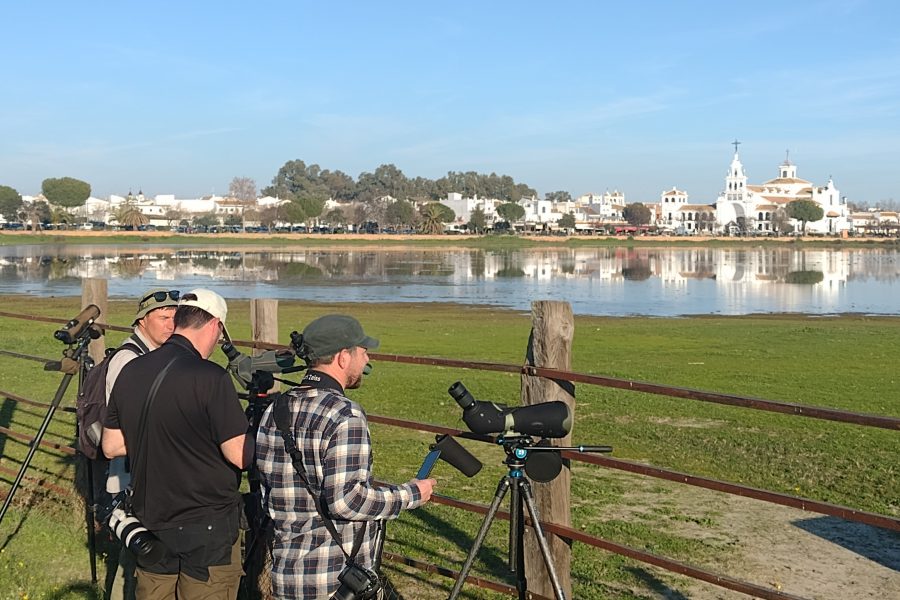
Birdwatchers’ trip reports, available on the Internet, provide insight into the seasonal rhythms, geographic points of interest, and economic attractiveness of birding in Spain. As a top European destination, Spain’s position on major migratory routes and its wealth of charismatic species create a powerful attraction.
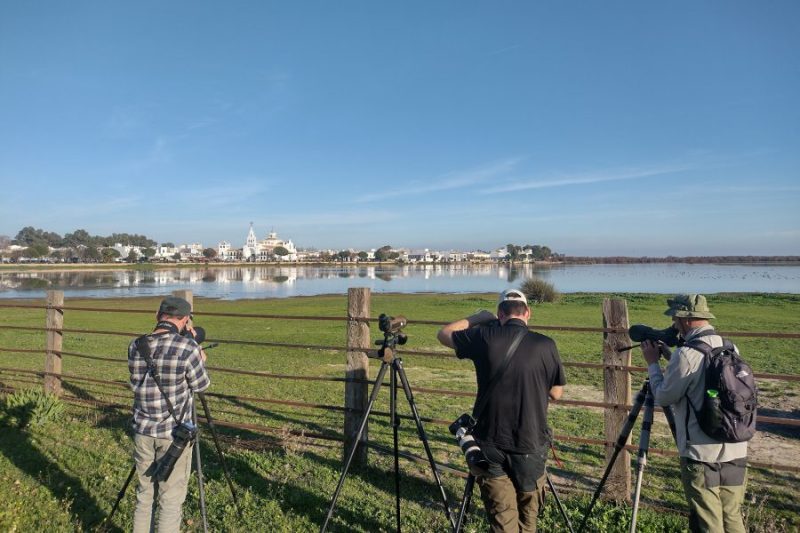
Introduction and context
The following analysis is based on detailed birding trip reports extracted from the CloudBirders platform, a specialized database and community for global birding trip reports.
Launched in 2013, this platform collects accounts from dedicated birders, often including full species lists, site descriptions and travel logistics. These reports provide valuable information on destination preferences, seasonal influx and geographical distribution from the perspective of committed and international (mainly British and Dutch) birders.
Spain‘s 1217 reports constitute 8.4% of all European reports on the platform, underlining the country’s position as a top destination for ornithological tourism. This significant proportion reflects Spain’s exceptional biodiversity, its location on the main migratory routes and its solid reputation within the international birdwatching community.
National analysis: regional distribution in Spain
The data reveal a strong concentration of ornithological activity in specific regions recognized for their avifauna, although an important methodological nuance must be considered.
Four regions are dominant, together representing more than half (52.5%) of all reports where a single region could be identified (*). Andalusia leads with 300 reports (18% of national activity), followed by the Canary Islands (281 reports, 17%), the Balearic Islands (143 reports, 8.94%) and Extremadura (115 reports, 7%). These regions have consolidated their status thanks to their exceptional biodiversity, emblematic species and infrastructure of professional guides.
The case of Extremadura is particularly noteworthy. Unlike Andalusia or the islands, which are important tourist centers, Extremadura’s high ranking seems to be due almost exclusively to its attractiveness for nature and birdwatchers, highlighting its success as a destination specializing in ecotourism.
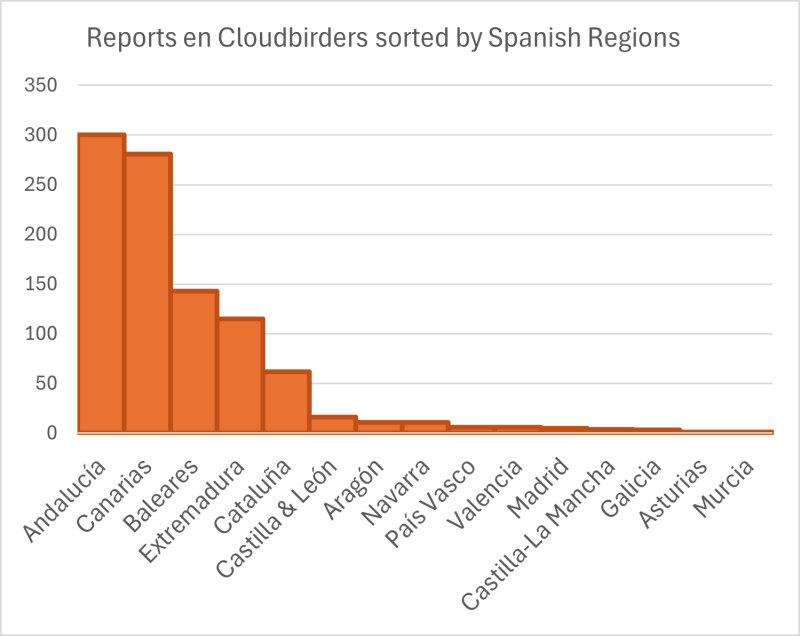
(*) However, there is an important analytical bias: approximately 31% of the reports describe trips covering several Spanish regions. In addition, archipelago regions (Canary and Balearic Islands) are inherently distinct destinations, which could lead to an over-representation in the count per trip compared to continental regions, where itineraries often combine several areas. While this does not diminish the actual attractiveness of these key points, it suggests that ornithological activity on the peninsula, especially in northern regions such as the Pyrenees (covered by reports from Aragon, Navarra and Catalonia), is probably more extensive than implied by the raw regional counts.

Other secondary destinations with significant attention include Catalonia (62 reports, 3.88%) and the Pyrenean regions of Aragon and Navarra, valued for their alpine species. Other regions such as Castilla y León, the Basque Country, the Valencian Community and Galicia receive more discreet attention, indicating potential for further development.

Andalusia: main ornithological destination in Spain
Andalusia’s position as a leading region is well supported by the data, accounting for approximately 31% of activity nationally. Activity within Andalusia is mainly concentrated in the western part of the region, accounting for approximately 79% of the reports. Eastern Andalusia, although significant, accounts for the remaining 21%.

The Doñana National Park is the undisputed reference, with 68 reports (approximately 23% of the Andalusian activity). Its status as a critical wetland and refuge for species such as the Spanish Imperial Eagle has been a major attraction since the well-documented expeditions of the mid-20th century, in particular by the best-seller Portrait of a wilderness. The story of the Coto Doñana Expeditions (Mountfort 1968).
The province of Cádiz, especially the Strait of Gibraltar and the plain of La Janda, is another important center (42 reports). Famous for the spectacular migration of raptors, its ornithological importance has been documented since the 19th century.
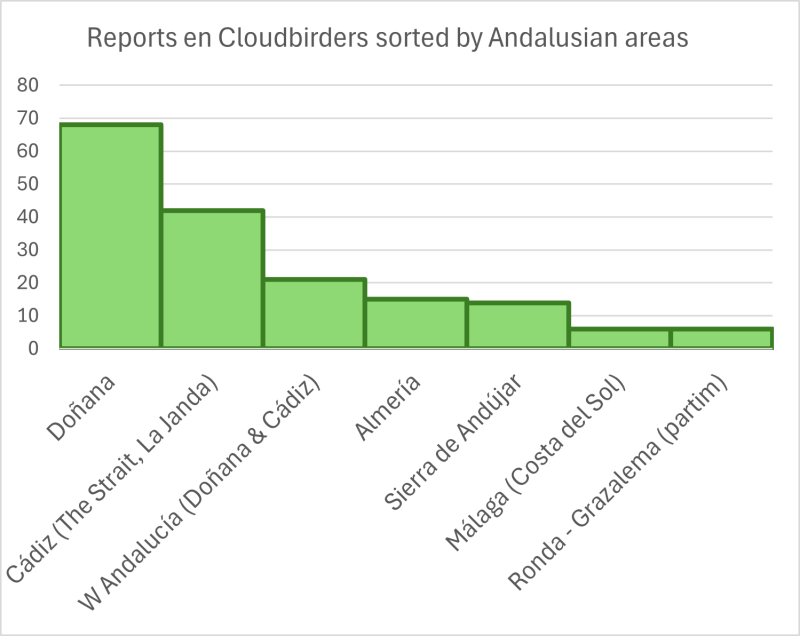
Key secondary areas include the Sierra de Andújar ( 14 reports), famous for its Iberian lynx population, which attracts international wildlife tourists, and the distinctive semi-arid landscapes of Almería (15 reports). Areas such as the Costa del Sol and Ronda-Grazalema, although appearing in fewer reports, are established components of itineraries combining birding and culture.
Phenology of ornithological activity
The seasonal pattern of excursions is clearly defined by avian activity and weather.
Spring Peak (April-May): the absolute high season
… coinciding with the climax of spring migration and the breeding period. It offers maximum species diversity, active bird behavior and pleasant conditions.
Autumn Wave (September-November): A secondary peak, led by September, is driven by the spectacles of autumn migration, especially in the Strait of Gibraltar.
Winter (December-February)
A period of constant activity focused on wintering species (e.g., cranes, waterfowl) and the mild climate, attractive to visitors from colder areas of northern Europe.
Summer Vacation (June-August)
Activity decreases significantly due to the end of migration and reproductive migration, along with high temperatures, especially inland.
Tourism patterns and profile
The data indicate that the reporting cohort is predominantly composed of international birders, especially from northern Europe, on ornithological excursions or independent trips.
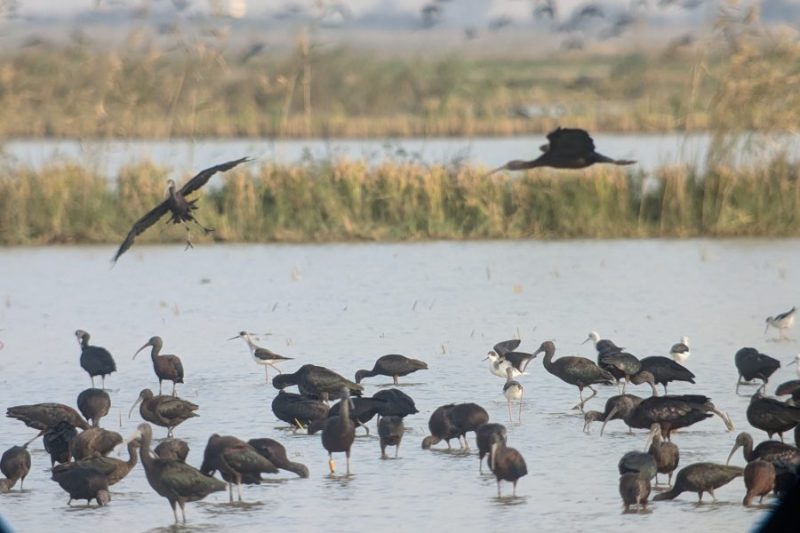
Specialized tour operators, both international and Spanish, are frequently cited. Spanish national birders have less visibility in this dataset, as they probably use other national platforms or channels to share their observations.

The typical trip consists of a multi-destination itinerary of 7 to 14 days, often combining several regions or combining key birding sites with cultural attractions. This pattern underscores the opportunity for integrated tourism development that links Spain’s exceptional natural heritage with its rich cultural wealth.
In conclusion
These maps, percentages and graphs analyzed have only one true meaning: they are the collective expression of a desire.
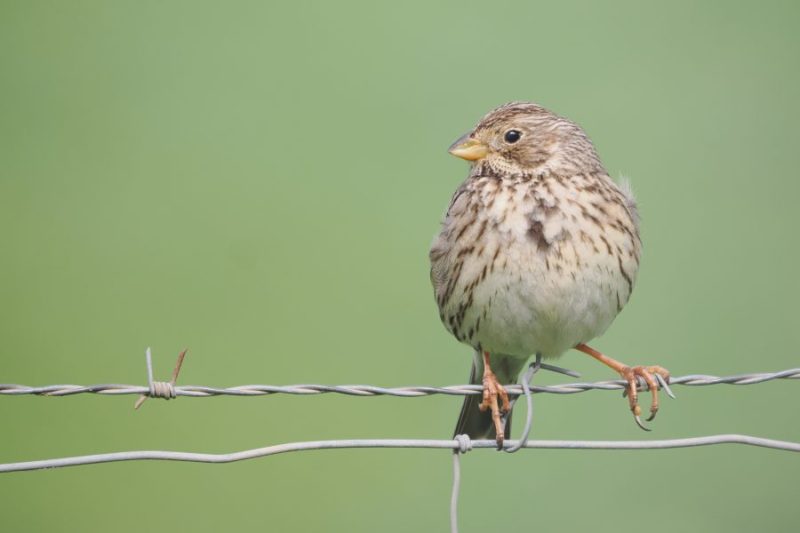
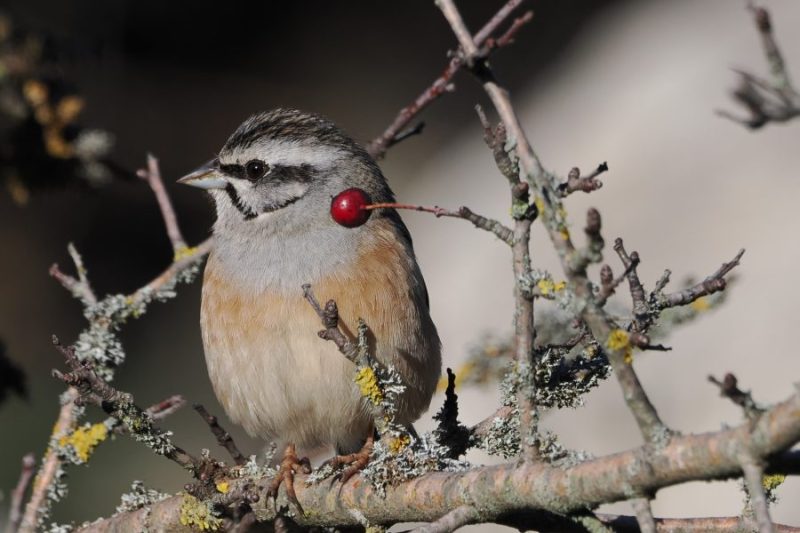
… The desire to witness the moment when a Booted Eagle decides to cross the sea in Tarifa; to listen to the silence broken by the trumpeting of the cranes at dawn in Extremadura; to locate, among the bushes, an elusive passerine. In short, to connect with nature.
Leave a Reply