


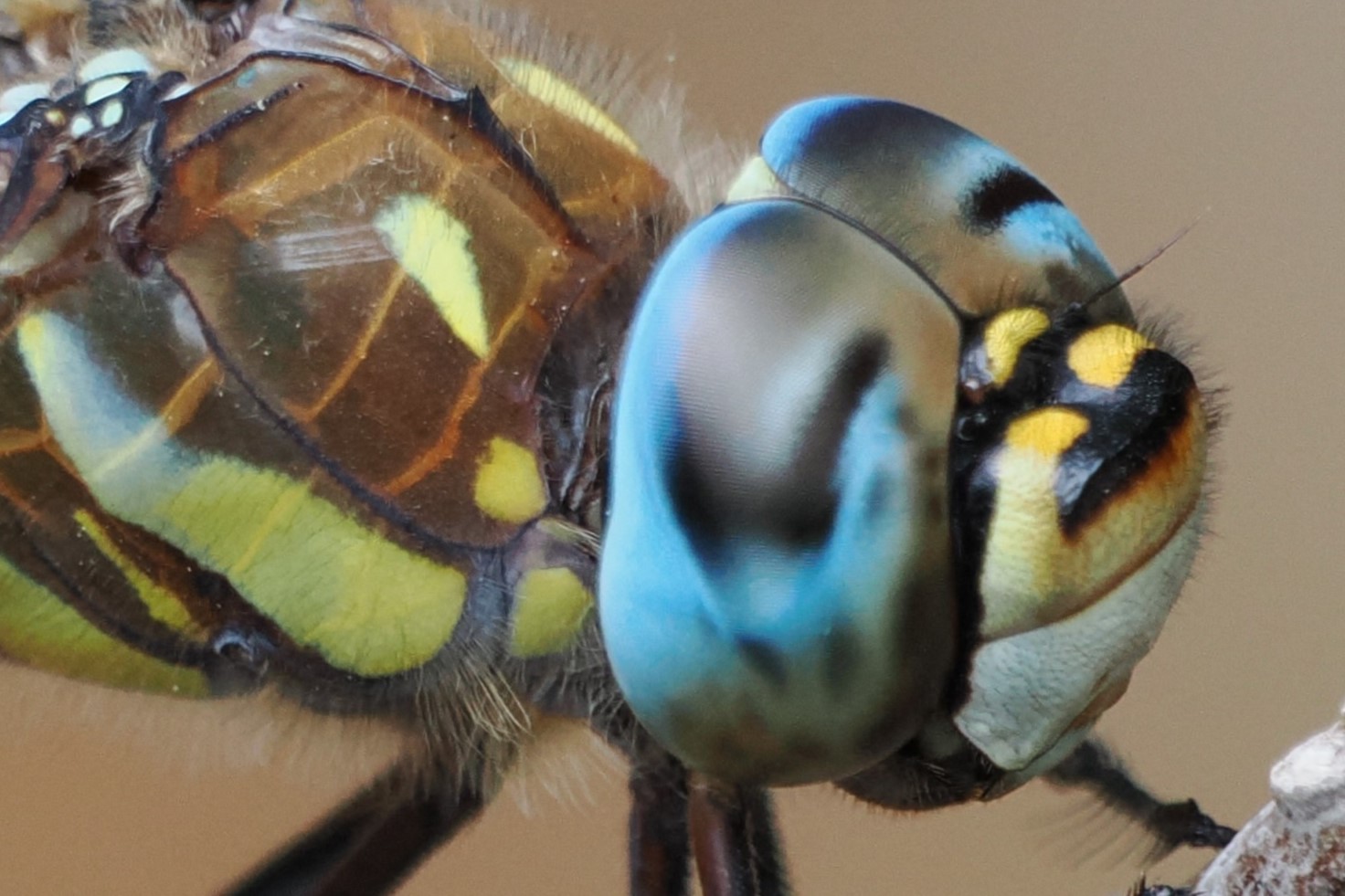
Odonates are large and beautiful insects, with diurnal activity and unique behaviors, especially active in summer, with a very specific ecology and requirements. In recent years, their observation has awakened a lot of interest thanks to modern guides and the rise of digital photography. Today, it is as easy to enjoy dragonflies and damselflies in the field as it is to identify them in photographs.

First of all, I would like to highlight the importance of our country for odonates. Spain is home to one of the most diverse and unique faunas in Europe. Check out the dragonfly watching excursions and the G3-guides reports.
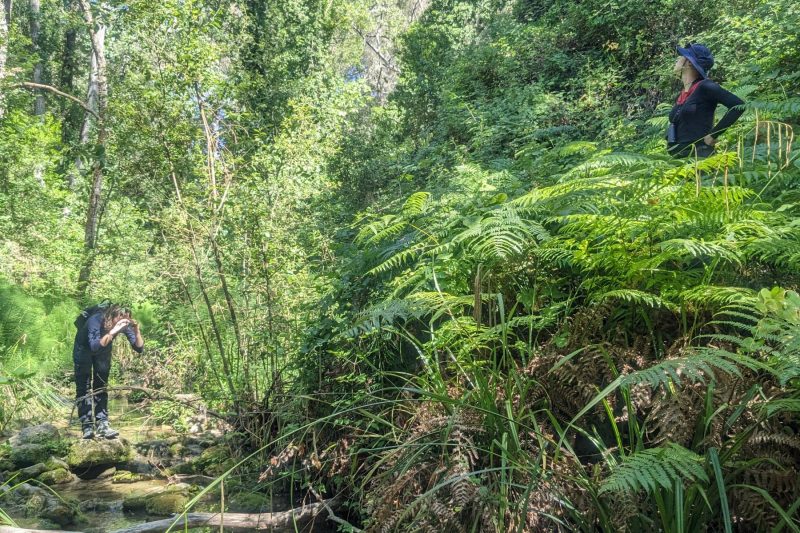
Observation of dragonflies in Spain
The European community of dragonfly watchers is very active and one of the most “multifaceted”, counting open-minded people who share information and promote citizen science. In addition, odonatologists like to socialize in the evenings, especially after long days in the field, enjoying the sun and water. In short, observing odonates is probably one of the most enjoyable lifestyles there is.

Books: field guides
European wildlife is so modest in its diversity that the best guidebooks cover the diversity of the entire continent.
Field Guide to the Dragonflies of Britain and Europe (2nd edition) by Dijkstra, Schröter and Lewington. The first edition of 2006 instantly became a bible for its comprehensive treatment (all species, updated maps and 1,000 drawings), modern format for the field and easy-to-understand treatment for beginners.
Europe’s Dragonflies: A Field Guide to the Damselflies and Dragonflies by Smallshire and Swash. A perfect complement to Dijkstra’s with its complete set of photographs.
Magnificent bilingual book (Portuguese, English): The Dragonflies of Portugal As Libélulas de Portugal. by Maravalhas and Soares.

Seasonality: the best time for sightings
We highlight three main periods to observe dragonflies in Europe. Rare species are usually in spring, followed by the appearance of most species in summer, and finally a few dragonflies become more abundant in autumn.
In the Mediterranean basin, odonates can be flying all year round, e.g. Sympetrum striolatum is adult in small numbers during the winter. The peak season for odonates is May-June in Andalusia and July-August in northern Spain. Some notable exceptions among the outstanding species: Zygonyx torridus usually flies in early summer and marks the change of season; adults of Sympetrum sinaiticum appear in greater numbers during autumn.

List of species of dragonflies in Spain
Although the taxonomy of odonates is stable in Europe, novelties continue to appear: some dragonflies are colonizing the continent mainly from the south and taxa new to science continue to be discovered in our territory, especially in the Mediterranean peninsulas.
See our updated list of Spanish species at the end of this article. You can also download the list of odonates from Andalucía. As a general note, in the Mediterranean region, dragonfly densities and diversity are usually low in one locality… Completing a species list involves visiting many places.
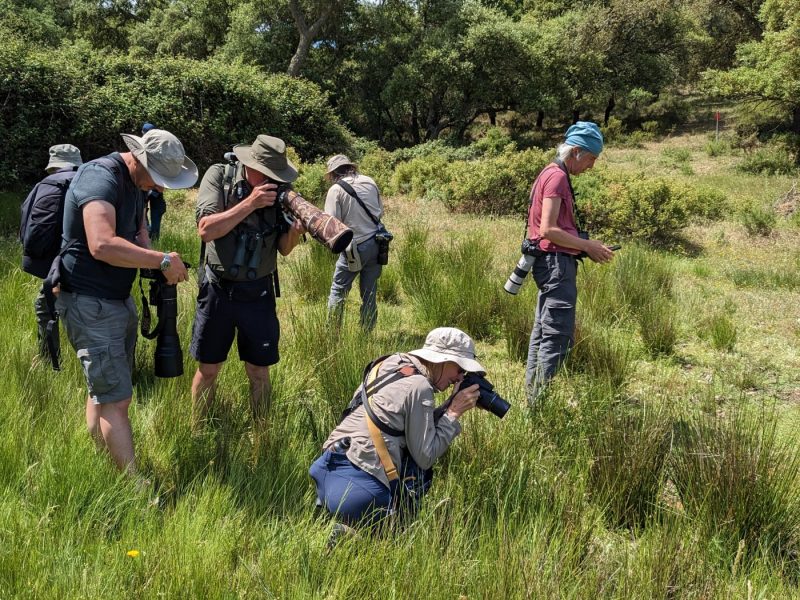
Evolution in the observation of odonates
Traditional entomology with specimen collection is still a necessary activity but the rise of purely observational methods has completely changed the rules of the game. Today, most European observers identify specimens directly in the field using binoculars and cameras. See our “History of odonatology in Spain”.
Observation without collecting greatly speeds up visits… resulting in a better knowledge of the dragonflies present in an entire region. It is easier to organize excursions to explore a wide range of habitats. On a well-planned expedition, it is possible to list 50 species of dragonflies in a few days.

The adult insect
The image of a dragonfly immediately forms in the mind… However, there is variability within the same species: immature, sexually mature individuals, males and females, differ in coloration.
Males are more conspicuous than females and actively defend their territories. Libellulids perch on branches near the water, while gonphids usually perch on boulders. The skinks fly incessantly (their identification in flight needs a lot of training) resting among the tall vegetation. Macromia is even more elusive. Cordulegaster is also a strong flier with breeders mostly restricted to shady streams. Gonphids spend most of their time away from streams and appear in small numbers despite emerging in much larger numbers.
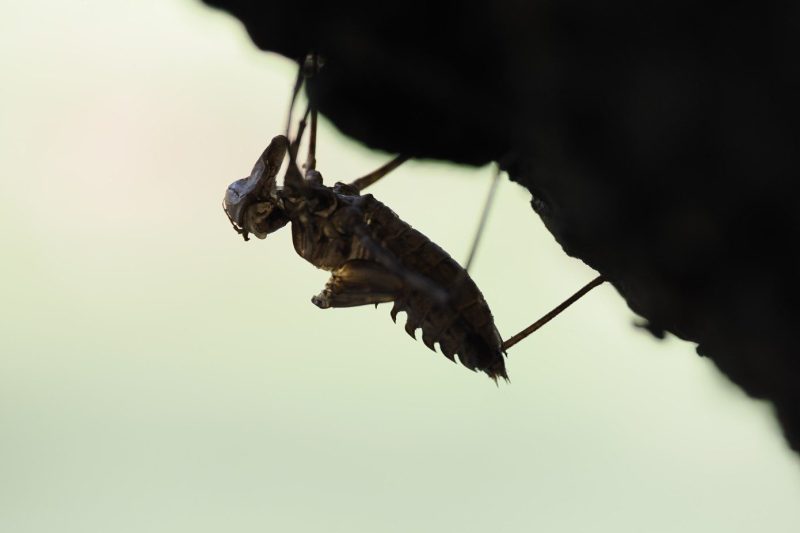
Exuvias for the serious student
Exuviae collection offers a completely different approach to odonatology. The larval skin is fragile, but offers a non-invasive way to study dragonfly populations. They are beautiful in their own right and fulfill the spirit of collecting material in the field. This field technique provides a better understanding of dragonflies and their habitat.
New guides are available for the identification of exuviae. In Spanish, Larvas de libélulas en la península ibérica 2ª Edición (Conesa, 2022).
Responsible behaviour and ethics
Dragonfly protection involves respecting the rules of protected natural areas and obtaining permits before entering private areas. Special permits are usually required to capture dragonflies and collect specimens for scientific purposes, even of common species, although such regulations are often useless for achieving practical conservation of aquatic biodiversity. In the few cases of extremely rare odonates, it is still vital to minimize disturbance of larval habitat. In general, when joining a group of observers, try not to disturb the insect perched on its perch.

Odonates in Spain
Prunier, Cabana and Miralles-Nuñez published the following introductory article on Spanish dragonflies in the Book of Abstracts of the 7th European Congress of Odonatology (ECOO 2024). The original pdf can be downloaded.
Spain is the fourth largest country in Europe, with just over 500,000 square kilometers. Together with Portugal, it belongs to the Iberian Peninsula, which is the westernmost continental area of Eurasia and one of the only three Mediterranean peninsulas in Europe. The Spanish geography is, in fact, more complex, since it includes the Balearic and Canary archipelagos and small enclaves in Africa (Ceuta and Melilla).
Biodiversity of dragonflies in Spain
Such a unique territory is inhabited by 83 species of dragonflies, in addition to three missing species and one doubtful one, which represents 60% of European odonates with recent data available for Macaronesia (Weihrauch et al., 2016) and Balearic Islands (Rebassa & Canyelles, 2022).
General distribution of odonates
Although wetlands are scarce in the autonomous cities of Ceuta and Melilla, mass migrations of Anax ephippiger are occasionally observed. As a general rule, widely distributed European dragonflies are generally distributed throughout peninsular Spain (Prunier et al., 2015). Several factors condition the Spanish odonatofauna.
Climate and altitude.
The Spanish climate is characterized by an enormous heterogeneity, with a general gradient of aridity from northwest to southeast. The Atlantic, temperate and humid climate of northwestern Spain (Galicia, Cantabrian coast) is abruptly replaced by Mediterranean conditions – very dry summers – typical of most of Spain (Catalonia, Valencia, Andalusia) and even desert conditions in the southeast (Murcia, eastern Andalusia). Between the coasts, two inland plateaus (Castilla y León and La Mancha) are famous for their continental character and extreme temperatures, while the high mountain ranges (Cantabrian, Pyrenees, Iberian System, Central System, Betic Cordillera) offer a diverse topology and create “climatic islands” all over the territory.
Finally, the large river valleys (Ebro, Tagus, Guadiana, Guadalquivir) can be described as steppe plains, most of which have been transformed into areas of intensive agriculture. They still harbor interesting endorheic wetlands and their estuaries form wetlands of international importance (Doñana, Ebro Delta).
Climate and topography largely explain the diversity of freshwater ecosystems in Spain and, consequently, the richness of dragonflies in both lentic and lotic habitats. In addition, the geographical position of the Iberian Peninsula as a transition point between two continents contributes greatly to its odonatological community, giving rise to a mixture of African and Eurosiberian elements, enriched with endemisms from the southwestern Palearctic.
Mountains and northern highlands
The Iberian Peninsula is isolated from the rest of Europe by the Pyrenees, a natural barrier for some odonates restricted to southern France, but also a refuge for species that do not expand into southern Iberia: Cordulegaster bidentata and Platycnemis pennipes fly over Pyrenean streams while Leucorrhinia dubia, Coenagrion hastulatum and Somatochlora metallica inhabit mountain lagoons (known locally as “ibón”). Other scarce Spanish dragonflies, such as Sympetrum flaveolum, Aeshna juncea and Lestes sponsa, are limited to the northern mountain ranges (Pyrenees, Cantabrian Mountains, Central System) and the Northern Plateau.
Endemic dragonflies in Spain
The isolation of the Iberian Peninsula from the rest of Europe has produced two endemic taxa: a subspecies of Sympetrum vulgatum ibericum distributed mainly in continental Spain (and in slight expansion in the French Pyrenees) and the recently described Onychogomphus cazuma present in the mountains near the Mediterranean coast, approximately from Valencia to Andalusia. The subspecies Calopteryx haemorrhoidalis asturica Ocharan, 1983 is still considered valid by some researchers.
Western European endemics have spread beyond the Pyrenees, mainly associated with gently flowing rivers: Macromia splendens, Gomphus graslinii, Gomphus simillimus show a patchy distribution in Spain, while Boyeria irene, Onychogomphus uncatus, Calopteryx xanthostoma, Platycnemis latipes and P. acutipennis are much more abundant. Finally, Gomphus pulchellus is often associated with lentic habitats.
Some dragonflies are distributed in Western Europe as well as in the Maghreb. Some are much more abundant north of the Strait of Gibraltar, such as Ischnura graellsii, the most common dragonfly in Spain, or Coenagrion mercuriale and Oxygastra curtisii, whose ranges reach northern Europe. On the other hand, Orthetrum nitidinerve and Onychogomphus costae are very common in Morocco and are scattered in Spain.
African expansions in Europe
Unlike the Eurosiberian elements, southern Spain has a rich community of dragonflies of African origin. Most species seem to have arrived several decades ago, such as Brachythemis impartita, Diplacodes lefebvrii, Orthetrum trinacria or Trithemis annulata. Orthetrum chrysostigma was even known in this territory in the 19th century. The latest arrival, Trithemis kirbyi, was detected in Andalusia in 2007 and quickly colonized much of eastern Spain, southeastern Portugal and reached France and even Belgium in 2022.
Mediterranean Corridor
Mediterranean territories are extensive in Spain allowing for a rich dragonfly community: species restricted to the Mediterranean region and adapted to its climatic conditions. Typical Mediterranean aquatic ecosystems: temporary wetlands colonized by Lestes spp. and Sympetrum fonscolombii; small intermittent streams with low flow, especially good for threatened species such as Coenagrion caerulescens, C. mercuriale and Orthetrum nitidinerve; medium-sized rivers with coarse substrates favoring a rich community of gomphids and other southwestern Palearctic endemics.
Onychogomphus costae is an exception, as it is mainly present in lowlands and larger rivers. Sympetrum sinaiticum is distributed throughout the Mediterranean basin, from Spain to the Middle East, but is absent in other European countries. In Spain, it is distributed along the Mediterranean coast and inland. Selysiothemis nigra is another exception that spread from Asia along the Mediterranean basin and is distributed mainly in eastern Spain.
Macaronesia – Canary Islands
The Canary Islands are part of the Macaronesian archipelago. This isolated territory is home to 16 species of dragonflies, including Sympetrum nigrifemur, endemic to the Canary Islands and Madeira, and Zygonyx torridus, which is quite widespread in the Canary Islands. There are four more African species in the area that are not currently found in peninsular Spain: Trithemis arteriosa, Ischnura saharensis, I. senegalensis and the recently detected Orthetrum ransonnetii.
Scarce species
A few dragonflies are very rare in Spain and have an unconventional distribution. Three species are common in most of Europe, but rare and localized in the Iberian Peninsula.
Brachytron pratenseonly present in coastal lagoons, mainly in northern Portugal, Galicia and the Cantabrian coast.
Libellula fulvavery localized, in some points of the coast of Portugal, the east of the Cantabrian coast and the basin of the lake of Banyoles.
Gomphus vulgatissimusonly present in some rivers in the north of the Iberian Peninsula.
Lestes macrostigmaspecialist in salt marshes with strong population fluctuations, is present in Doñana and some inland salt lakes.
Finally, Pantala flavescensthe most extreme rarity, with recent detection of breeding in the Iberian Peninsula (Andalusia and Valencia).
Bibliography
SPAIN PENINSULA. Prunier, F., Brotóns Padilla, M., Cabana, M., Campos, F., Casanueva, P., Chelmick, D., Cordero Rivera, A., Díaz Martínez, C., Evangelio Pinach, J. M., Gainzarain, J. A., García-Moreno, J., Lockwood, M., de los Reyes, L., Mañani, J., Mezquita Aranburu, I., Muddeman, J., Muddeman, J., García-Moreno, J., Lockwood, M., de los Reyes, L., Mañani, J., Mezquita Aranburu, I., Muddeman, J. L., Ocharan, F. J., Otero, F., Prieto-Lillo, E., Zaldívar López, R. (2015). Odonata España provincial lists. Boletín de la Rola, 6: 59-84.
BALEARIC ISLANDS. Rebassa, M. and Canyelles, X. (2022). Update of the status of the odonators of the Balearic Islands. Un repàs a la seva situació dels començaments del segle XX fins a l’actualitat. Bolletí de la Societat d’Història Natural de les Balears, 65: 97-115.
CANARY ARCHIPELAGO. Weihrauch, F., Vieira, V., Cordero Rivera, A. and de Santos Loureiro, N. (2016). Update on the zoogeography of Odonata in the Macaronesian Islands. Rola Bulletin, 8: 9-22.
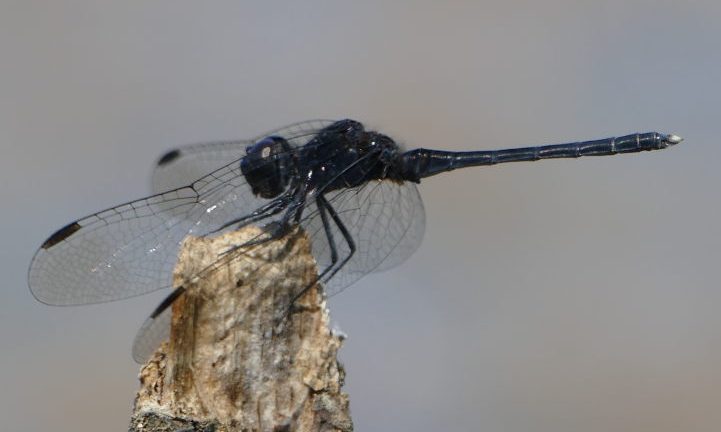
Dragonflies of Spain: updated listing
The following list of dragonflies and damselflies present in Spain is the most updated (1/7/2024) and was published in the Book of Abstracts of the 7th European Congress of Odonatology. It covers the Spanish territories in the Iberian Peninsula, the Balearic Islands and the Canary archipelago, including recent additions and information on breeding (X), doubtful (?), missing (✝) and accidental (Acc.) species. In total, 87 taxa have been observed so far in Spain.
More information is available in the brief history of dentistry in Spain.
| # | SPAIN SPECIES LIST | Ib. | Bal. | Can. |
|---|---|---|---|---|
| 1 | Calopteryx haemorrhoidalis (Vander Linden, 1825) | X | X | |
| 2 | Calopteryx virgo (Linnaeus, 1758) | X | ||
| 3 | Calopteryx xanthostoma (Charpentier, 1825) | X | ||
| 4 | Lestes barbarus (Fabricius, 1798) | X | X | |
| 5 | Lestes dryas Kirby, 1890 | X | ||
| 6 | Lestes macrostigma (Eversmann, 1836) | X | ||
| 7 | Lestes sponsa (Hansemann, 1823) | X | ||
| 8 | Lestes virens (Charpentier, 1825) | X | ||
| 9 | Chalcolestes viridis (Vander Linden, 1825) | X | X | |
| 10 | Sympecma fusca (Vander Linden, 1820) | X | X | |
| 11 | Ceriagrion tenellum (de Villers, 1789) | X | X | |
| 12 | Coenagrion caerulescens (Fonscolombe, 1838) | X | X | |
| 13 | Coenagrion hastulatum (Charpentier, 1825) | X | ||
| 14 | Coenagrion mercuriale (Charpentier, 1840) | X | ||
| 15 | Coenagrion puella (Linnaeus, 1758) | X | ||
| 16 | Coenagrion pulchellum (Vander Linden, 1825) | ✝ | ||
| 17 | Coenagrion scitulum (Rambur, 1842) | X | X | |
| 18 | Enallagma cyathigerum (Charpentier, 1840) | X | ||
| 19 | Erythromma lindenii (Selys, 1840) | X | X | |
| 20 | Erythromma viridulum (Charpentier, 1840) | X | X | |
| 21 | Ischnura elegans (Vander Linden, 1820) | X | X | |
| 22 | Ischnura graellsii (Rambur, 1842) | X | ||
| 23 | Ischnura pumilio (Charpentier, 1825) | X | Acc. | |
| 24 | Ischnura saharensis Aguesse, 1958 | X | ||
| 25 | Ischnura senegalensis (Rambur, 1842) | X | ||
| 26 | Pyrrhosoma nymphula (Sulzer, 1776) | X | ||
| 27 | Platycnemis acutipennis Selys, 1841 | X | ||
| 28 | Platycnemis latipes Rambur, 1842 | X | Acc. | |
| 29 | Platycnemis pennipes (Pallas, 1771) | X | ||
| 30 | Platycnemis subdilatata Selys in Lucas, 1849 | ? | ||
| 31 | Aeshna affinis Vander Linden, 1820 | X | X | |
| 32 | Aeshna cyanea (Müller, 1764) | X | Acc. | |
| 33 | Aeshna juncea (Linnaeus, 1758) | X | ||
| 34 | Aeshna mixta (Latreille, 1805) | X | X | |
| 35 | Anax ephippiger (Burmeister, 1839) | X | X | X |
| 36 | Anax imperator Leach in Brewster, 1815 | X | X | X |
| 37 | Anax parthenope (Selys, 1839) | X | X | X |
| 38 | Boyeria irene (Fonscolombe, 1838) | X | ||
| 39 | Brachytron pratense (Müller, 1764) | X | ||
| 40 | Isoaeschna isoceles (Müller, 1767) | X | X | |
| 41 | Gomphus graslinii Rambur, 1842 | X | ||
| 42 | Gomphus pulchellus Selys, 1840 | X | ||
| 43 | Gomphus simillimus Selys, 1840 | X | ||
| 44 | Gomphus vulgatissimus (Linnaeus, 1758) | X | ||
| 45 | Onychogomphus cazuma Barona, Cardo & Díaz, 2020 | X | ||
| 46 | Onychogomphus costae Selys, 1885 | X | ||
| 47 | Onychogomphus forcipatus (Linnaeus, 1758) | X | ||
| 48 | Onychogomphus uncatus (Charpentier, 1840) | X | ||
| 49 | Paragomphus genei (Selys, 1841) | X | ||
| 50 | Lindenia tetraphylla (Vander Linden, 1825) | ✝ | ||
| 51 | Cordulegaster bidentata Selys, 1843 | X | ||
| 52 | Cordulegaster boltonii (Donovan, 1807) | X | ||
| 53 | Macromia splendens (Pictet, 1843) | X | ||
| 54 | Cordulia aenea (Linnaeus, 1758) | X | ||
| 55 | Somatochlora metallica (Vander Linden, 1825) | X | ||
| 56 | Oxygastra curtisii (Dale, 1834) | X | ||
| 57 | Brachythemis impartita (Karsch, 1890) | X | Acc. | |
| 58 | Crocothemis erythraea (Brullé, 1832) | X | X | X |
| 59 | Diplacodes lefebvrii (Rambur, 1842) | X | ||
| 60 | Leucorrhinia dubia (Vander Linden, 1825) | X | ||
| 61 | Leucorrhinia pectoralis (Charpentier, 1825) | ✝ | ||
| 62 | Libellula depressa Linnaeus, 1758 | X | Acc. | |
| 63 | Libellula fulva Müller, 1764 | X | ||
| 64 | Libellula quadrimaculata Linnaeus, 1758 | X | ||
| 65 | Orthetrum albistylum (Selys, 1848) | X | ||
| 66 | Orthetrum brunneum (Fonscolombe, 1837) | X | Acc. | |
| 67 | Orthetrum cancellatum (Linnaeus, 1758) | X | X | |
| 68 | Orthetrum chrysostigma (Burmeister, 1839) | X | X | |
| 69 | Orthetrum coerulescens (Fabricius, 1798) | X | X | |
| 70 | Orthetrum nitidinerve (Selys, 1841) | X | ||
| 71 | Orthetrum ransonnetii (Brauer, 1865) | X | ||
| 72 | Orthetrum trinacria (Selys, 1841) | X | X | |
| 73 | Selysiothemis nigra (Vander Linden, 1825) | X | X | |
| 74 | Sympetrum flaveolum (Linnaeus, 1758) | X | ||
| 75 | Sympetrum fonscolombii (Selys, 1840) | X | X | X |
| 76 | Sympetrum meridionale (Selys, 1841) | X | ||
| 77 | Sympetrum nigrifemur (Selys, 1884) | X | ||
| 78 | Sympetrum pedemontanum (Müller, 1766) | X | ||
| 79 | Sympetrum sanguineum (Müller, 1764) | X | ||
| 80 | Sympetrum sinaiticum (Dumont, 1977) | X | ||
| 81 | Sympetrum striolatum (Charpentier, 1840) | X | X | |
| 82 | Sympetrum vulgatum ibericum Ocharan, 1985 | X | ||
| 83 | Trithemis annulata (Palisot de Beauvois, 1807) | X | X | X |
| 84 | Trithemis arteriosa (Burmeister, 1839) | Acc. | X | |
| 85 | Trithemis kirbyi Selys, 1891 | X | X | |
| 86 | Zygonyx torridus (Kirby, 1889) | X | X | |
| 87 | Pantala flavescens (Fabricius, 1798) | X | X |
Leave a Reply