


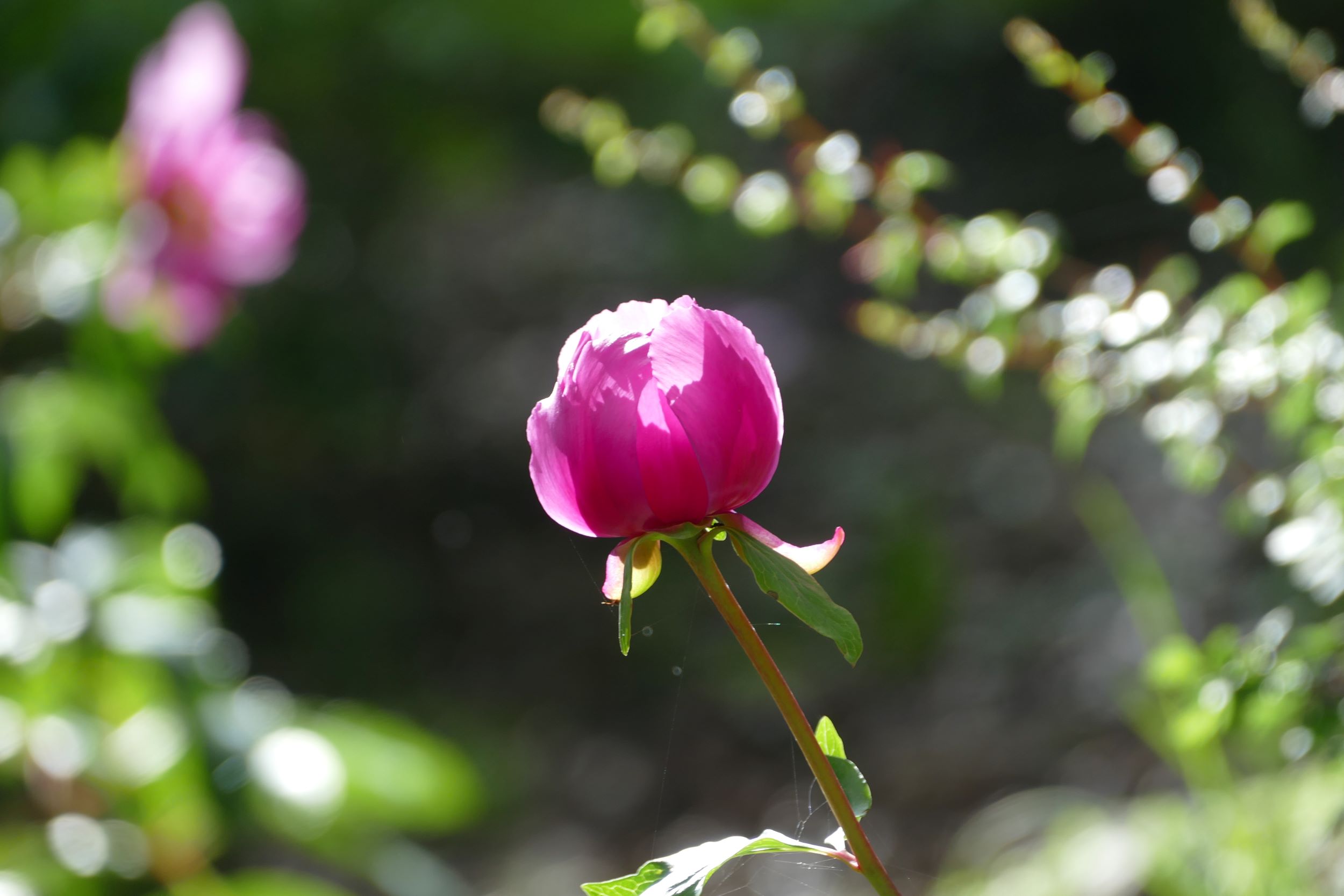
We walked the Route I Hacho de Gaucín, a classic of the municipality and in my opinion one of the emblematic routes of the Serranía de Ronda, very accessible and close to the coast. Circular route of 6.5 km and 450 meters of positive difference in altitude. Medium difficulty in favorable weather conditions. On this occasion, we approached to enjoy the spectacular flowering of peonies.

Second installment of the season 2024 of the routes offered by the City Council. The track of the route can be consulted on the website of the tourist office of Gaucín and is very well indicated in the field with appropriate markings and clearing.

In the social networks of Visit Gaucín, we can also find a small photographic report on the development of the excursion.
https://www.instagram.com/reel/C6B1kZLshOQ/embed/captioned/?cr=1&v=14&wp=540&rd=https%3A%2F%2Fjuanmaraa52.sg-host.com&rp=%2Fruta-del-hacho-en-gaucin%2F#%7B%22ci%22%3A0%2C%22os%22%3A1214.800000011921%2C%22ls%22%3A1016.2000000476837%2C%22le%22%3A1212.6000000238419%7D
From here, we highlight the effort of the town hall to support hiking in their municipality and remember the pioneering impulse of Patrick Elvin, culminated in his 2021 book “64 walks around Gaucin, Andalucia“. The trail has been officially created a few years ago and allows access to the highest point (1,011 meters) with really beautiful views… although during the excursion the dense fog prevented us from enjoying them and transported us to another time of the year.

The route(offered by G3 guides) allows you to enjoy the essence of the Serranía de Ronda and the Genal Valley with its views over the mountains and white villages, varied Mediterranean vegetation, Quercus forests with up to four species of Quercus, abrupt geology of limestone and sandstone, abundance of flora and birdlife, of course the vultures that are never missing and butterflies. The weight of history and its trace in the landscape. A short but intense route that allows us to test our physical fitness, walking along cliffs and ridges, and protected by the shade of the trees when the sun is strong.

After half an hour’s walk, we arrive at the holm oak grove where peonies grow, also known by many vernacular names such as rosas albaderas. What a beautiful flower … What a lot of flowers! We are surrounded by thousands of flowering stems… some buds, most flowers in full bloom and quite a few already past their prime. The bloom of a peony lasts about a week…so witnessing the peak needs to be watched for. In less than a week, most of the plants went from buds to flower, already beginning their decline. The Albadera (Paeonia broteri Boiss. & Reut.) is characterized by its whitish carpels (center of the flower) hairy and the underside of its leaves hairless.

At the geodesic point, we had fun reading a passage from Prosper Mérimée‘s famous novel. We marched to Gaucín, where I met Carmen, who had arranged an appointment for us there. In the expeditions she served as a spy for our people and there was never a better one. She was returning from Gibraltar and had already arranged with a ship’s master the shipment of English goods that we were to receive on the coast. We went to wait for them near Estepona; then we hid part of them in the mountains, and loaded with the rest, we headed for Ronda. Carmen had preceded us, and she was also the one who indicated the moment when we should enter the city. This first trip and some others were fortunate. I liked the life of a smuggler better than that of a soldier: I gave gifts to Carmen, I had money and a mistress. I didn’t have many regrets. because, as the gypsies say, “it doesn’t sting with pleasure”.

Along the way, we were able to observe very well the differences between holm oaks (Quercus ilex rotundifolia), cork oaks (Quercus suber) and gall oaks (Quercus faginea). The big surprise was the discovery of a specimen of Andalusian gall oak (Quercus canariensis) that we could clearly identify by the distribution of the hairs in the central nerve of the leaf.

The day brought many more observations of interest… such as the hawk chasing vultures, numerous coral-red honey suckers (Cytinus hypocistis), the karstic crags on the ridge, the abundant flowering of the rockroses, a centennial gall oak with dry syndrome, the Prosepina butterfly and, again, caterpillars of the Red Waves butterfly. All in all, a very interesting and pleasant day.

We would like to thank the group for their interest and willingness to make the summit in spite of the fog, the Gaucín Town Hall for supporting the tourism activities and, finally, Anne-Alice, author of the photos.


Leave a Reply