


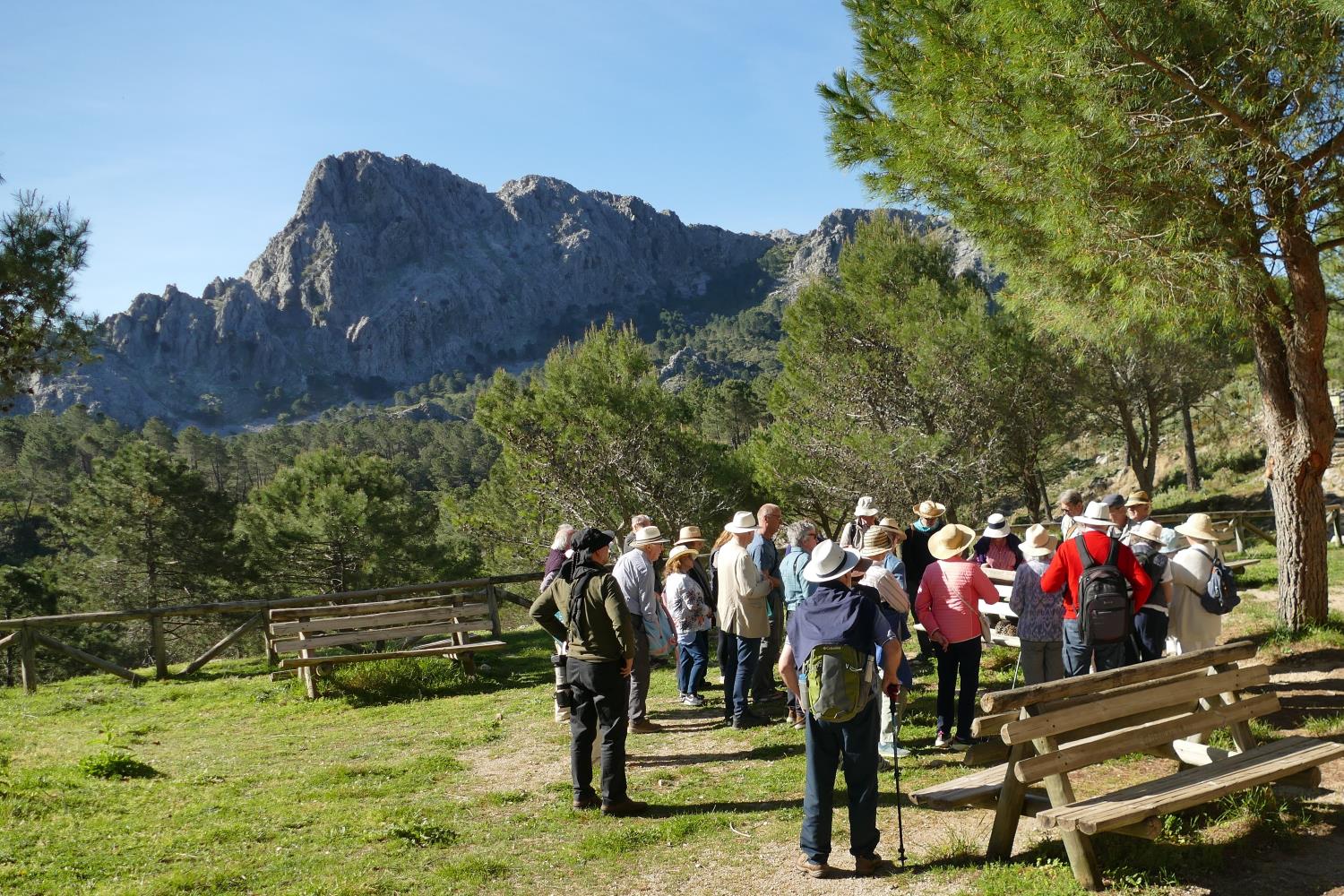
I had the pleasure of guiding the Irish Tree Society for two days in the botanical sector of the Serrania de Ronda. The group followed a magnificent program exploring the emblematic Andalusian forests of the Betic mountain range and the historic ornamental parks, rich in trees growing in the blessed coastal climate.
After the heavy rains in Andalusia, the countryside was glorious with roadsides full of red, blue, yellow and white flowers… poppies (Papaver rhoeas), vipers (Echium plantagineum), cristamtemos (Glebionis segetum, syn. Chrysanthemum segetum), Crambe filiformis and many others.
DAY ONE
Conifers of Grazalema and Genal groves
We dedicated the morning to discover a representation of Andalusian conifers (Gymnosperma: Pinaceae). From the parking lot we could easily observe three species of pines widely distributed in the Mediterranean region but mostly widespread and common in Spain. There, native pines have all their leaves (“needles”) produced in pairs.
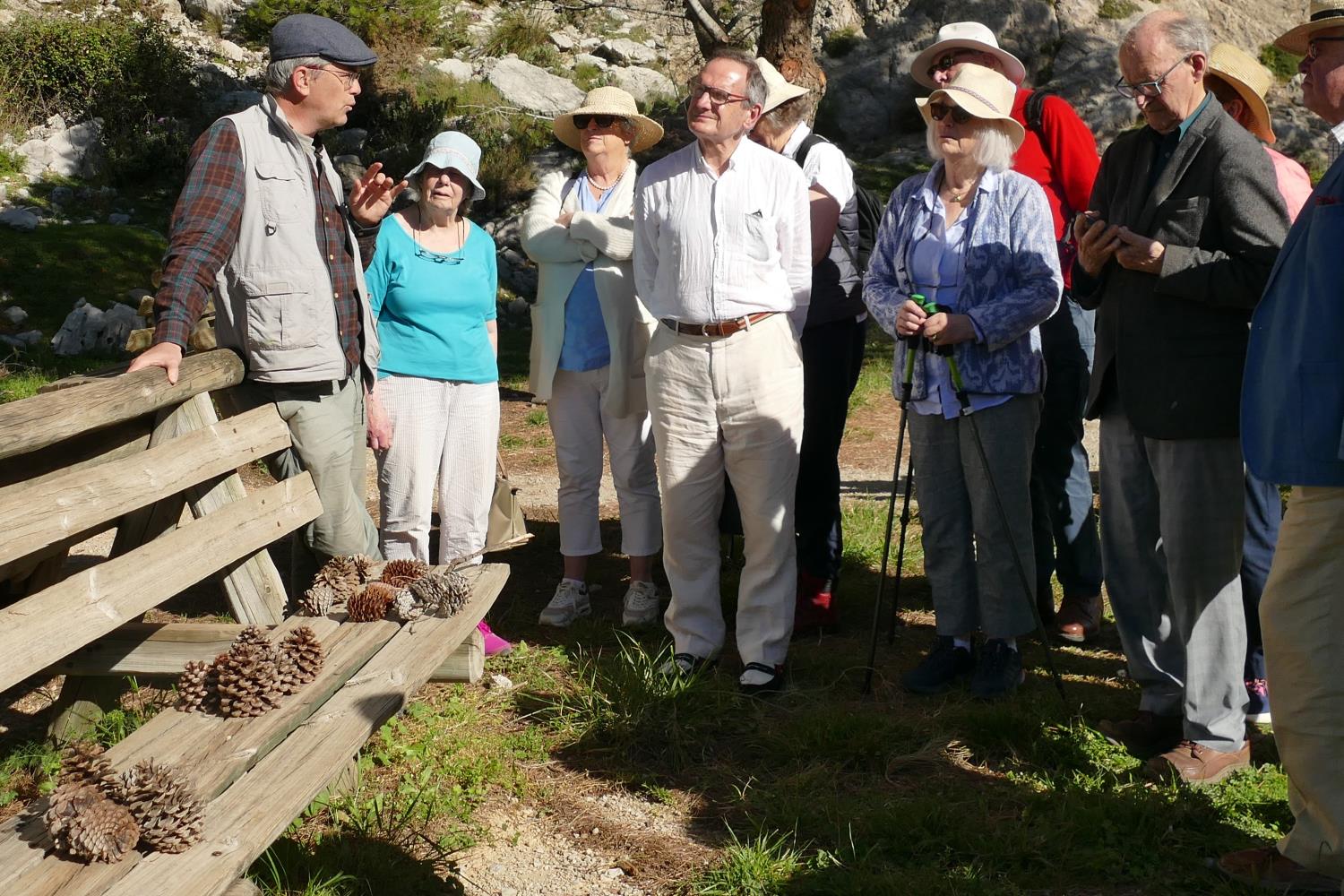
Aleppo pine. Pinus halepensis Mill. 1768. Loose silhouette with medium sized needles. Gray and finely fissured bark. Medium sized cone with a strong petiole. As a result, the tree maintains numerous pine cones for a long time in the crown. Thermophilic and drought resistant, used to reforest arid areas.
Maritime pine. Pinus pinaster Aiton. Very dense silhouette with long needles of bright green color. Very thick bark. Very long cone with pointed scales in the Andalusian populations. It is the best tree for resin collection.
Stone pine. Pinus pinea L. Typical rounded silhouette. Large and voluminous cones of ovoid shape, the cone scales with two deep holes that provide space for the kernels. Edible seeds (pine nuts).
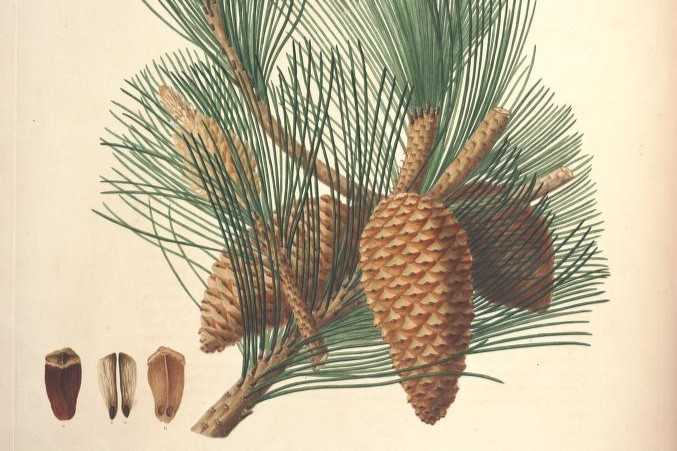
Some of us had the opportunity to see Red Crossbills (Loxia curvirostra) feeding frantically on their seeds at close range.
We then climbed up the Sierra del Pinar track and the 250 m difference in altitude was no problem for most of our intrepid Irish high-level botanists. We crossed the dense maritime pine forest and were able to observe some typical Mediterranean plants, such as the holm oak(Quercus ilex rotundifolia), the chicken thistle(Ptilostemon hispanicus), a Betic endemism, or the black juniper(Juniperus phoenicea). Very common understory shrubs: white steppe(Cistus albidus) and matagallo(Phlomis purpurea), Betic gorse (Ulex baeticus). From the ridge, we could finally discover the purpose of this expedition, which was none other than to see the rare and emblematic Spanish firs (Abies pinsapo).
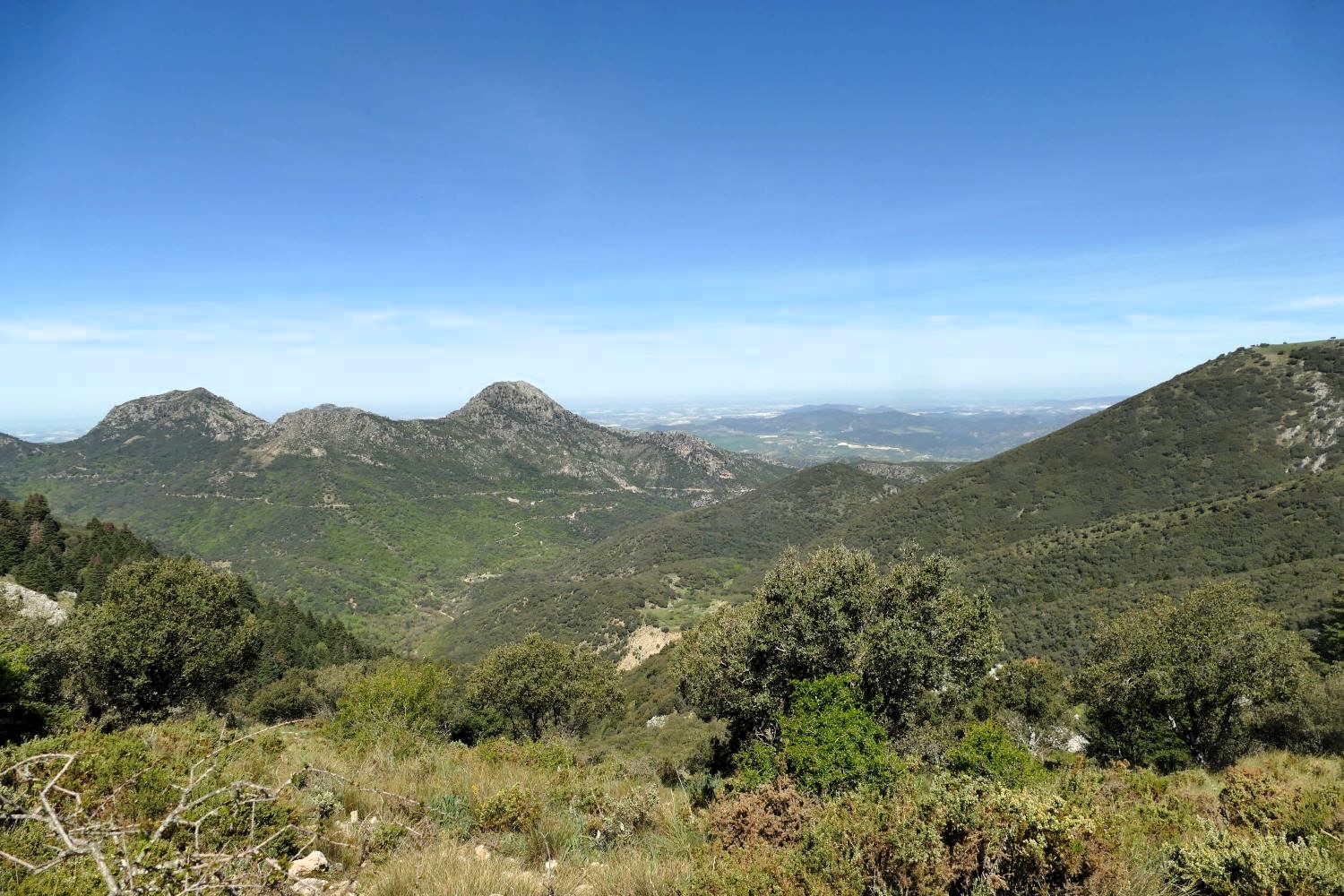
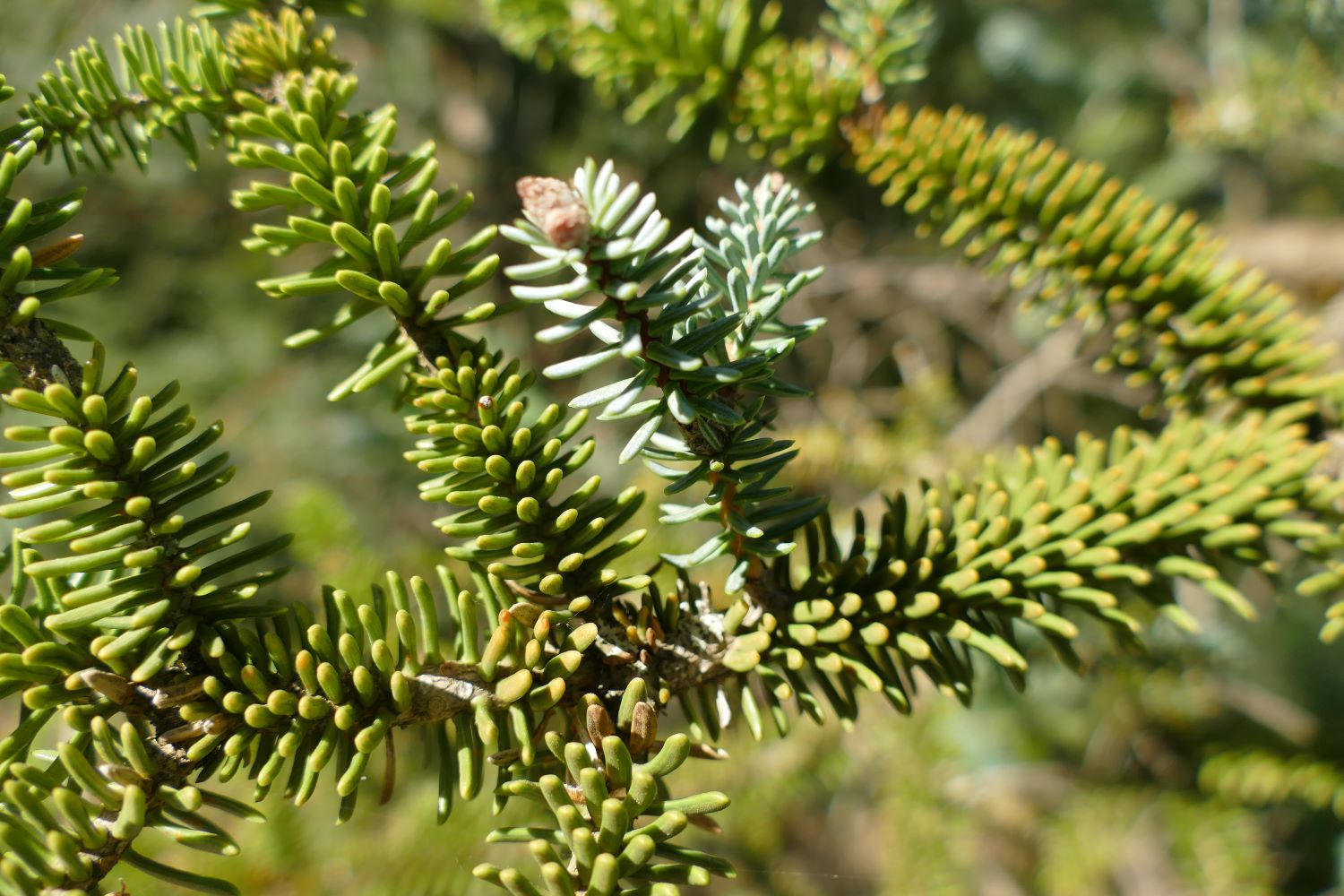
In total, we have only three Spanish fir forests left in the whole world, so the magnificent views made us a bit excited. These Andalusian firs grow on the northern slopes and are recognizable by their needles that cover the branches in a circular shape, unlike the common fir (Abies alba). At this time of year, we did not see any pine cones… but we could make out dead trees in the distance, probably the result of recent severe droughts caused by climate change.
After a well-deserved rest at the Paisaje Restaurant (Atajate), we began to walk through the beautiful Genal Valley with its mixture of chestnut orchards(Castanea sativa), almond trees (Prunus dulcis), olive trees (Olea europaea) and cherry trees (Prunus avium) mixed with oak forests with gall oaks(Quercus faginea) and holm oaks. The walk was very pleasant thanks to its gentle slope. The Mediterranean shrubs were very diverse in species: Rhamnus alaternus, Arbutus unedo, Calicotome villosa, Cytisus grandiflora, Cytisus vilosus, small Ulmus minor, Cistus salvifolius, Cistus ladanifer and Cistus monspeliensis… and some more. Several lianas were also observed. Some bee orchids(Ophyrys lutea, Ophrys tenthredinifera) and flowers such as pink valerian (Centranthus calcitrapae) color those 50 shades of green.
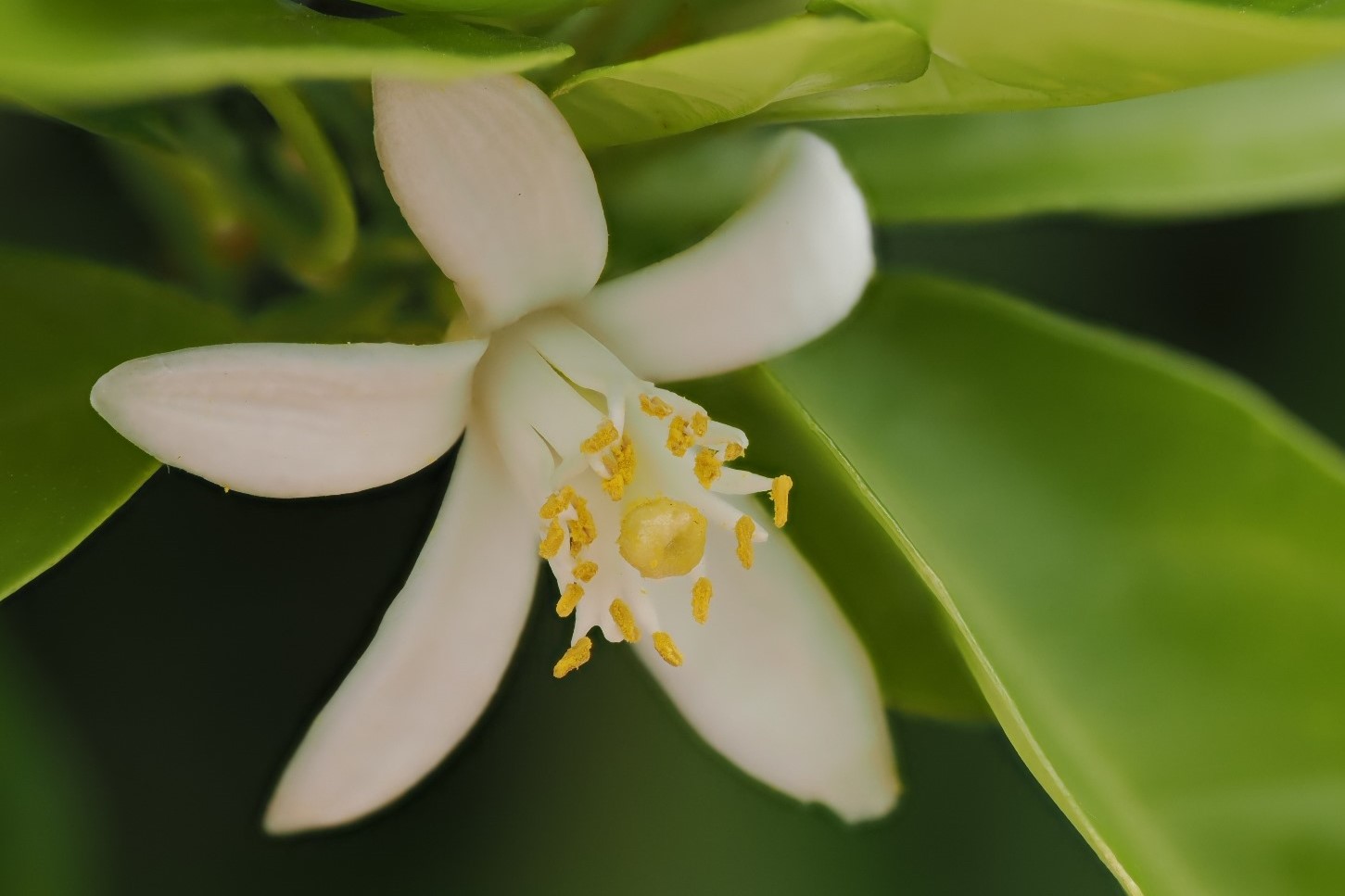
We ended up in the white village of Benaladid smelling the scent of orange blossom (a kind of Citrus). What a delight!
DAY TWO
Botanical Garden and Los Alcornocales
This second day highlights the differences and contrasts between the flora of the calcareous limestones (Grazalema) and the acid sandstones (Alcornocales).
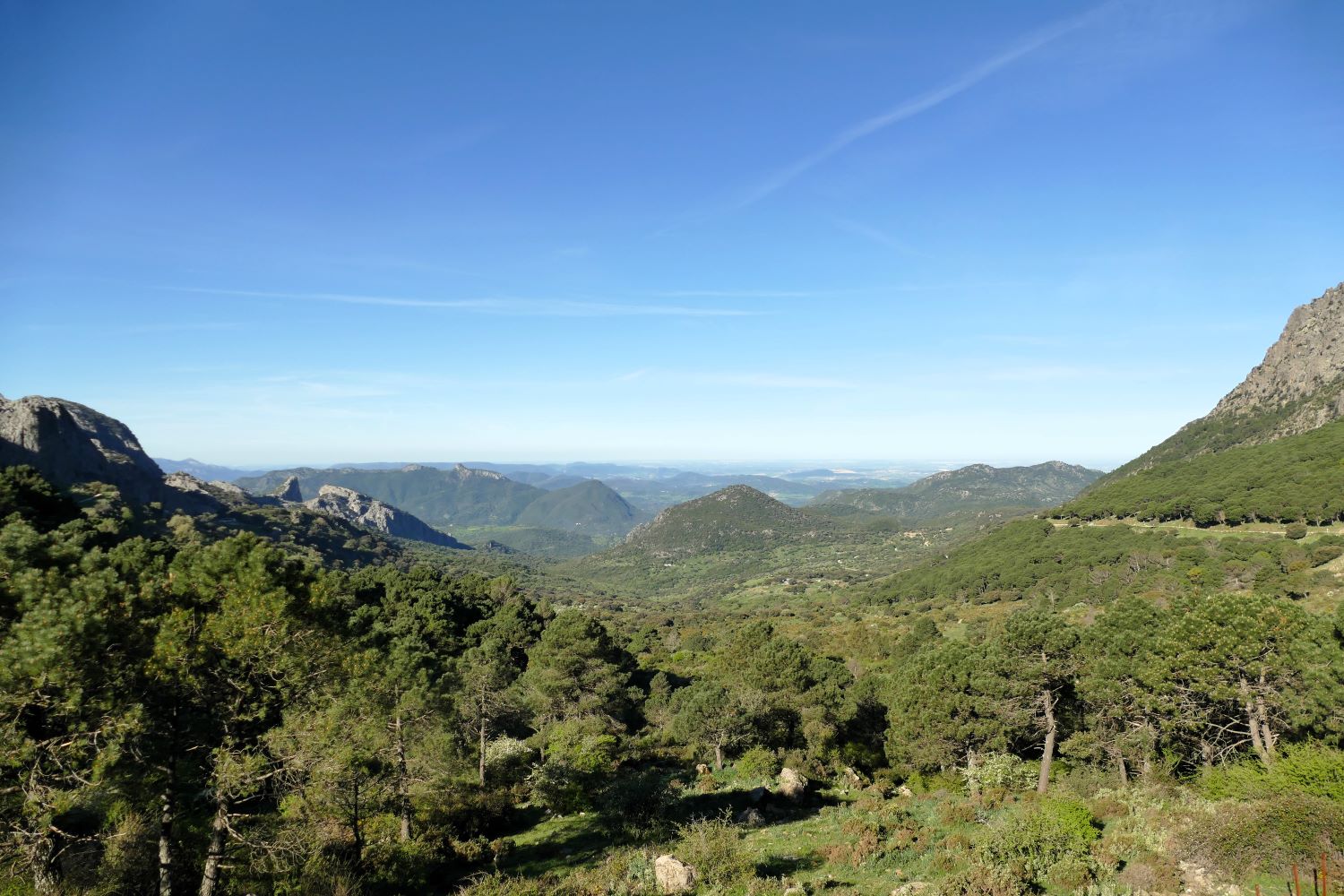
We stop at the Mirador del Boyar to observe the karstic model of the Sierra de Grazalema and the southern slope of the Sierra del Pinar, where there are no Spanish firs. Some Atlantic cedars(Cedrus atlantica) remind us that the sierra was heavily reforested during the 20th century. In the distance, the mountains give way to a huge and flat area, the Campiña de Jerez and, in the distance, Doñana.
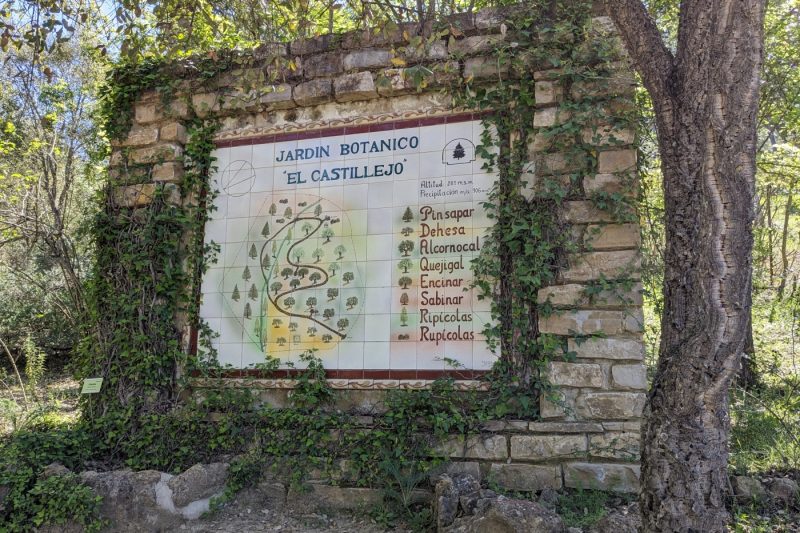
We arrive at El Bosque and visit the Botanical Garden of El Castillejo, a medium-sized modern park with a dense vegetation of local Mediterranean flora. It is a pleasure to observe all the species that we have already observed in the wild and those that remain to be discovered by the group. The plants are well labeled and the rather short walk allows a perfect educational use. It is pleasant to walk through a small forest of Spanish firs. Finally, we were happy to see high school students very focused on their botanical drawings.
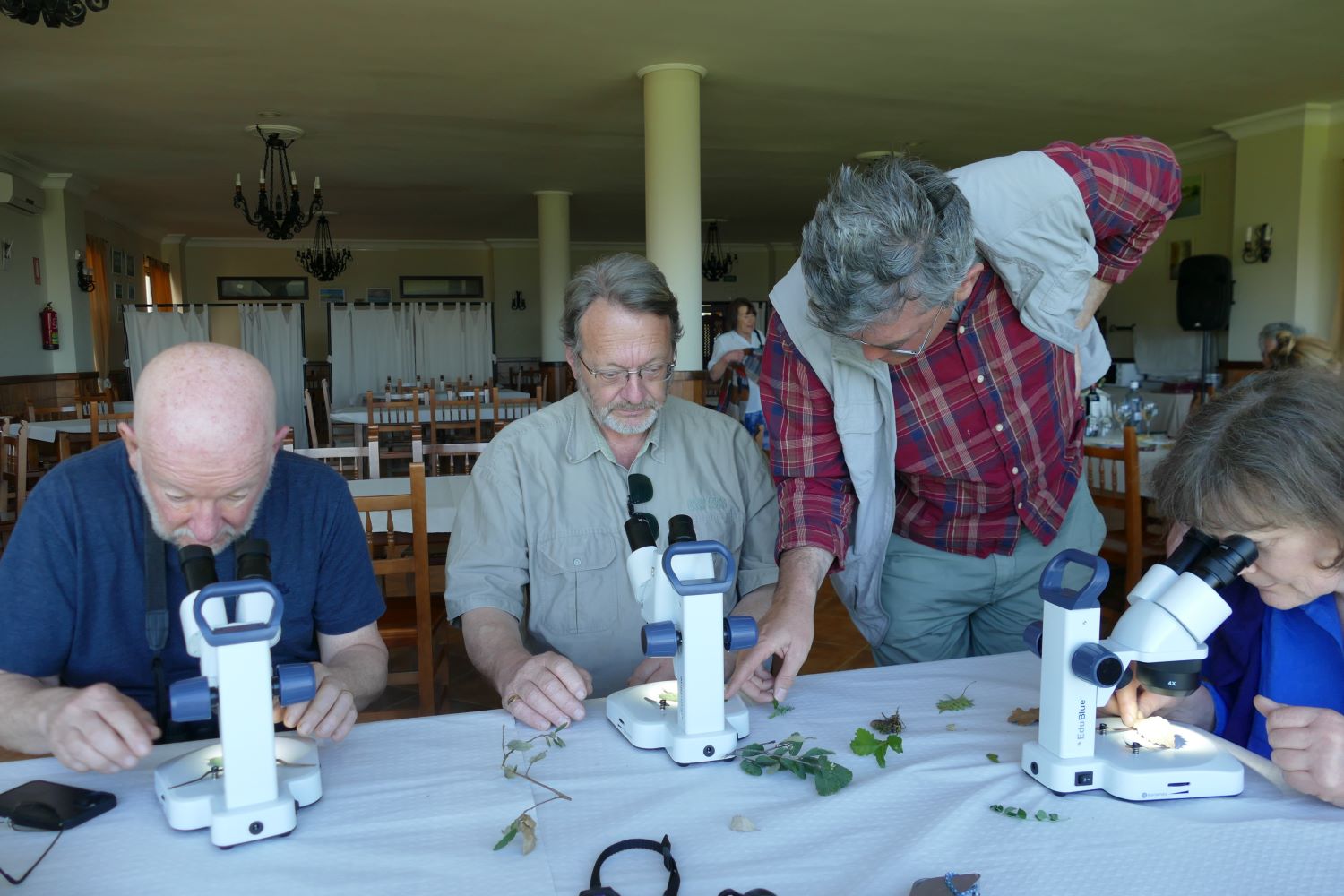
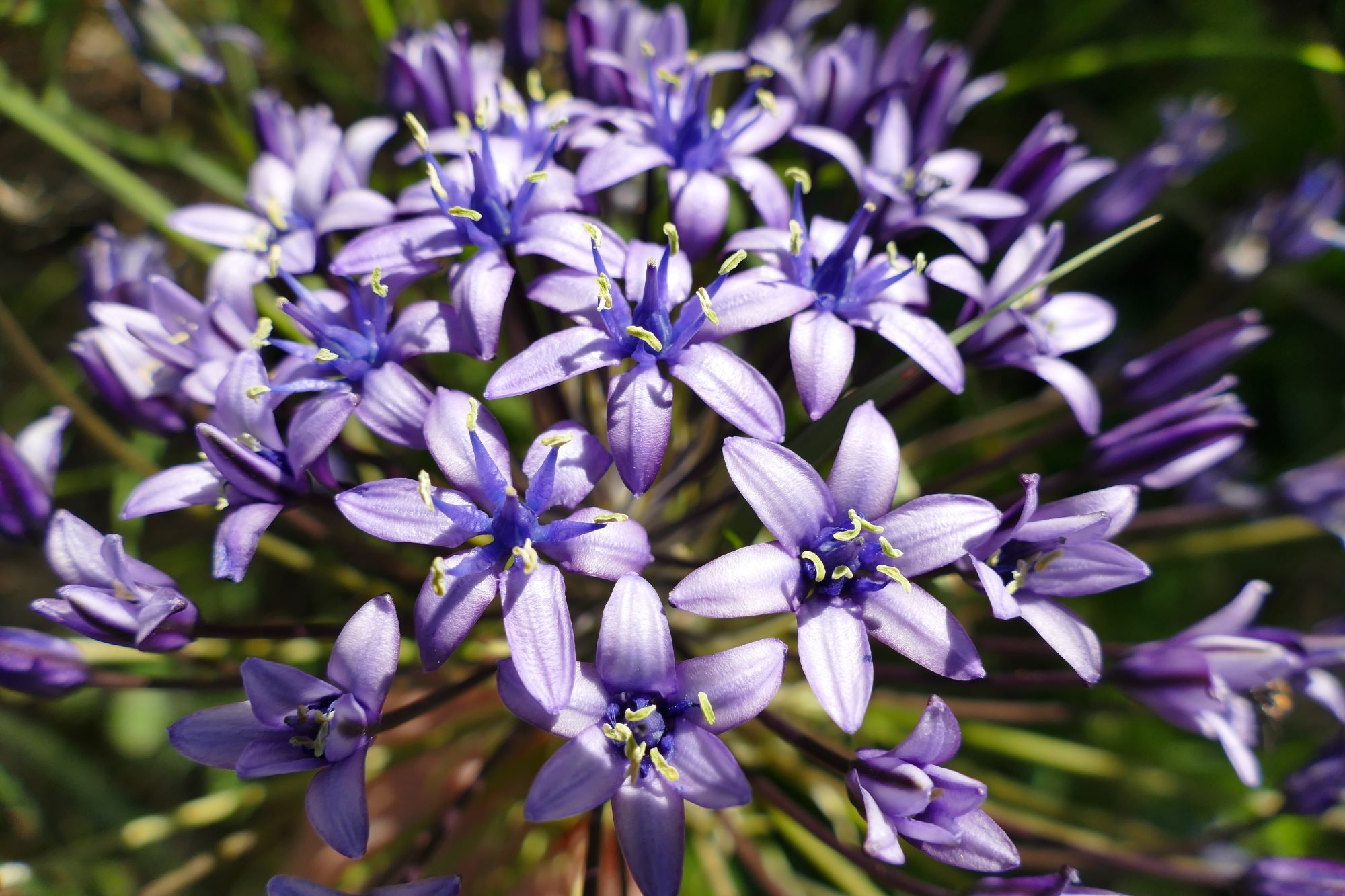
Next, we enter the Natural Park of Los Alcornocales, with its gigantic forest of cork oaks (Quercus suber) mixed with Andalusian gall oaks (Q. canariensis). This species and Q. faginea are often difficult to separate… but the young leaves of Q. canariensis have floccose indumentation that soon falls off, a criterion visible in the field. Sandstones are also sedimentary rocks, like limestones, but of a totally different nature and pH… and the perfect substrate for calcium intolerant organisms like cork oaks. In La Sauceda, we find one of the most beautiful trails with public passage. The music of the stream, the shade of the oaks, flowers like the blue lupine (Lupinus angustifolius) or the giant hyacinth(Scilla peruviana) and the mild temperatures make the whole experience very pleasant.
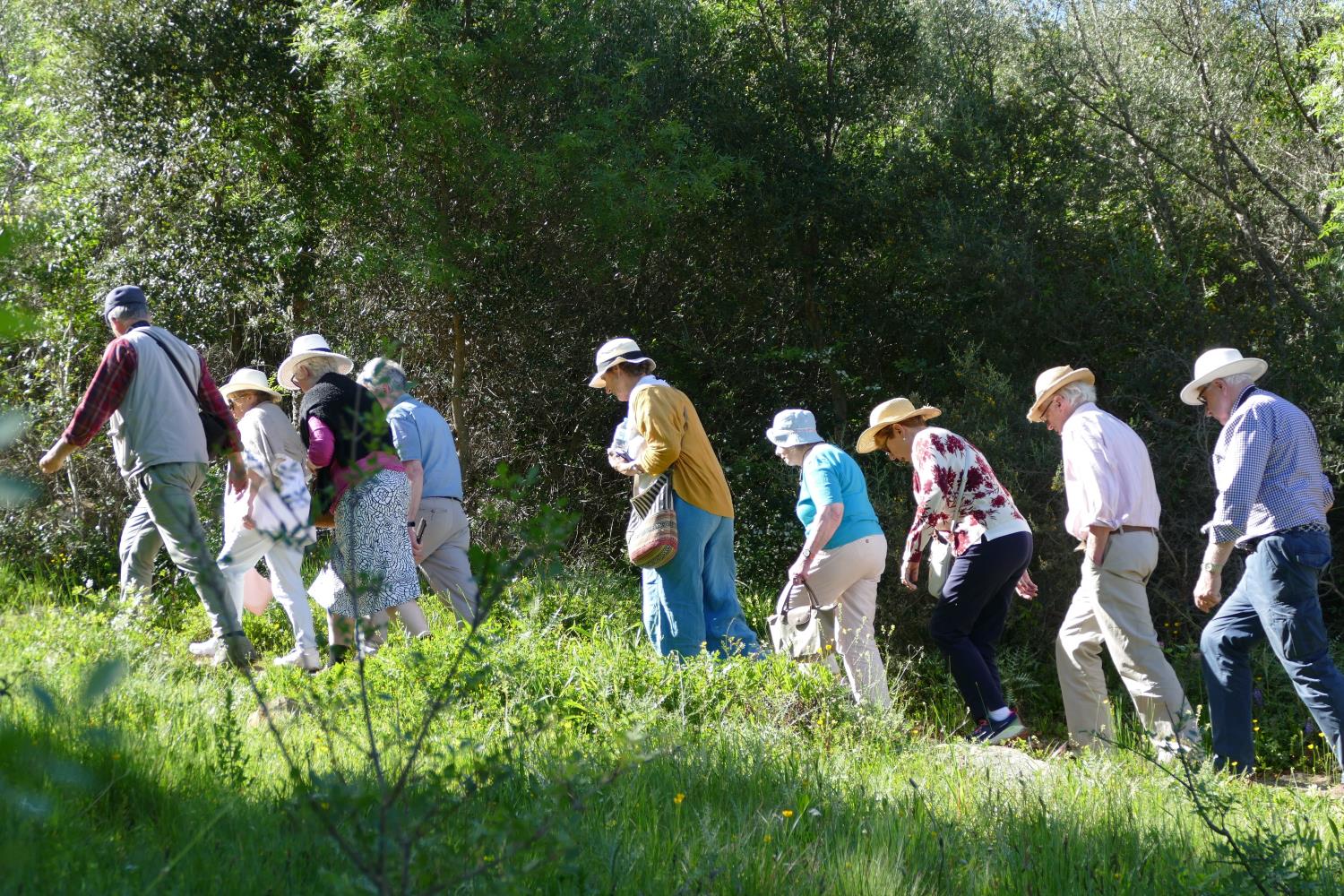
It’s time to say goodbye and wish you all a safe trip. I hope you enjoy your trip.
Special thanks to Harriet Landseer and Anne Alice Cases.
Leave a Reply