


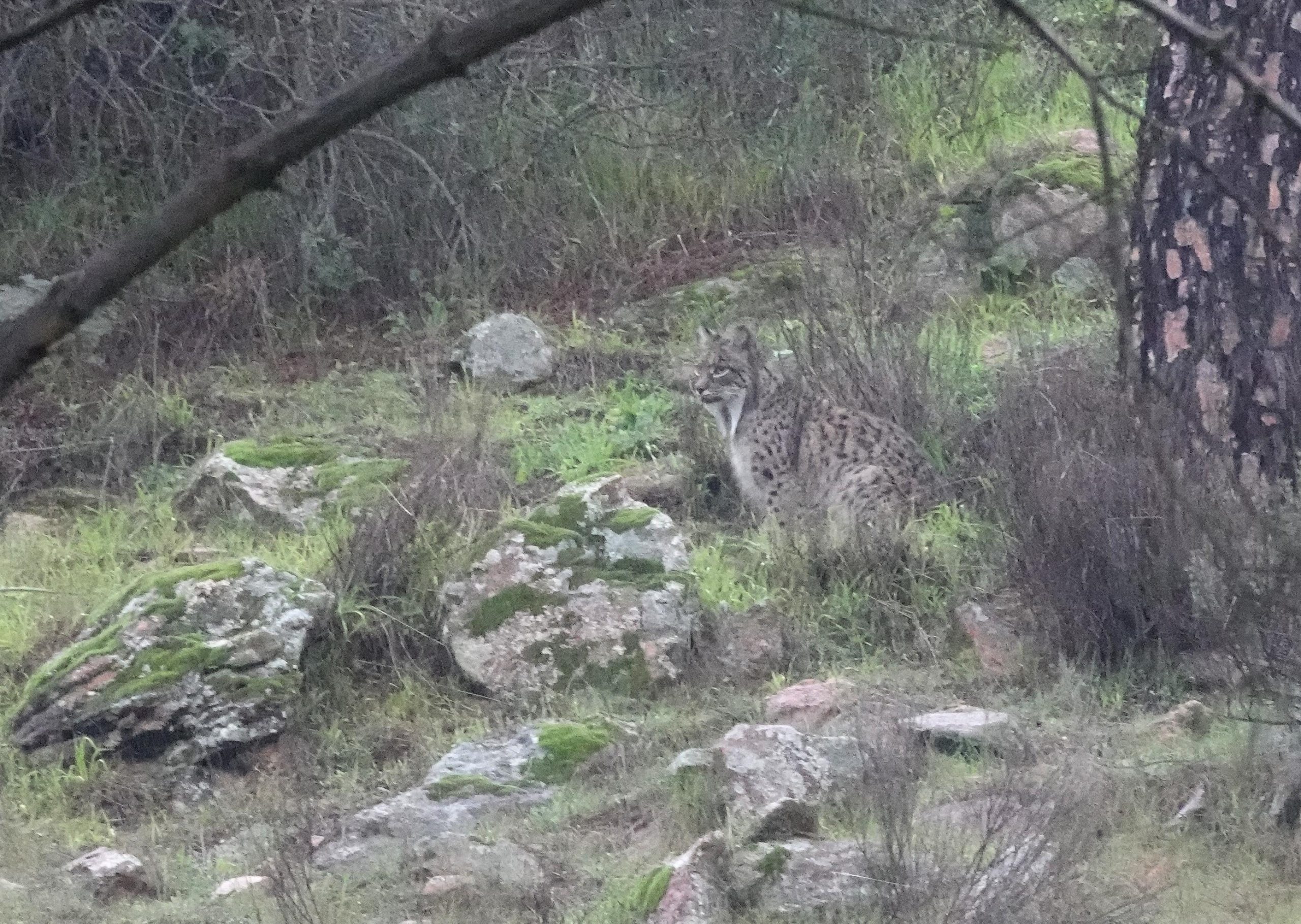
From January 5 to 15, 2023, we made a tour in Andalusia with Florent Prunier (G3-guides). The main objective was to see Iberian lynx, but also other wild animals such as birds and amphibians. It was a very pleasant and successful trip, largely thanks to the good attention and knowledge of our local guide.
A report by Roy van Grunsven, Dick Groenendijk and Tim Termaat.

Florent picked us up in Seville and took us to the hotel, but the city was chaotic because apparently they were celebrating the Epiphany of the Magi in the streets. After dinner, we went out to visit some temporary ponds where we found Triops mauritanicus and other large branchiopods and some nice amphibians like the Mediterranean tree frog. We spent the next two days in the south and east of Doñana, where we birded in different habitats and saw many fantastic species, from Balearic Shearwater, Yelkouan Shearwater and Audouin’s Gull over the sea to Little swift, Yelkouan Shearwater, Collared Pratincole and White headed Duck, along with many waders, flamingos, ducks and squids. On the way we again came across the festivities of the Three Wise Men, apparently something very important here.

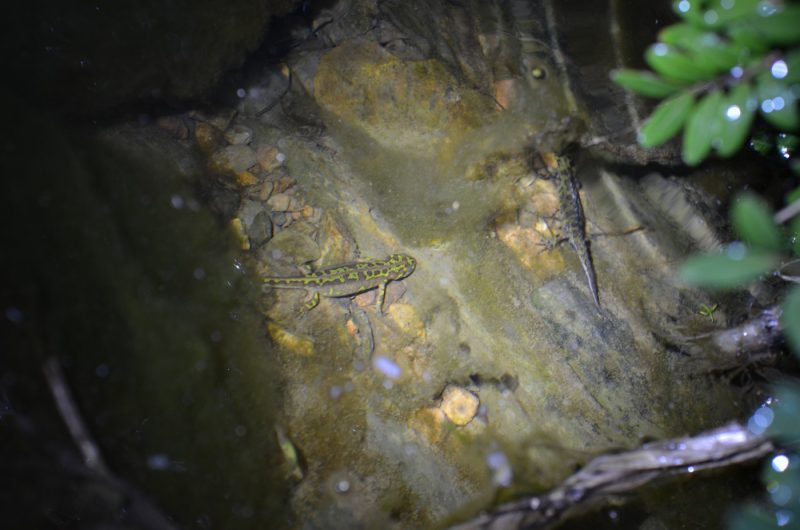
We left Doñana to go to Córdoba, where Florent showed us the subspecies of common salamander endemic to Sierra Morena, the marbled newt pygmy and the Iberian ribbed newt, along with different interesting animals such as giant centipedes and “strange” beetles (of which Florent was able to tell us the names).
We arrived in Sierra Morena in the afternoon, this area is known for its lynx population. At the first stop we already saw
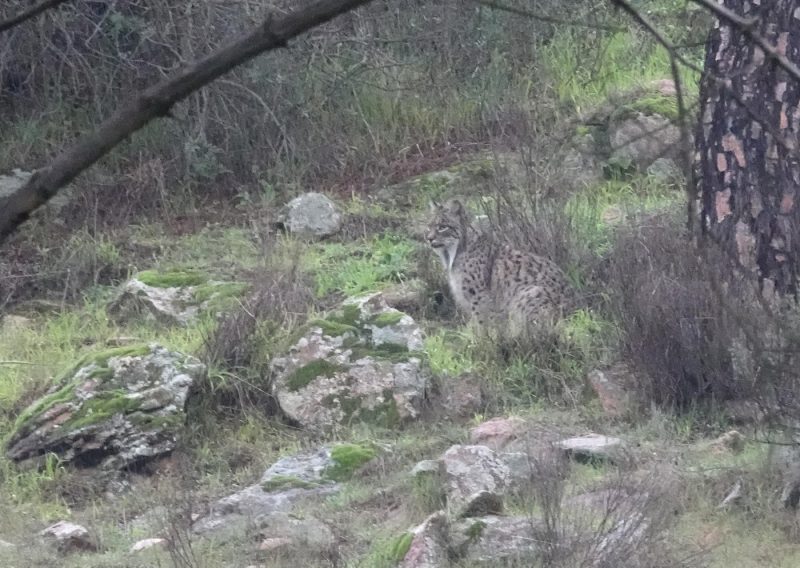
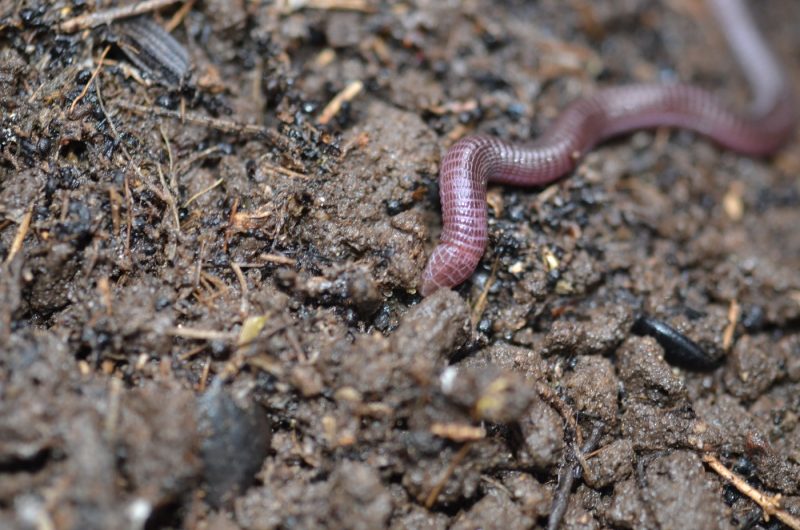
Besides the bobcats, there were many beautiful birds such as the aforementioned eagles, Black Vultures, Cinereous Vultures, Rock Bunting, Eurasian Skylarks, Red-legged Partridges and many others. Surprising was what we found when we turned some rocks in a place suggested by Florent. We found Bosca’s newt, Iberian worm lizard, scorpions (Buthus aff. ajax), giant centipedes and several other “creepy” crawlies. Before leaving Andújar there was one species still on the wish list, the elusive otter. Knowing where and at what time of day they were seen lately was well worth it, as we soon saw one swimming in the river.
Leaving Andújar we headed back towards Doñana with a great circuit. The first day this included the area around Osuna where we saw many Calandra Larks and Great Bustards, Fuente de Piedra with Greater Flamingo, lots of pretty ducks such as Mallards, a beautiful group of Great Bustards and a spectacular sighting of 1,766 Common Cranes (yes, we counted them). The next day was spent looking for small things near a stream with some nice dragonflies, grasshoppers and an Iberian smooth snake as some of the surprises. The day ended in the spectacular scenery of El Torcal among mountain goats, lone rock-thrushes and the shy black wheatears.
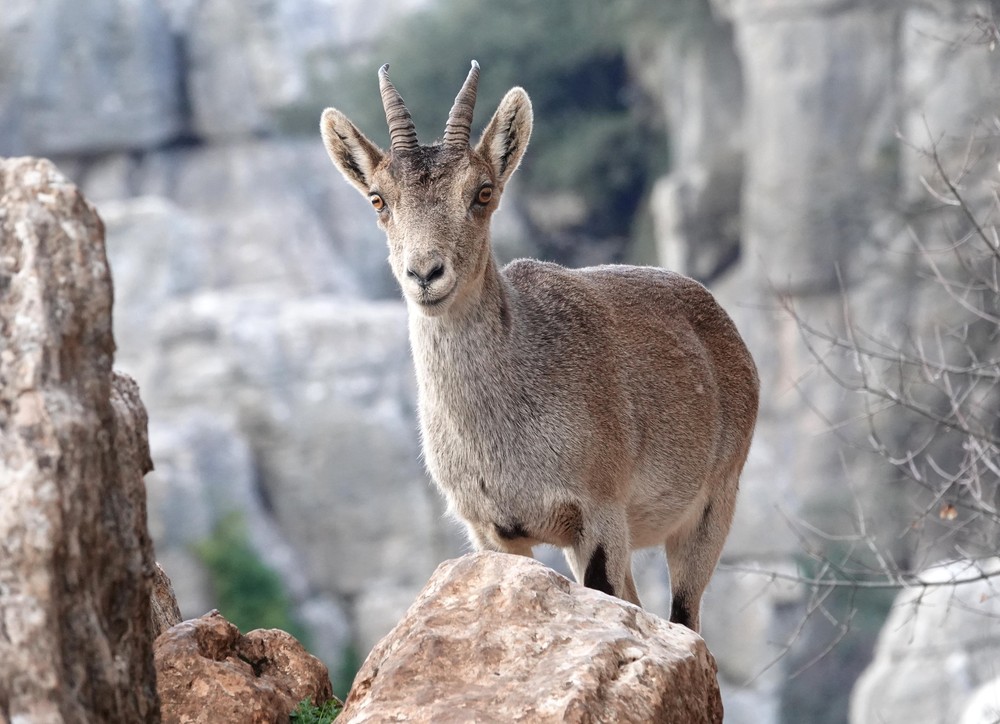
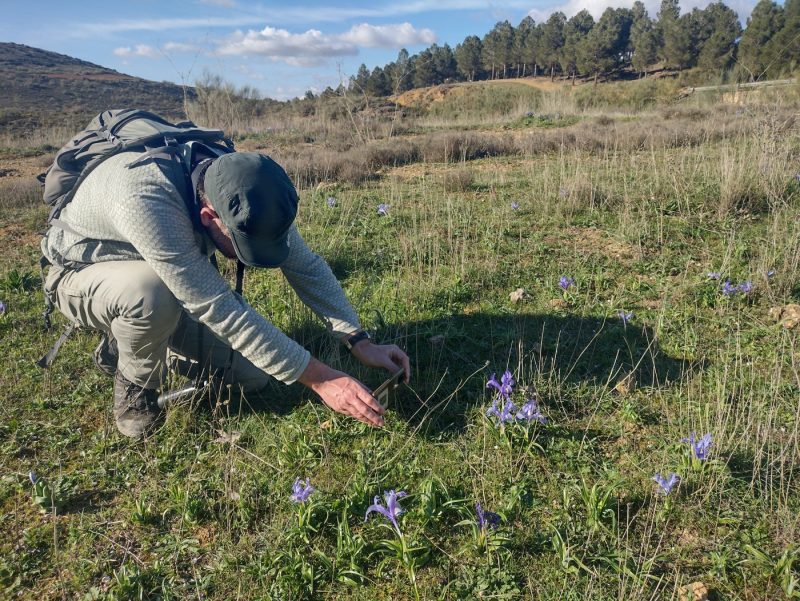
One of the great desires of one of us was to see Bonelli’s Eagle, for which Florent knew some good places in the Sierra de Grazalema. This area has rock formations with large groups of griffon vultures but also another (subspecies) of common salamander that we found along with a spotted toad. Here the Black Wheatears were less shy and we were able to see them very well along with many other species, such as the Black Ouzel and the Iberian Southern grey shrike to name just two. To our delight, the lilies are already in full bloom in the month of January in Andalusia. At the last stop overlooking a cliff an adult Bonelli’s Eagle finally appeared, a very impressive animal.
After a few more stops at lagoons, we returned to Doñana focusing on the western and northern part. Large numbers of waterbirds were seen, including some highlights such as a Caspian Tern, two Eurasian dotterels, a group of 92 Night Herons, but also two specialties of Doñana, the Marbled Teal and a Red-knobbed Coot hidden among the large numbers of Common Coots.

Finally we watched the sunset at the beautiful Charco de la Boca in El Rocio, a classic site where we enjoyed watching numerous species of birds in the evening light, before returning to our cabin for a final evening of good food and wine and preparing our luggage for the flight home.
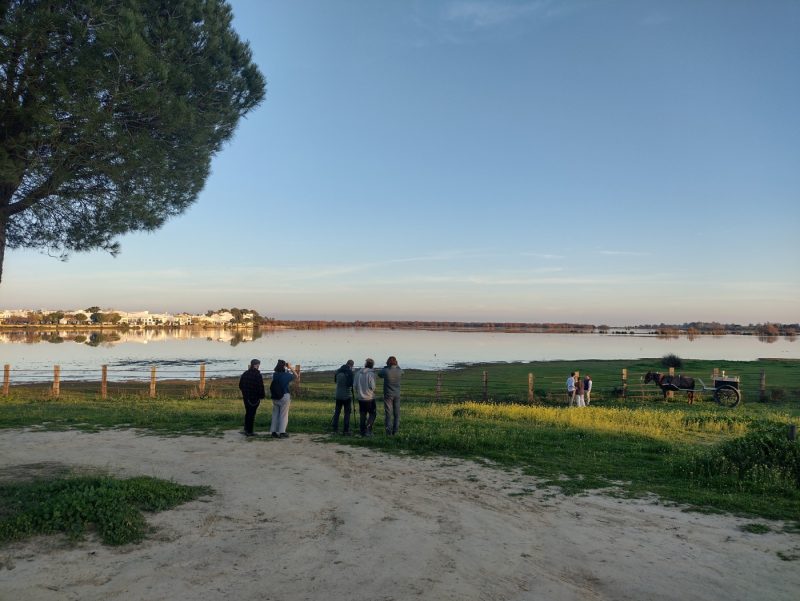
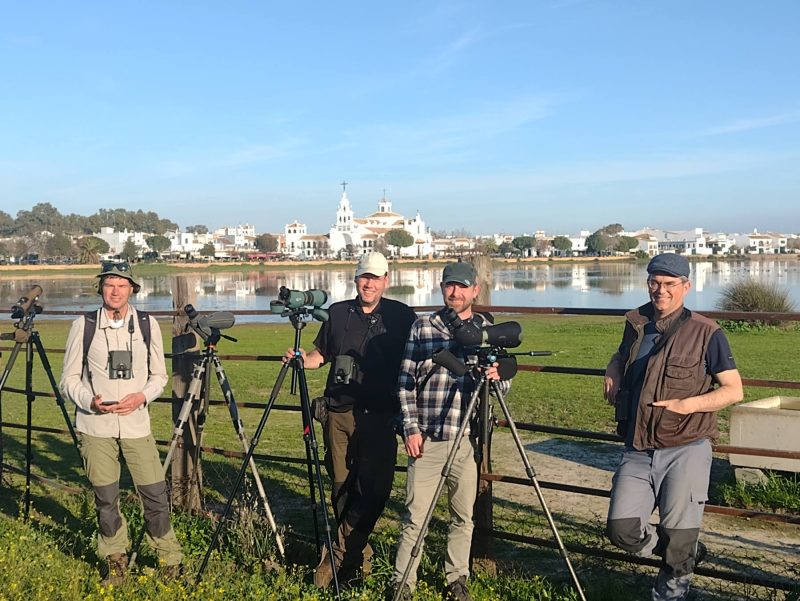
Overall, it was a fantastic trip, with 172 species of birds (in winter!), many hard-to-find amphibians, strange branchiopods and some nice mammals, including impressive sightings of the iconic Iberian lynx. We had not prepared much, as Florent had organized everything, including transportation, accommodation and made sure we had a good meal three times a day. It is true that you can find a lot of information about where to bird in Andalusia on the Internet, but this is much more difficult for other groups, such as amphibians. Also, you come across interesting things like giant centipedes, strange grasshoppers or a nice flower and Florent knows [most of the time]. This makes it much more interesting. Maybe even more important: we had a great and relaxed time, enjoying the beautiful Andalusian nature, as a group of four friends.
More photographs from this trip are available on Dick’s observers page at Observation.org.

Leave a Reply