


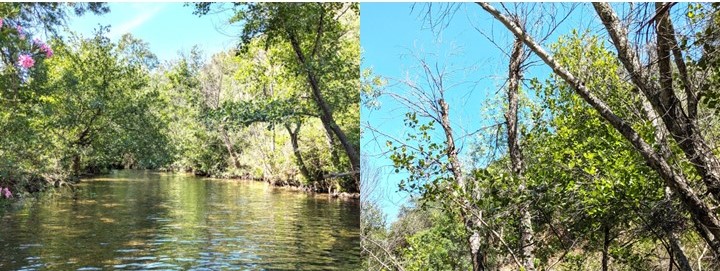
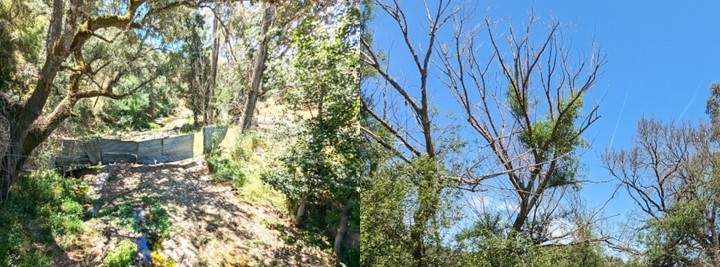
Recently I had the very unpleasant surprise of discovering many dead trees along the small rivers of northern Andalusia, a situation caused by a prolonged drought. I am afraid that we are witnessing the disappearance of the Mediterranean alder riparian forests in Sierra Morena.

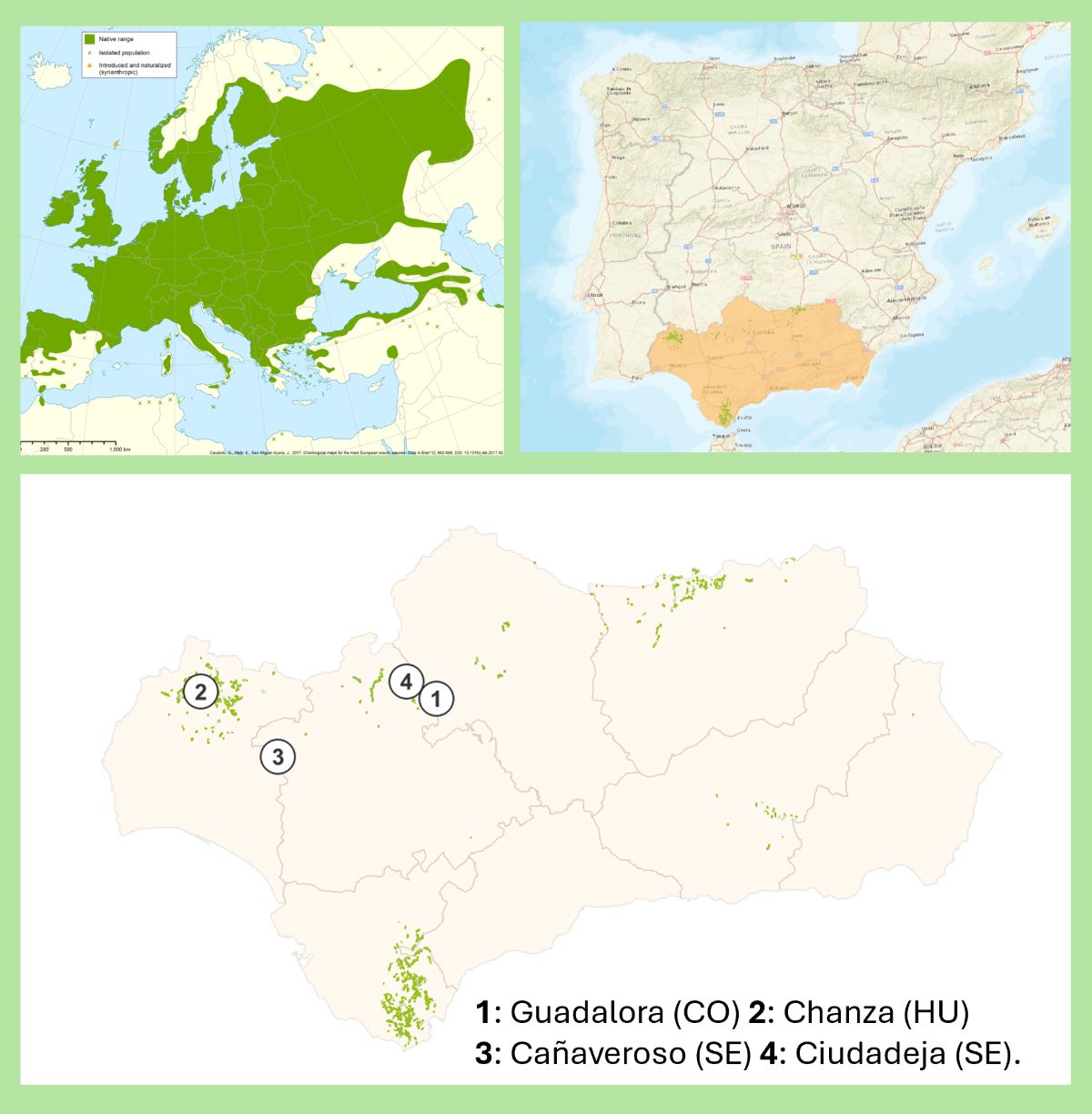
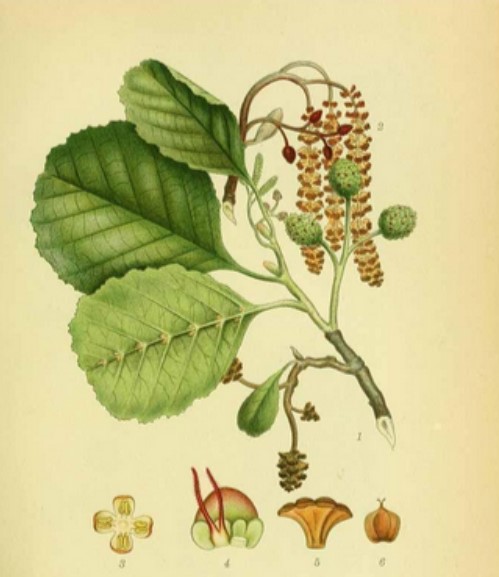
Black alder(Alnus glutinosa), a deciduous tree of the Family Betulaceae, thrives in moist soils due to its very high water requirements. The species is distributed throughout most of Europe, Asia and northwestern Africa (Figure 1). Common in northwestern Spain, alders disappear in drier areas, towards the east and southeast … In short, this plant is a sort of “oddball” in the Mediterranean region.
In Andalusia, and more specifically in Sierra Morena, the alder forests represent the mature vegetation of permanent rivers and streams.
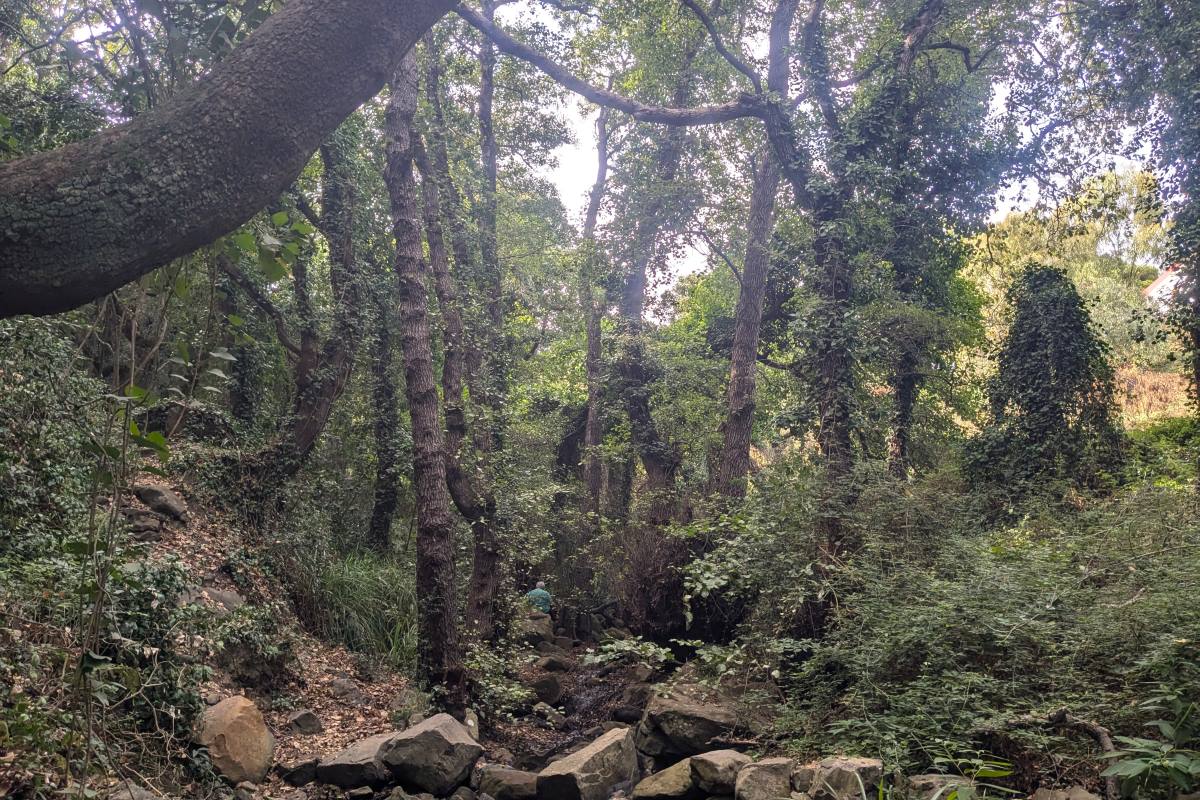
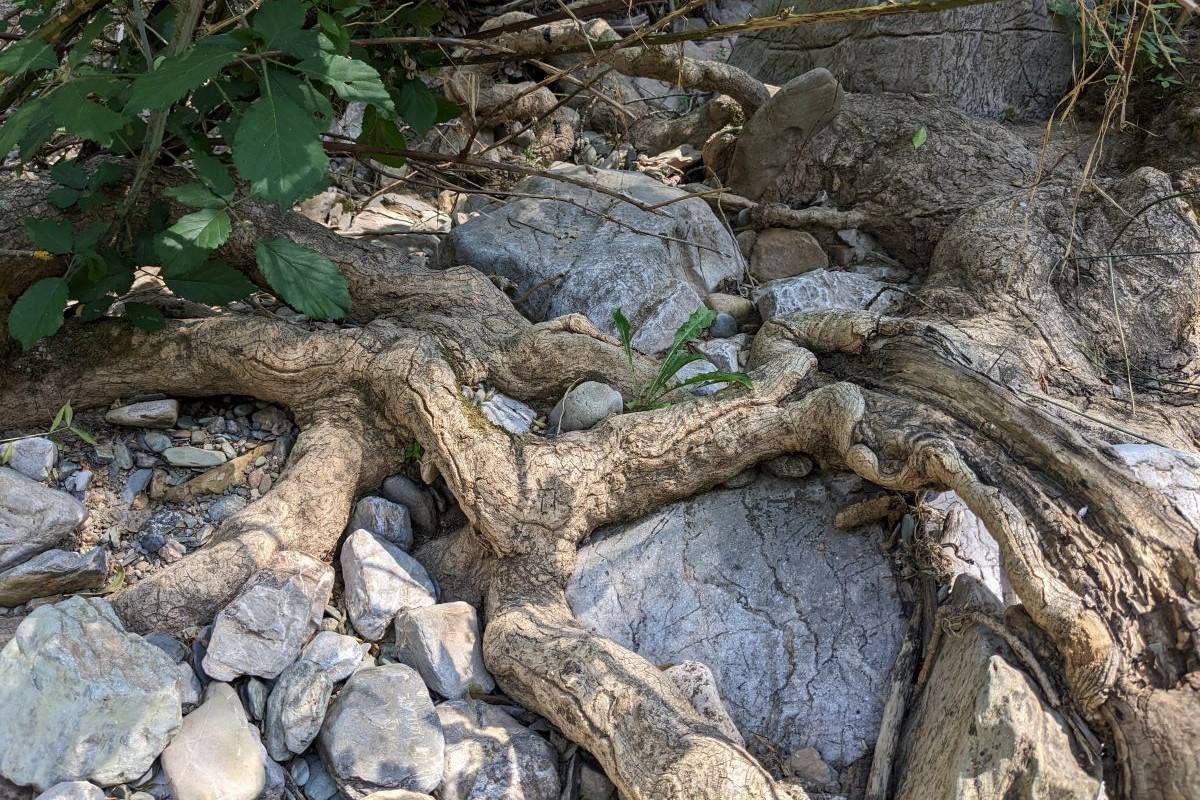
The alluvial allisilvae generally develop in high and medium permanent watercourses on siliceous substrate. These generally “closed” and shaded ripisilvas, especially in narrow rivers, offer a very different aspect from those more typical of the Mediterranean region. As expected, these high heritage value landscapes are rich in rare species. Root hair grows in the water column and provides a microhabitat for insects.
Fig. 1a. Distribution of the Genus Alnus Mill., 1754 in Europe (Caudullo et al. 2017).
Fig. 1b. Location of Andalusia.
Fig. 1c. Mediterranean alder groves in Andalusia, habitat 91E0* (REDIAM).
New!!! Martin et al. (2024) have just published that alder populations south of the Ebro belong to the tetraploid endemic species Alnus lusitanica Vit, Douda and Mandák 2017.
Mediterranean alder riparian forests are relictual in Andalusia and recognized as endangered by the European Habitat Directive (code 91E0*). I recently visited riparian forests at several points in the western part of Sierra Morena.
- Guadalora River (province of Cordoue)
- Chanza River (Huelva)
- Canaveroso River (Séville)
- Rivera de Ciudadeja (Séville)
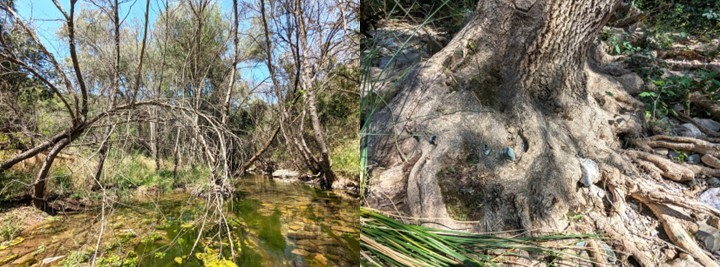
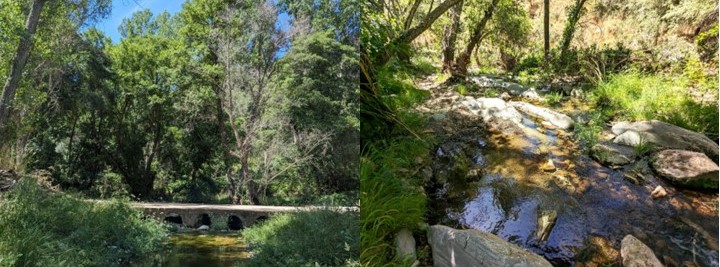
The Guadalora River, one of Spain’s 289 River Nature Reserves, is probably the most beautiful riparian forest in the province of Cordoba. Clearly something was wrong at the time of my visit, although the water was crystal clear, there were no fish, no benthic invertebrates, very few dragonflies flying…. A later call confirmed that the river was dry for two long years (2022, 2023). At the Algeciras Bridge I found some dead alders, the bases of the trunks of several specimens clearly dry, … but also willows(Salix), elms(Elm) and ash(Fraxinus) with numerous dry lower branches (!). The hackberry trees(Celtis australis) were fine, but this plant, rare in nature and planted in the city, does not belong to the ripisilva as such.
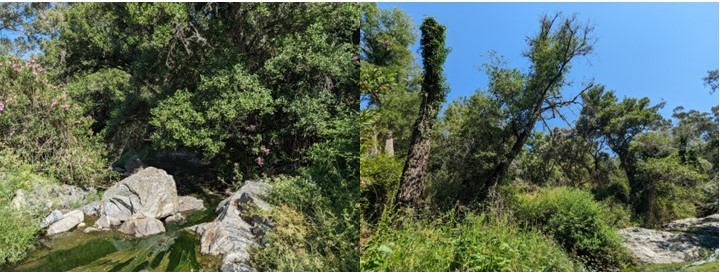
Later, a long journey westward took me to the province of Huelva. This area receives more Atlantic rainfall than the central and eastern Sierra Morena, and hosts a high density of alder forests (Figure 2).
My visit to the Chanza River confirmed to me that alder mortality was not a local problem….
Once again dead alders were seen here and there. The most striking feature in the creek was the abundance of striking green filamentous algae. Of course, they are favored by the sun and would not thrive in the shade of a well-maintained riparian forest.
My journey continued until I reached the rather isolated and little known Arroyo Cañaveroso, not far from the city of Seville. In June the water flow of the river was already low. The impact of the drought was marginally noticeable on the vegetation. An otter was swimming peacefully along a very shallow transparent pool. What a beauty.
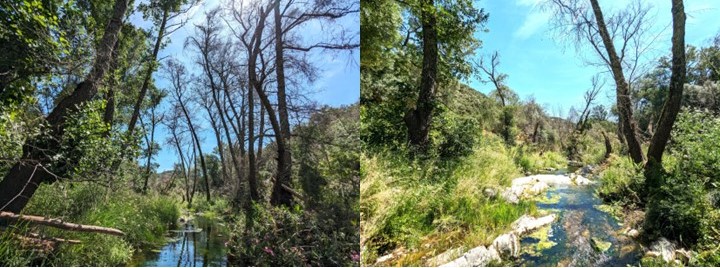
Also heavily impacted is the Rivera de Ciudadeja, located in the province of Seville, near Las Navas de la Concepción. The upper part was dry and there were even some dead (!) ash trees. Downstream, along the road to the mills, many alders have already disappeared, even some white poplars(Populus alba) are affected by the prolonged drought. Small relict patches of alders still remain, but soon large gaps in the canopy remind us of the loss of the riparian forest.
This discovery is very worrying, but not surprising… Mediterranean alder forests were expected to be affected by global warming.
Of course, not all river sections were as affected as the Ciudadeja. But I think there is very little chance that the situation will improve. Heat waves are repeated every summer… High temperatures and low rainfall are a limiting factor for this species. The collapse of Lusitanian alder populations on the banks of Sierra Morena is probably the result of several interacting factors:
- Increased drought stress can have serious consequences, leading to weakened trees and reduced regeneration success.
- Modified hydrological regimes affect soil moisture levels, which are essential for alders to survive.
- Reduced demographic recruitment: drier conditions make it more difficult for seeds to germinate and establish seedlings.
Restoration of alder riparian forests in xeric climates will be very difficult, if possible at all. When present, the canopy creates shade that keeps both the microclimate and running water cool. How is it possible to recover those same conditions when the canopy disappears in an environment as hot as the Andalusian summer? I hope I am wrong but it seems to me that when a Mediterranean alder grove is lost, there are few ways to recover it until the next Little Ice Age…..
It is urgent to evaluate in detail the current situation of, let us remember, this priority habitat of the Directive.
Leave a Reply