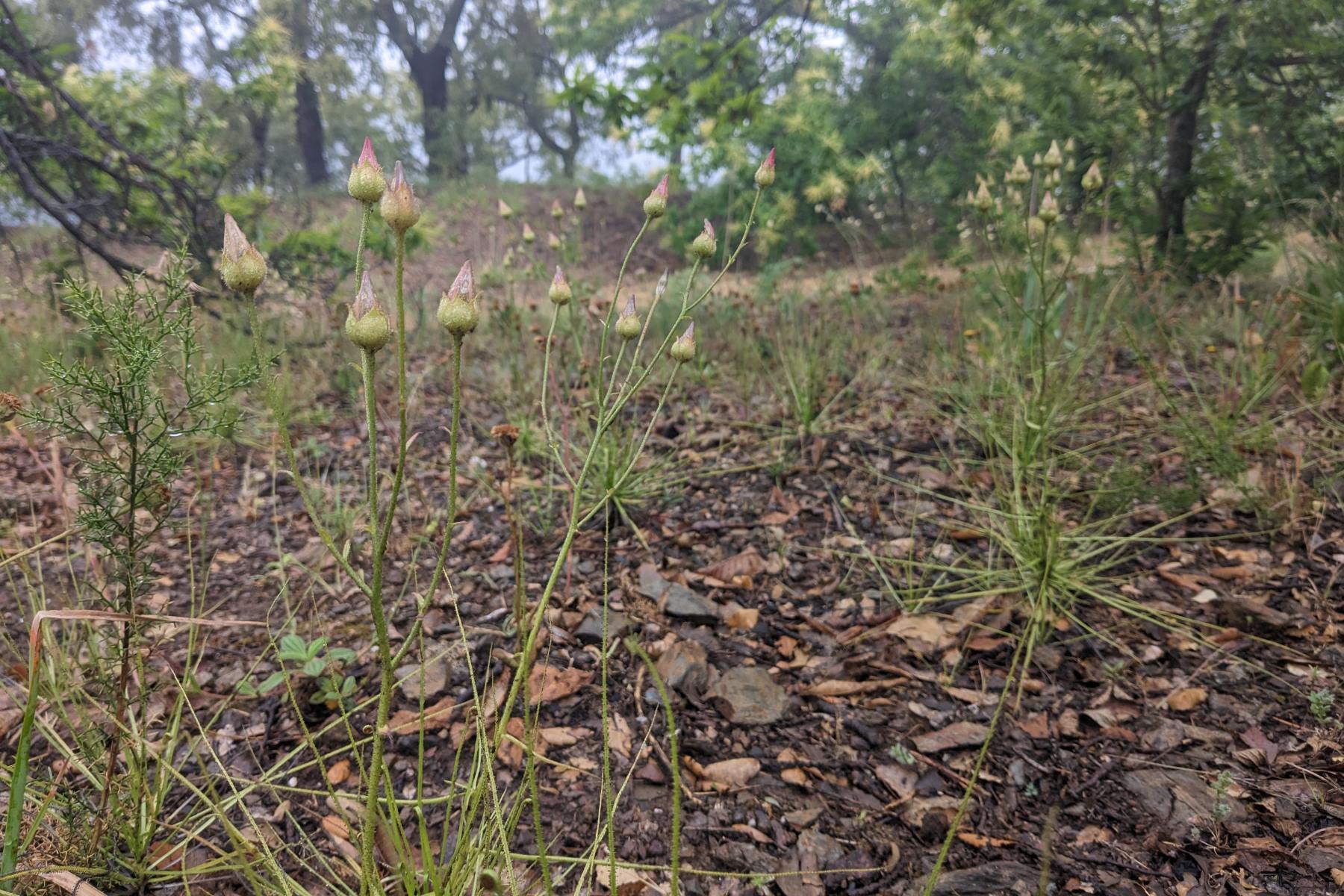
The Portuguese sundew, Drosophyllum lusitanicum
- A carnivorous plant
- Grows in the Mediterranean bush
- Localized Iberian-Magrebi endemism.

Gaucín / Ronda / Estepona

Winter / Spring

Half day of observation

Private groups
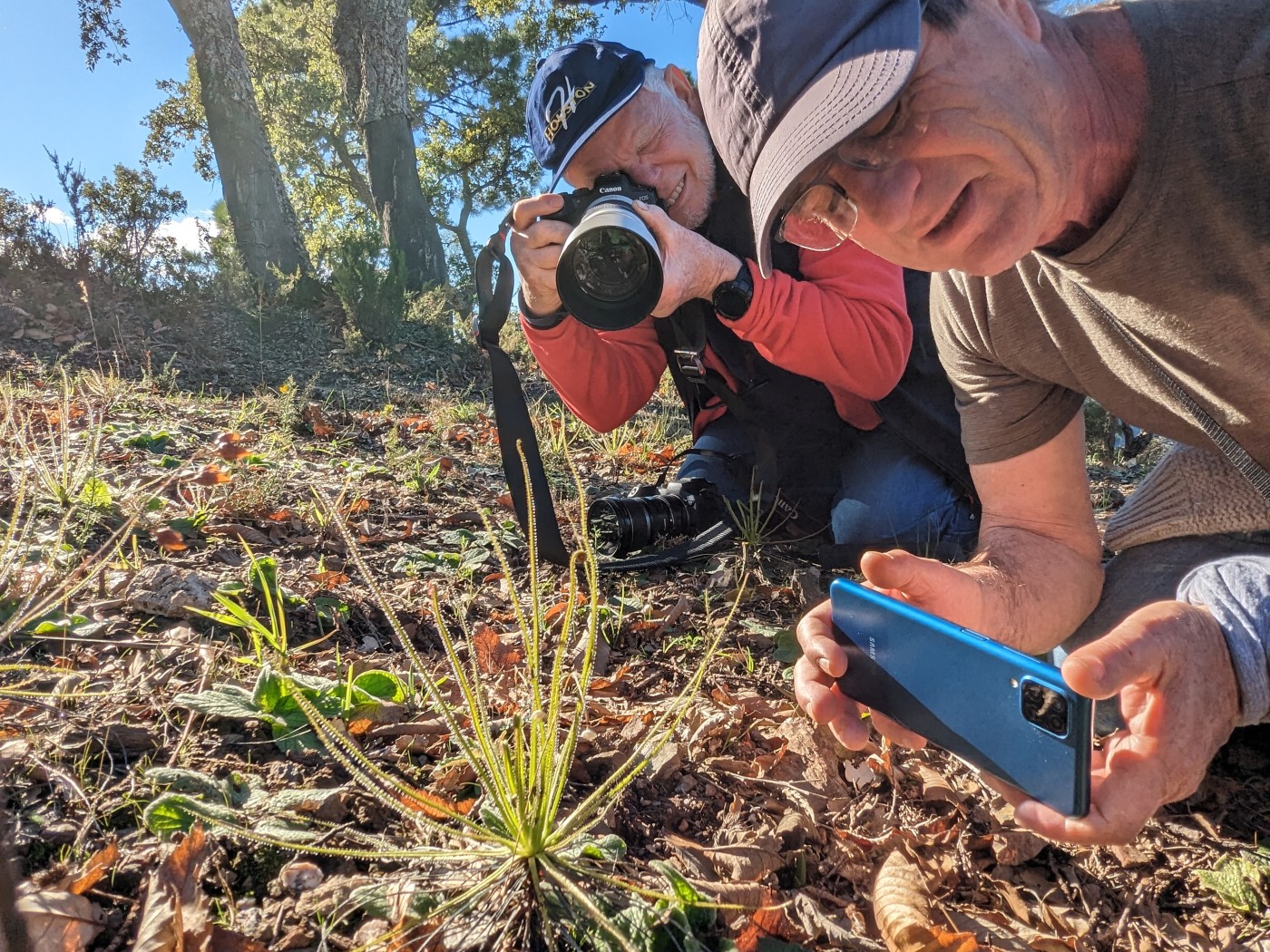
An even more different carnivorous plant
Carnivorous plants arouse great interest as a botanical curiosity. Their ability to feed on animal prey reverses the expected natural roles and provides a macabre component that is fascinating. Also surprising are the morphological adaptations of their leaves in prey capture mechanisms, such as suction traps, sticky leaves or urns.
Carnivorous plants in Spain
In Spain, we can find up to 18 carnivorous plants: the genera Drosera (dew of the sun), Pinguicula (tirañas or grasillas) and Utricularia (lentibularias). They developed their surprising morphologies to colonize very poor ecosystems in nutrients, in cold and mountain climate zones, on wet peaty soils and even oligotrophic waters.
Drosophyllum lusitanicum
The last species is an exception: the Portuguese sundew (Drosophyllum lusitanicum) grows, unlike the others, in dry soils typical of the Mediterranean climate. In fact, this carnivorous plant is unique, with only one species within its botanical genus; endemic to the southwest of the Iberian Peninsula and northwest Africa and localized in few populations.
A very unique morphology
Plant with extensive leaves covered with red glandular hairs, secreting viscous and aromatic mucilaginous droplets that irresistibly attract insects, turning this plant into a living trap of spectacular appearance. The flowers are yellow or greenish, with five petals, and in height to attract, this time, pollinating insects.
Adaptations to fire
It grows in dry, sandy or rocky soils, poor in nutrients, preferring acid soils (it does not tolerate calcareous soils). It is found in the Mediterranean scrub (pine forests, chestnut groves, thickets) in open areas, often degraded. The flycatcher is favored by fire, as it colonizes the clearings in burned areas, very poor in nutrients.

Private tour Drosophyllum, the Mediterranean carnivorous plant
Tour variants and options
It combines perfectly with a hiking route or an ecotourism tour in the Genal Valley and Sierra Bermeja.
Additional information

The “plus”. The visit of Genalguacil, the museum village.
Includes
- Specialized professional guide
- High-end telescopes
- High-end binoculars
- List of potential species
- Door-to-door passenger pickup/destination
- Accident insurance