


Bastion of Iberian lynx. Kingdom of the wild rabbits and their cohort of predators (furry and feathered).
- 74 species of mammals
- Iberian lynx
- Abundance of large herbivores
- 5 Iberian endemisms
- Great morphological diversity


Mammals are generally inconspicuous vertebrates and very difficult to observe. They have in common their constant body temperature, being covered with hair, being viviparous and feeding their young with milk. They are the most diverse class of animals in the world.
Andalusia is home to a great diversity of mammals, both solitary and colonial. Think of flying bats, sea-dwelling cetaceans, grass-eating lagomorphs and their carnivorous predators. The Fin whale (Balaenoptera physalus), the world’s second largest mammal, migrates through the Strait of Gibraltar, along with another giant of the seas. At the other extreme, one of the smallest species present in the area is the Etruscan shrew (Suncus etruscus) well distributed in the Iberian Peninsula.


Mammals of Andalusia
Cetaceans, lords of the sea

It is difficult to observe live mammals in their habitat, both in Andalusia and in Europe. Paradoxically, the easiest group to observe is also generally the most inaccessible: the cetaceans of the Strait of Gibraltar, with seven species present, which can be observed on specialized boat excursions.
Wild rabbit, keystone species for carnivores

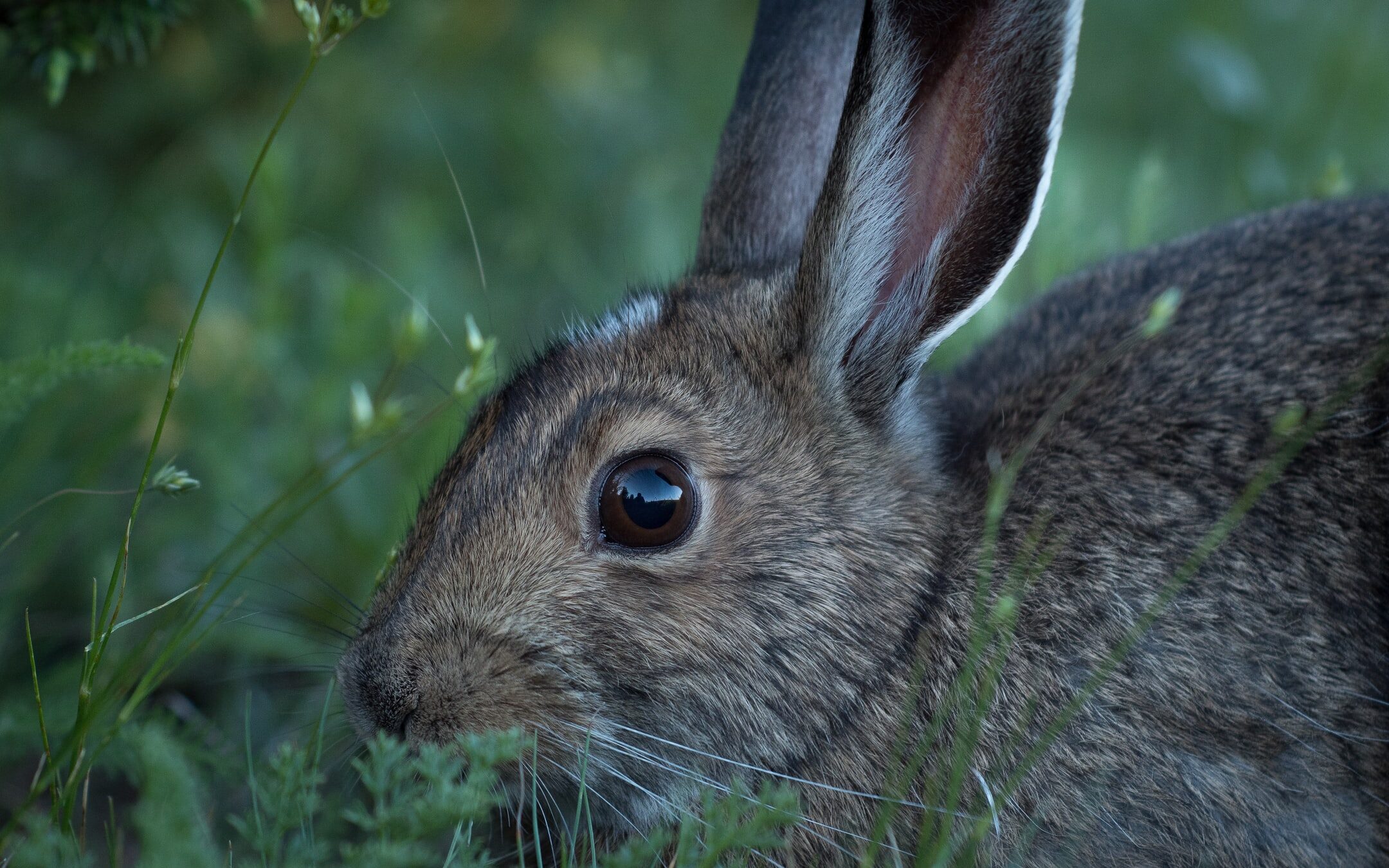
Let’s mention the Iberian mammal par excellence: the wild rabbit (Oryctolagus cuniculus), a lagomorph native to the peninsula and later exported all over the world, and whose name in Phoenician formed the term Hispania, the land of rabbits. It is a herbivorous species that generally lives in colonies and is the main prey of the most emblematic Iberian predators, birds of prey and carnivorous mammals, starting with the most famous of them, the Iberian lynx (Lynx pardinus), a real specialist whose populations depend on the density of this lagomorph.

The Iberian lynx, on the verge of extinction, considered for years as the most endangered feline in the world, is the subject of an ambitious conservation project, which has stopped the massacre, stabilized the populations of its last refuges in Sierra Morena and Doñana and a re-introduction program has also been initiated. The lynx is the symbol of nature conservation in Spain and it is possible to observe the species in its natural environment.
As for another emblematic mammal, the Iberian Grey Wolf (Canis lupus), the latest news is not comforting and it seems that the species has disappeared from Andalusia. Fortunately there are still large populations in Spain, located in the northwest of the Iberian Peninsula. Another remarkable carnivore is the otter (Lutra lutra), a species increasingly widespread and easy to observe in the field.
Large herbivores in the sierras

Throughout the entire Betic Mountain Range, it is common to observe ibex (Capra pyrenaica) in the wild, which can be considered another emblematic mammal of Andalusia.
The deer (Cervus elaphus) and the wild boar (Sus scrofa) are abundant in the forests of Andalusia. With the first autumn rains, the bellowing of the deer marks the prelude to mating. Known as “la berrea”, this spectacle of nature, easily observable in a respectful way with the environment and the fauna, leaves no one indifferent.
Restricted mammals in Europe
More than thirty species of bats inhabit the Iberian Peninsula. One of the rarest in Europe is the big cockatoo (Nyctalus lasiopterus), which has populations in southern Andalusia.
Finally, let us not forget the Barbary macaques (Macaca sylvanus), introduced in Gibraltar and the only European primate in the wild (about 300 individuals). This species is increasingly localized in its original range in North Africa.
Mammals: List of species present in Andalucía
| # | GROUP | FAMILY | SPECIES1 | COMMON NAME | ID. | DISTRIBUTION | HABITAT2 | RARITY3 |
| 1 | Cetaceans | Baleanopteridae | Balaenoptera physalus | Fin whale | Evidente | Cosmopolitan | Sea | |
| 2 | – | Delphinidae | Delphinus delphis | Common dolphin | Easy | Cosmopolitan | Sea | |
| 3 | – | Delphinidae | Globicephala melas | Long-finned pilot whale | Evidente | Cosmopolitan | Sea | |
| 4 | – | Delphinidae | Grampus griseus | Risso’s dolphin | Easy | Cosmopolitan | Sea | R |
| 5 | – | Delphinidae | Killer whale Killer whale | Killer whale | Evidente | Cosmopolitan | Sea | |
| 6 | – | Delphinidae | Stenella coeruleoalba | Striped dolphin | Easy | Cosmopolitan | Sea | |
| 7 | – | Delphinidae | Tursiops truncatus | Common bottlenose dolphin | Easy | Cosmopolitan | Sea | |
| 8 | – | Phocaenidae | Phocoena phocoena | Harbour porpoise | Easy | Northern hemisphere | Sea | R |
| 9 | – | Physeteridae | Physeter catodon | Sperm whale | Evidente | Cosmopolitan | Sea | |
| 10 | Ungulates | Bovidae | Ammotragus lervia | Arruí | Easy | North Africa, Sahara | Mount | EXÓ |
| 11 | – | Bovidae | Capra pyrenaica hispanica ** | Spanish Ibex ** | Evidente | Iberia | Rocks | |
| 12 | – | Bovidae | Ovis aries | Moufflon | Evidente | Corsica, Armenia | Mount | EXÓ |
| 13 | – | Capreolidae | Capreolus capreolus | Roe deer | Evidente | Europa | Mount | R |
| 14 | – | Cervidae | Cervus elaphus | Red deer | Evidente | Palearctic | Mount | |
| 15 | – | Cervidae | Lady lady | Fallow deer | Evidente | Asia Minor, Europe | Mount | HIST |
| 16 | – | Suidae | Sus scrofa | Wild boar | Evidente | W Palearctic | Mount | |
| 17 | Carnivores | Canidae | Canis lupus | Grey Wolf | Difícil | Northern hemisphere | Mount | EXT |
| 18 | – | Canidae | Vulpes vulpes | Red fox | Evidente | Northern Hemisphere, Australia | Mount | |
| 19 | – | Felidae | Felis silvestris | European wildcat | Difícil | Europa | Mount | RR |
| 20 | – | Felidae | Lynx pardinus ** | Iberian lynx ** | Evidente | Iberia | Mount | R |
| 21 | – | Herpestidae | Herpestes ichneumon | Egyptian mongoose | Evidente | Africa, Iberia, Levant | Mount | HIST |
| 22 | – | Muestelidae | Lutra lutra | Otter | Evidente | Palearctic | Rivers | |
| 23 | – | Muestelidae | Tuesday foina | Beech marten | Evidente | Europa | Mount | |
| 24 | – | Muestelidae | Meles meles | Eurasian badger | Evidente | W Palearctic | Mount | |
| 25 | – | Muestelidae | Mustela nivalis | Weasel | Evidente | Palearctic | Mount | |
| 26 | – | Muestelidae | Mustela putorius | Polecat | Easy | Europa | Mount | R |
| 27 | – | Phocidae | Monachus monachus | Mediterranean Monk Seal | Evidente | Mediterranean, North Africa | Sea | EXT |
| 28 | – | Viverridae | Genetta genetta | Small-spotted genet | Evidente | Africa, Iberia, France | Mount | HIST |
| 29 | Insectivores | Erinaceidae | Atelerix algirus | Algerian hedgehog | Difícil | Spanish Mediterranean coast; North Africa | Mount | HIST / R |
| 30 | – | Erinaceidae | Erinaceus europaeus | Western hedgehog | Difícil | Europa | Mount | |
| 31 | – | Soricidae | Crocidura russula | Greater white-toothed shrew | Difícil | Europe, North Africa | Mount | |
| 32 | – | Soricidae | Crocidura suaveolens | Lesser White-toothed shrew | Difícil | Palearctic | Wet pastures | |
| 33 | – | Soricidae | Neomys anomalus | Miller’s water shrew | Difícil | Palearctic | Wet pastures | RR |
| 34 | – | Soricidae | Suncus etruscus | Pygmy white-toothed shrew | Difícil | S Palearctic | Mount | |
| 35 | – | Soricidae | Talpa occidentalis ** | Iberian mole ** | Evidente | Iberia | Mount | R |
| 36 | Lagomorphs | Leporidae | Lepus granatensis ** | Iberian hare ** | Easy | Iberia | Crops | |
| 37 | – | Leporidae | Oryctolagus cuniculus | Wild rabbit | Easy | Cosmopolitan; originally Iberia | Mount | |
| 38 | Rodents | Muridae | Apodemus sylvaticus | Wood mouse | Difícil | Europe, Asia Minor and North Africa | Mount | |
| 39 | – | Muridae | Arvicola sapidus | Southern water vole | Delicate | Iberia, Francia | Wet pastures | R |
| 40 | – | Muridae | Chionomys nivalis | Snow vole | Difícil | Europe, Asia Minor | Rocks | RR |
| 41 | – | Muridae | Microtus cabrerae ** | Cabrera vole ** | Difícil | Iberia | Pastures | RR |
| 42 | – | Muridae | Microtus duodecimcostatus | Mediterranean pine vole | Difícil | Iberia, S France | Crops | |
| 43 | – | Muridae | Mus musculus | House mouse | Difícil | Cosmopolitan | Urban | |
| 44 | – | Muridae | Mus spretus | Algerian mouse | Difícil | Circum-Mediterranean | Mount | |
| 45 | – | Muridae | Rattus novergicus | Brown rat | Difícil | Cosmopolitan | Urban | |
| 46 | – | Muridae | Rattus rattus | Black rat | Difícil | Cosmopolitan | Mount | |
| 47 | – | Myoxidae | Eliomys quercinus | Garden dormouse | Evidente | Europa | Mount | |
| 48 | – | Sciuridae | Sciurus vulgaris | Red squirrel | Evidente | Palearctic | Forests | |
| 49 | Primates | Cercopithecidae | Macaca sylvanus | Barbary Mona | Evidente | Introduced in Gibraltar; Maghreb | Urban | |
| 50 | Bats | Miniopteridae | Miniopterus schreibersi | Schreibers ́ bat | Difícil | Europe, Africa, Asia, Australia | Cave shelter | R |
| 51 | – | Molosidae | Tadarida teniotis | European free-tailed bat | Difícil | S Palearctic | Generalista | R |
| 52 | – | Rhinolophidae | Rhinolophus euryale | Mediterranean horseshoe bat | Difícil | SW Palearctic | Cave shelter | R |
| 53 | – | Rhinolophidae | Rhinolophus ferrumequinum | Greater horseshoe bat | Difícil | Palearctic | Cave shelter | R |
| 54 | – | Rhinolophidae | Rhinolophus hipposideros | Lesser horseshoe bat | Difícil | Palearctic | Cave shelter | R |
| 55 | – | Rhinolophidae | Rhinolophus mehelyi | Mehely ́s horseshoe bat | Difícil | Circum-Mediterranean | ? | RR |
| 56 | – | Vespertilionidae | Barbastella barbastellus | Western Barbastelle | Difícil | Europa | Forests | R |
| 57 | – | Vespertilionidae | Eptesicus serotinus | Serotine | Difícil | Palearctic | Generalista | |
| 58 | – | Vespertilionidae | Hypsugo savii | Savi ́s pipistrelle | Difícil | Palearctic | R | |
| 59 | – | Vespertilionidae | Myotis bechsteini | Bechstein’s bat | Difícil | Cosmopolitan | Forests | RR |
| 60 | – | Vespertilionidae | Myotis blythii | Lesser mouse-eared bat | Difícil | Palearctic | Generalista | R |
| 61 | – | Vespertilionidae | Myotis capaccinii | Long-fingered bat | Difícil | Europe, Middle East | Cave shelter | RR |
| 62 | – | Vespertilionidae | Myotis daubentoni | Daubenton ́s bat | Difícil | Palearctic | Rivers | |
| 63 | – | Vespertilionidae | Myotis emarginatus | Geoffroy ́s bat | Difícil | W Palearctic | Generalista | R |
| 64 | – | Vespertilionidae | Myotis myotis | Greater mouse-eared bat | Difícil | Europe, Levante | Cave shelter | R |
| 65 | – | Vespertilionidae | Myotis mystacinus | Whiskered bat | Difícil | Palearctic | Generalista | R |
| 66 | – | Vespertilionidae | Myotis nattereri | Natterer ́s bat | Difícil | W Palearctic | Generalista | RR |
| 67 | – | Vespertilionidae | Nyctalus lasiopterus | Greater noctule | Difícil | W Palearctic | Shelter in trees | RR |
| 68 | – | Vespertilionidae | Nyctalus leisleri | Leisler ́s bat | Difícil | W Palearctic | Forests | RR |
| 69 | – | Vespertilionidae | Nyctalus noctula | Noctule | Difícil | Palearctic | Shelter in trees | EXT |
| 70 | – | Vespertilionidae | Pipistrellus kuhlii | Kuhl ́s pipistrelle | Difícil | Palearctic | Generalista | |
| 71 | – | Vespertilionidae | Pipistrellus nathusii | Nathusius ́s pipistrelle | Difícil | W Palearctic | Generalista | R |
| 72 | – | Vespertilionidae | Pipistrellus pipistrellus | Common pipistrelle | Difícil | W Palearctic | Generalista | |
| 73 | – | Vespertilionidae | Pipistrellus pygmaeus | Soprano pipistrelle | Difícil | W Palearctic | Generalista | |
| 74 | – | Vespertilionidae | Plecotus austriacus | Grey long-eared bat | Difícil | W Palearctic | Generalista | R |
(1) SPECIES. European endemism*. Iberian endemism**.
(2) HABITAT.
(3) RARITY IN ANDALUSIA. R: rare. RR: very rare. EXT: extinct. EXÓ: exotic, recent introduction. HIST: historical introduction.
Leave a Reply