


Endangered endemic species associated with temporary Mediterranean ponds.


- 11 toads and frogs
- 5 newts and salamanders
- Iberian endemic species
- Iberian ribbed newt, Europe’s largest newt
- Varied reproductive behaviors
Amphibians are small, discrete vertebrates threatened with extinction in Andalusia, like almost all aquatic fauna living in semi-arid regions with intensive agriculture. They are characterized by a double life cycle: adults are terrestrial and larvae are aquatic, developing from permeable eggs that require fresh water. They breathe through the gills (larvae), lungs (adults) and even the skin. The skin contains glands that produce anti-fungal, bactericidal and even toxic secretions for vertebrates. One of the most striking characteristics of this class of animals is the diversity of their reproductive strategies.
The Andalusian fauna includes 16 species endemic to the Iberian Peninsula and the Maghreb, with the exception of the true toads (Genus Bufo) that have spread from this territory to France and even Great Britain.


The amphibians of Andalusia
A diversity of forms and behaviors

We distinguish two groups: on the one hand, salamanders and newts (urodeles) retain a tail in the adult stage, on the other hand, frogs and toads (anurans) are tailless and generally jumpers.
To this diversity, correspond a morphological variability – with identification criteria to recognize adults, larvae and even clutches – the reproductive behavior (see note) of adults easily observable in the field, the songs, and finally the ecology of each species … It is not surprising that this group is one of our favorites and that we love to teach people.
Urodeles

Salamanders are represented in Andalusia by two species: the common salamander (Salamandra salamandra), which includes the subspecies of Sierra Morena, with spectacular red spots, and the endemism located south of the Guadalquivir, the Betic salamander (Salamandra longirostris), which has a pointed snout.
The Iberian ribbed newt(Pleurodeles waltl) is a species endemic to the Iberian Peninsula and the Maghreb, and holds the record for size among European newts. Its defensive behavior is rare to observe but very striking. In case of an attack, it can project its ribs out of the body.
The Southern marbled newt (Triturus pygmaeus) and the Bosca’s newt(Lissotriton boscai) complete the list of Andalusian aurodeles. The former likes ponds, the latter prefers streams. The male Southern marbled newt is spectacular when it comes into heat as it develops a very prominent dorsal crest.
Anurans

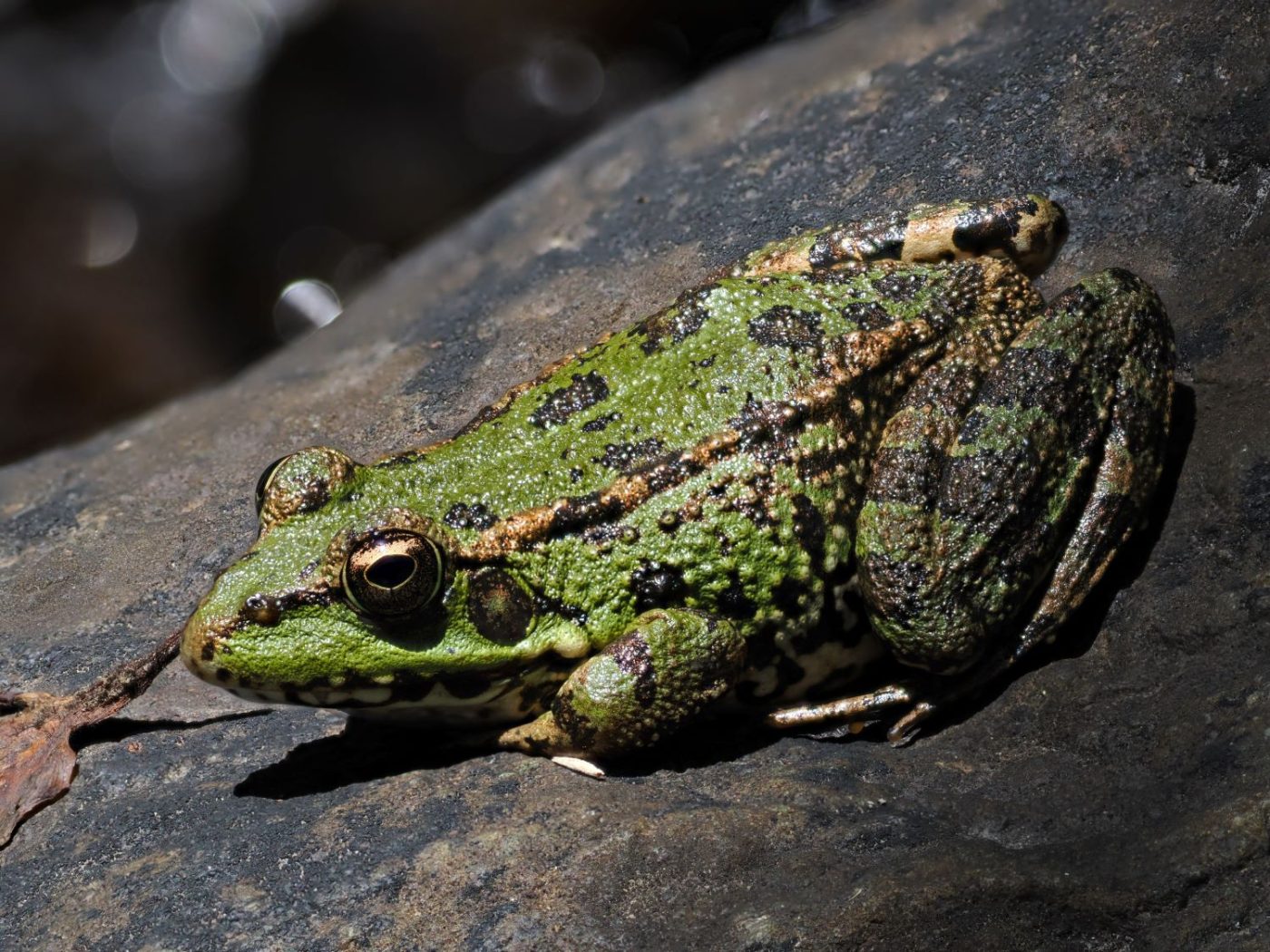
Among the anurans, the most abundant species is the green frog (Pelophylax perezi), very common but whose populations seem to be decreasing nevertheless.
The spiny toad (Bufo spinosus) and natterjack toad (Bufo calamita) are distributed according to their ecology. The first is mainly a species of forest and streams; the second of open environments and ponds. However, they can match at the same water point.
The list of amphibians living in Andalusia is completed with magnificent species belonging to several families: the Iberian spadefoot toad(Pelobates cultripes), the Iberian painted frog(Discoglossus galganoi), the Iberian painted frog(Pelodytes ibericus) and two little frogs of the genus Hyla.
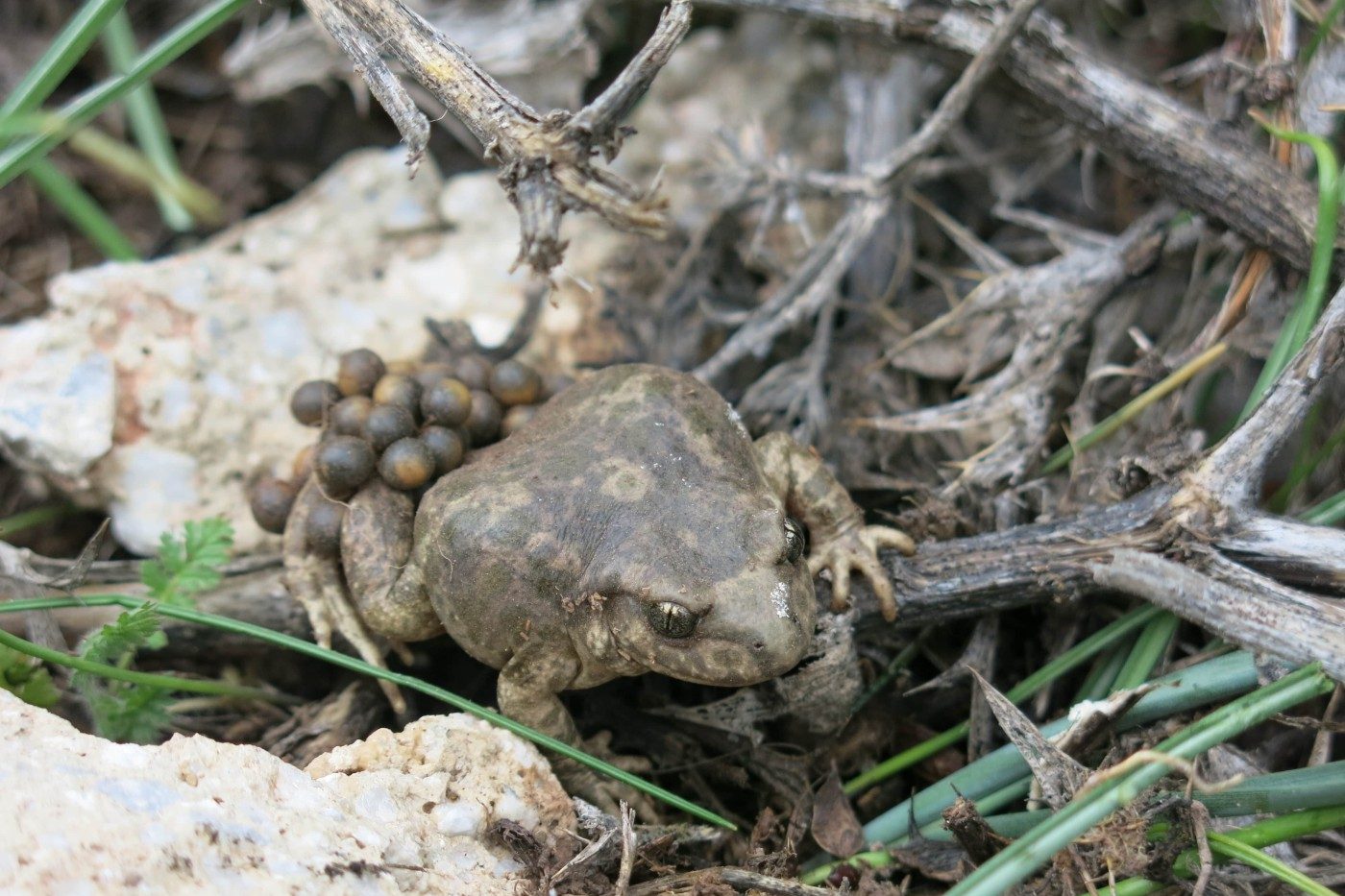
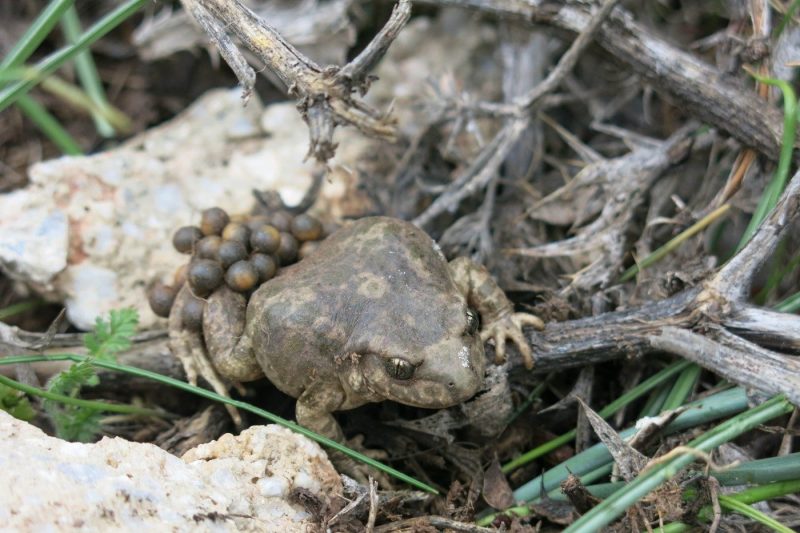
Finally three species of midwife toad (genus Alytes) live in Andalusia on a total of five species worldwide, all of which distributed in Europe and North Africa.
Amphibians: List of species present in Andalusia
| # | GROUP | FAMILY | SPECIES1 | COMMON NAME | ID. | DISTRIBUTION | HABITAT2 | RARITY3 |
|---|---|---|---|---|---|---|---|---|
| 1 | Batrachians primitive | Alytidae | Alytes cisternasii ** | Iberian midwife toad ** | Tricky | SO Iberia, norte Guadalquivir | Arroyos | |
| 2 | – | Alytidae | Alytes dickhilleni*** | Betic midwife toad *** | Tricky | SE Iberia, Sierras béticas | Arroyos | R |
| 3 | – | Alytidae | Discoglossus galganoi ** | Iberian painted frog ** | Easy | Iberia | Arroyos | |
| 4 | Meso-batracios | Pelobatidae | Pelobates cultripes | Iberian spadefoot toad | Unmistakable | Iberia, Francia (litoral) | Charcas | |
| 5 | – | Pelodytidae | Pelodytes hespericus*** | Mediterranean parsley frog*** | Tricky | Centre Iberia | Charcas | R |
| 6 | – | Pelodytidae | Pelodytes ibericus ** | Iberian parsley frog ** | Tricky | SO Iberia | Charcas | |
| 7 | Sapos verdaderos | Bufonidae | Bufo calamita | Natterjack toad | Unmistakable | Europa occidental | Charcas | |
| 8 | – | Bufonidae | Bufo spinosus | Spiny toad | Unmistakable | Ibero-Maghrebian, France | Arroyos | |
| 9 | Ranitas | Hylidae | Hyla meridionalis | Mediterranean tree frog | Easy | Ibero-Magrebí, Francia e Italia | Charcas | |
| 10 | – | Hylidae | Hyla molleri | Iberian tree frog | Easy | Iberia | Charcas | RR |
| 11 | Ranas verdes | Ranidae | Pelophylax perezi | Iberian green frog | Easy | Iberia, Francia | Generalista | |
| 12 | Tritones | Salamandridae | Lissotriton boscai ** | Bosca’s newt ** | Unmistakable | O Iberia, norte Guadalquivir | Charcas | R |
| 13 | – | Salamandridae | Pleurodeles waltl | Iberian ribbed newt | Unmistakable | Ibero-Magrebí | Charcas | |
| 14 | – | Salamandridae | Triturus pygmaeus | Southern Marbled Newt | Unmistakable | SO Iberia | Charcas | |
| 15 | Salamandras | Salamandridae | Salamander salamandra salamandra longirostris *** | Betic Salamander*** | Unmistakable | SO Iberia, Sierras béticas | Arroyos | R |
| 16 | – | Salamandridae | Salamandra salamandra morenica*** | Sierra Morena salamander*** | Unmistakable | SO Iberia, Sierra Morena | Arroyos |
(1) SPECIES. * European endemism . ** Iberian endemism . *** Localized Iberian endemism. Web of reference on Amphibians of Andalucia.
(2) PREFERRED HABITAT for breeding: Streams: weakly lotic biotopes, such as headwaters of streams, possibly troughs or even seeps (Discoglossus). Ponds: lentic biotopes, priority habitat of temporary Mediterranean ponds.
(3) RARE IN ANDALUSIA. R: rare. RR: very rare.
More facts about amphibians
Reproductive strategies of the andalusian species
It should be noted that salamanders do not copulate on dry land because they cannot swim; more surprisingly, salamanders do not lay eggs, but instead lay larvae and sometimes even juveniles, so they are viviparous and are a truly special case.
The other urodeles reproduce in ponds or streams, performing a nuptial dance where the male deposits a spermatophore on the substrate, followed by a displacement of the female that captures the spermatophore, fertilization is internal and then the eggs are laid one by one on aquatic plants.
For anurans, it is different, the Andalusian species practice external fertilization, the males attract the females in a favorable environment by their vocalizations (underwater or outside), cling to the female and inseminate her externally with the string of eggs that she deposits in the stagnant water. These strings can be more or less long. Sometimes there are concentrations of many individuals in the reproductive phase.
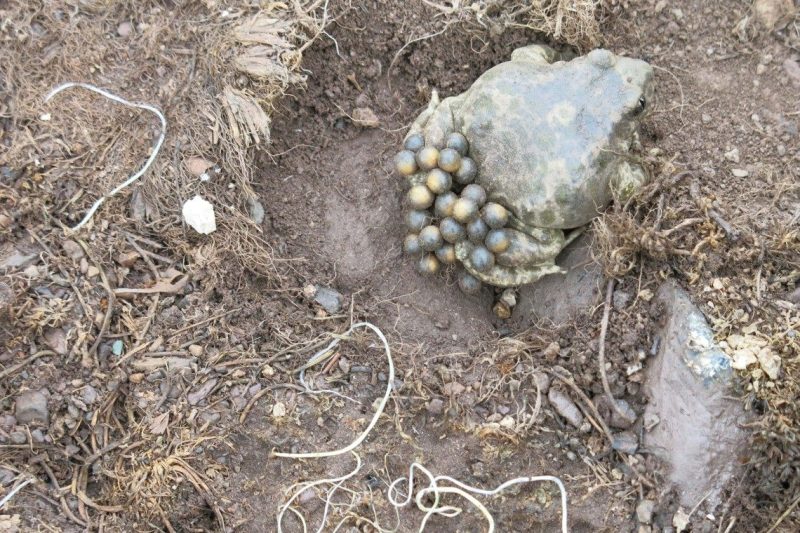
A special case is that of the midwife toads of the Genus Alyteswhere it is the male that takes care of the eggs, rolls the strings of eggs laid by the female between his hind legs and at the same time fertilizes them.
Importance of water troughs and fountains

A somewhat paradoxical habitat … The drinking troughs or fountains fed by spring water are generally isolated, mainly located in dry Mediterranean mountain ecosystems, and more abundant in the limestone mountains of eastern Andalusia. En estas condiciones, sorprende la colonización de estas estructuras artificiales por anfibios, especialmente en las sierras más áridas.
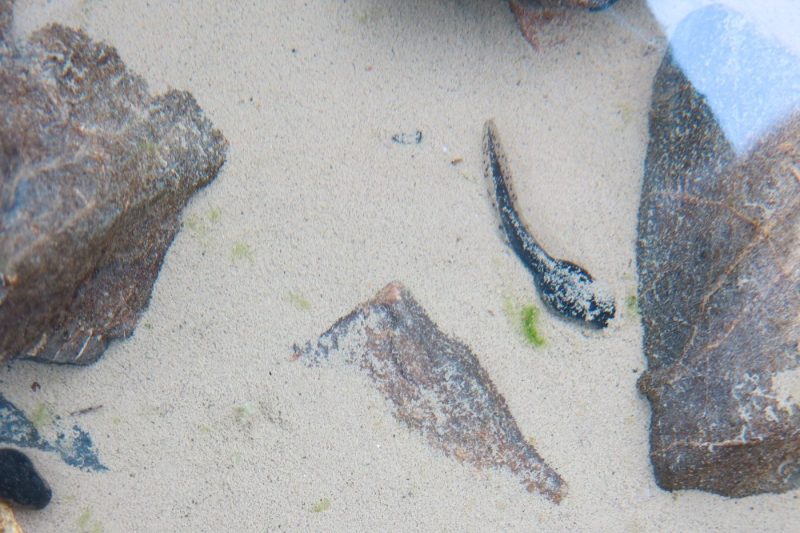
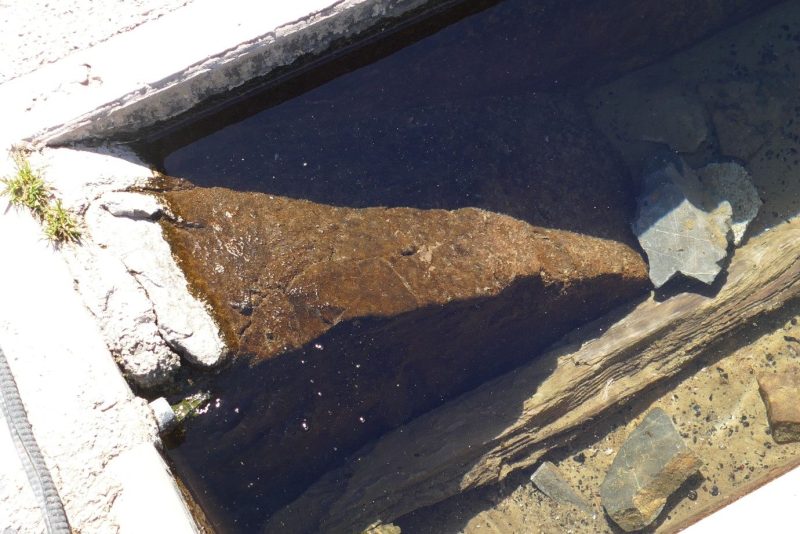
However, the hydrological conditions of these watering holes are similar to those of the headwaters of rivers, where there are micro-ponds or a very low flow of running, fresh, oxygenated water, and constitute an ideal biotope for species associated with “streams” such as salamanders and midwife toads.
Leave a Reply