


This circuit stands out not only for the diversity of the fauna observed, but also for the natural beauty of the Andalusian landscapes. November turns out to be a propitious period for a naturalist trip to our region. Natural spectacles typical of this season: the immense flocks of wading birds that populate the newly harvested rice fields and the griffon vultures that put the finishing touch to the post-nuptial migration in the Strait of Gibraltar.

Several resident bird species, among the most emblematic, also justify an ornithological tour to southern Spain, and are highly visible in the field after the breeding period. The trip offers the unique opportunity to observe species such as the Spanish Imperial Eagle, the Northern bald ibis ibis and the Iberian lynx in their natural habitats, making this one of the best nature watching experiences in Europe.
Day 1: Central and Northern Doñana
We started at El Rocío, a magnificent introduction to an ornithological trip. Immediately, a few Azure-winged Magpies crossed the runway. What a good omen for the trip to catch a glimpse of this endemic species. We stopped at Boca del Charco…the hermitage and the Madre marsh spread out before us. Wildlife is present but still in moderate numbers. The heavy rains of November 2024, which culminated in the terrible Valencia DANA, filled the marsh just over a week ago… a circumstance that is noticeable with mainly resident avifauna such as Spoonbills, Glossy Ibis, Coots, Black-winged Stilts, present in small groups and some Greylag Goose, a mainly wintering species but which has a small local breeding population in Doñana. Thanks to the terrestrial telescope we detected Greater Flamingoes almost two kilometers away.
La Rocina is also poor in fauna, but we observed with great interest how several white storks feed with great appetite on the American red swamp craysfish (Procambarus clarkii). They swallow them “whole”, to the point of seeing the passage of the arthropod in the neck of the bird. Obviously, the lagoon hosts waders such as Cattle Egrets, Little Egrets, Grey Herons and waterfowl, Little Grebes and European Pochards.
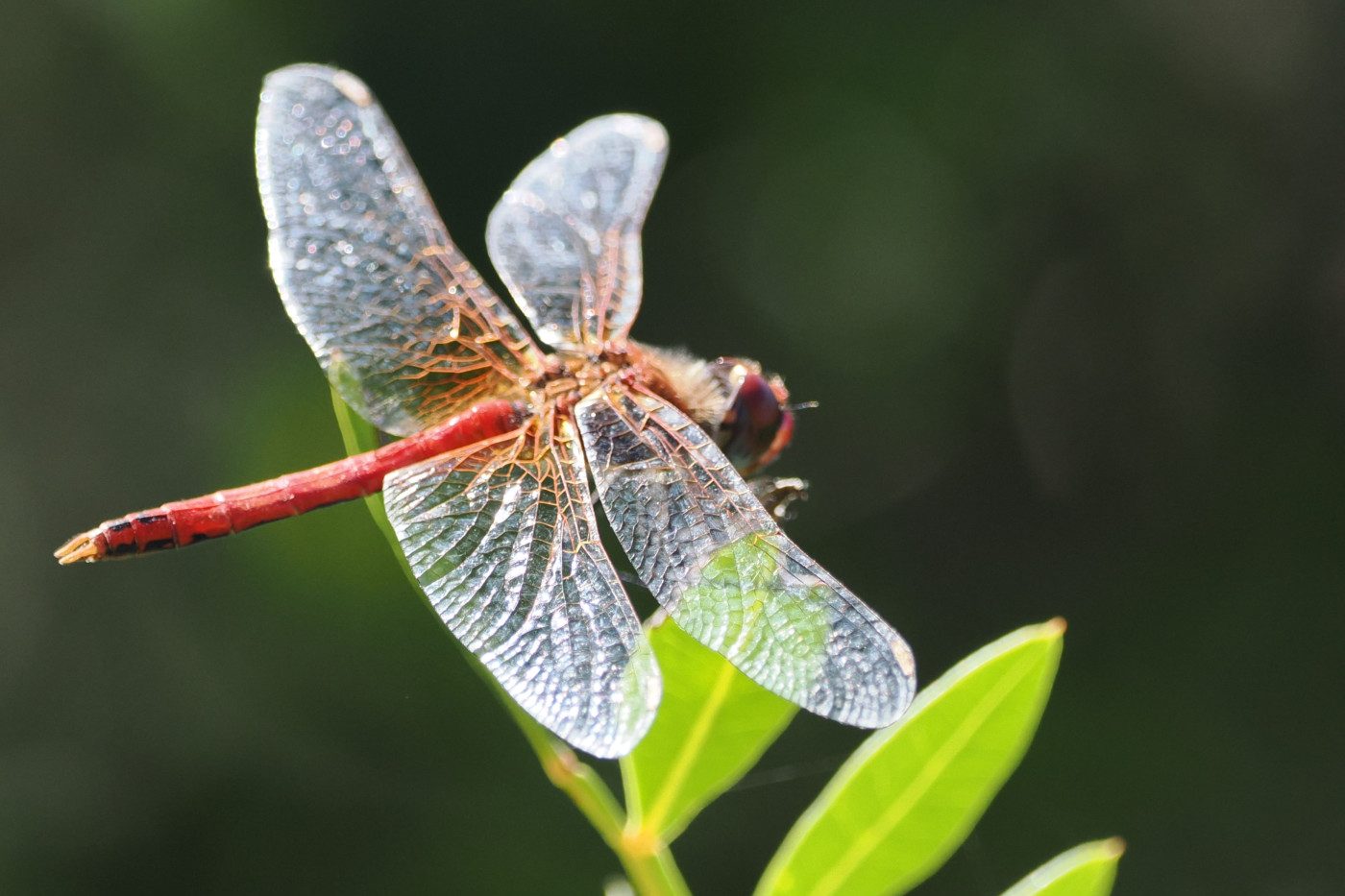
With the recent rains and consequent floods, it is amazing to see how odonates are already colonizing the wetlands of southern Spain. We will observe Migrant Hawkers (Aeshna mixta) and Red-Veined Darters (Sympetrum fonscolombii) in practically all the lagoons during the whole trip.
We took advantage of El Rocío to have lunch in a local inn and taste the local beef… As good in taste as it is environmentally friendly. Soon we pass by the ornithological center SEO/Birdlife, observing from the terrace a new species, the Lapwing and several distant deer.In the afternoon we head towards Aznalcázar, looking for a clearing in the pine forest where wild rabbits normally abound. Little activity this afternoon… Night falls; on the way back we were lucky enough to observe an Iberian lynx for a few seconds, what a thrill! It even stops and looks at us from a distance.
Day 2: North and East Doñana
The morning atmosphere is very wintry with a cloudy and grayish day. We stop to listen to the passerines along the Guadiamar Canal, Waxbill, Rufous Nightingale, White Wagtail, Pipit as well as Great Egret, among other species…. The Great White Egret lays salt in the morning, as well as the clutches (oothecae) of African mantis(Sphodromantis viridis) very visible among the vegetation.
We soon set off for Dehesa Abajo where we are greeted by a company of Ruddy Ducks and Coots, some Common Coots and Great crested Grebes. In the distance, more waders, a group of Avocets, etc. The Sympetrum fonscolombii thermoregulates abundantly on the embankment in front of the rare sun… The icing on the cake is a small group of Marbled ducks that can be seen.
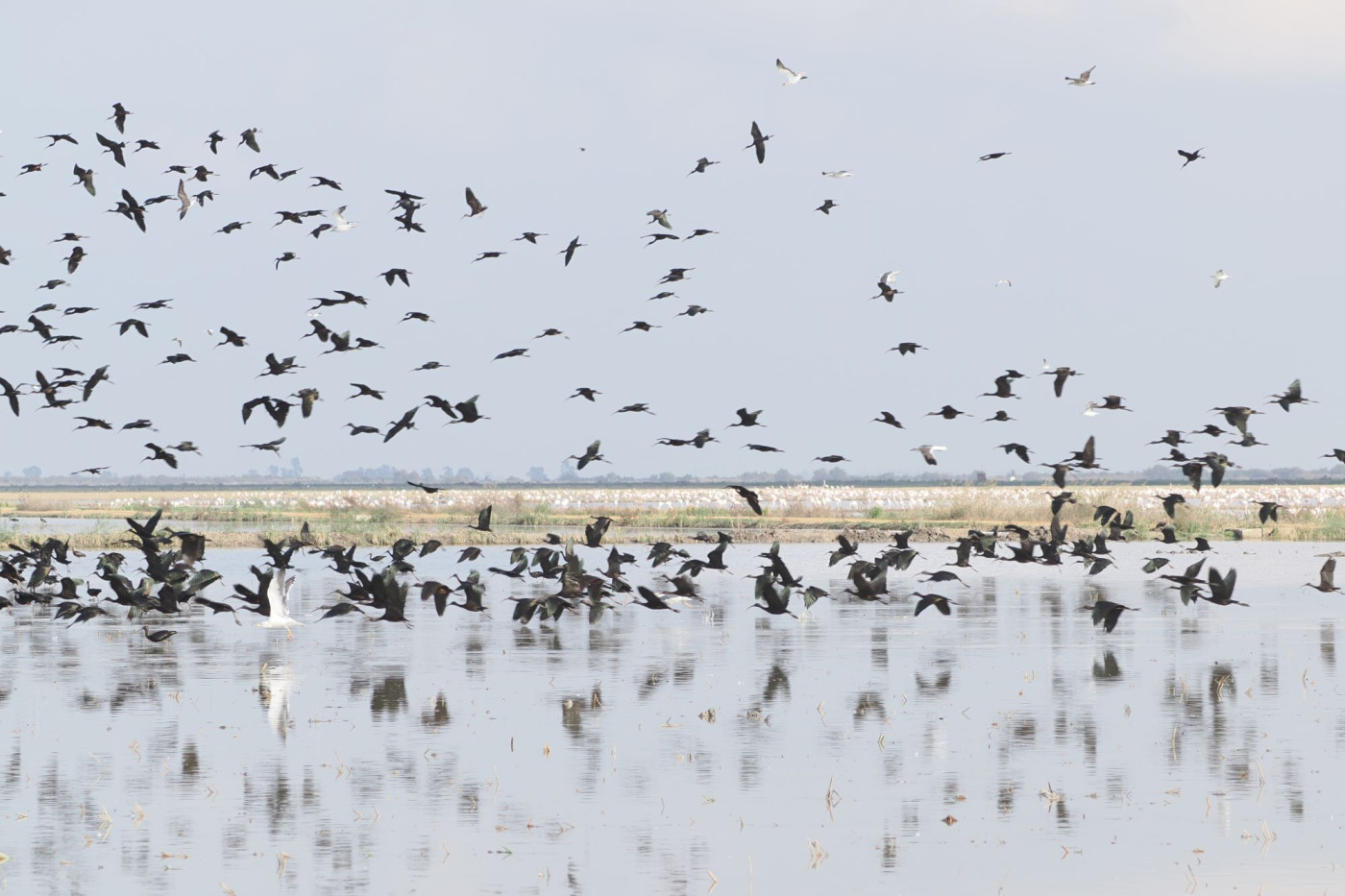
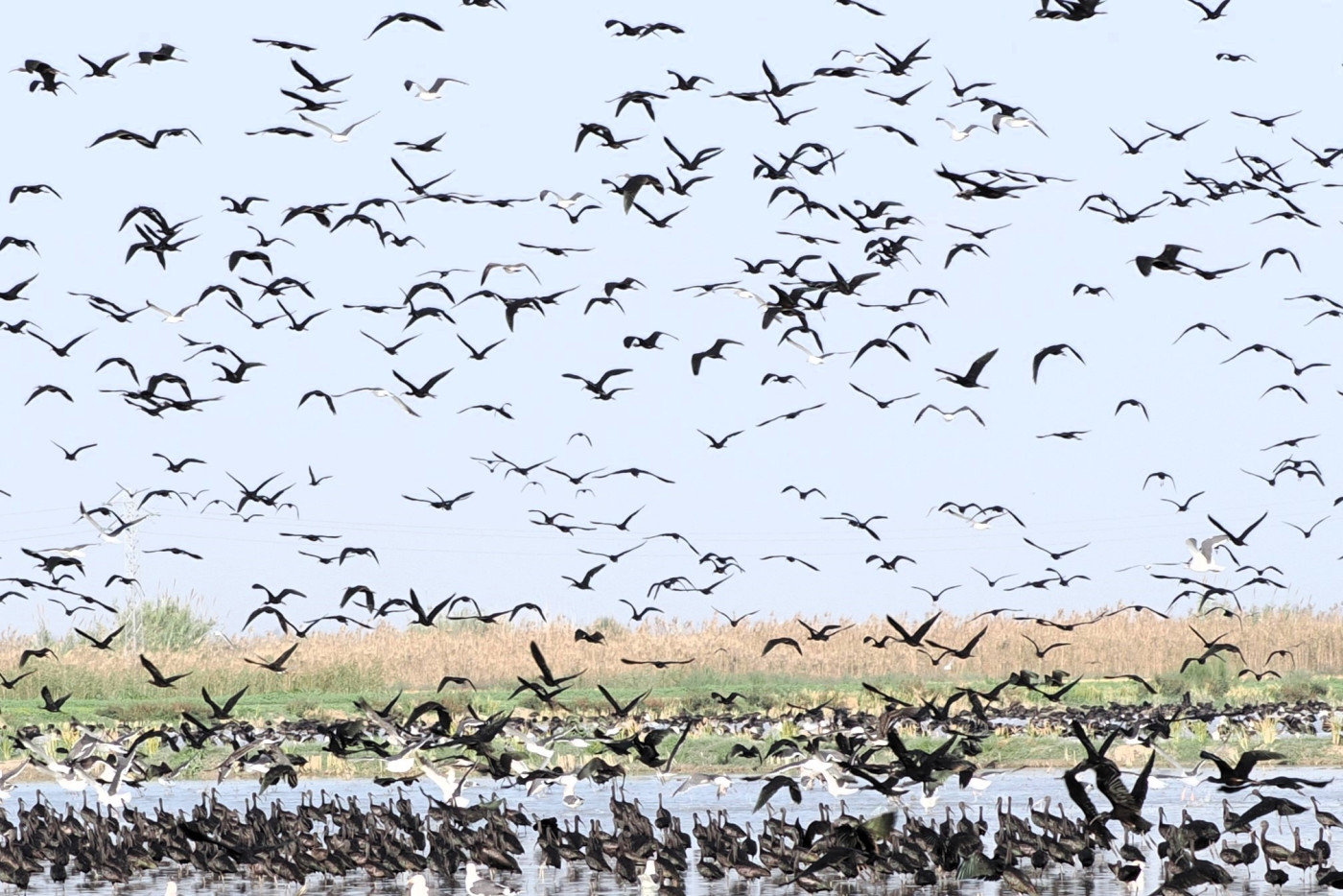
Heading towards Coria del Río, we cross the Guadalquivir and soon explore the immense polder on the left bank of the river. After the rice harvest, stubble and flooded fields abound. This time of year is crucial for bird watching. Just mention the bands of thousands of storks, Greater Flamingoes, gulls and Glossy Ibis. 8,000, 10,000, 12,000 Glossy Ibis? Who knows? It is extraordinary to observe the abundance of the lustrous ibis as a gigantic flock of starlings. Doñana remains a myth, no doubt.
We advance through the labyrinth of the Brazo del Este… adding the black stork to our list on the way. Curiously, the Natural Park, from the Gallegos Dam, is quite poor in birds… but it doesn’t matter, we continue to be amazed by the previous spectacle. Luck is still with us, with four Lesser Kestrels greeting our arrival from “La Giraldilla” in Lebrija, at sunset.
Day 3: South Doñana
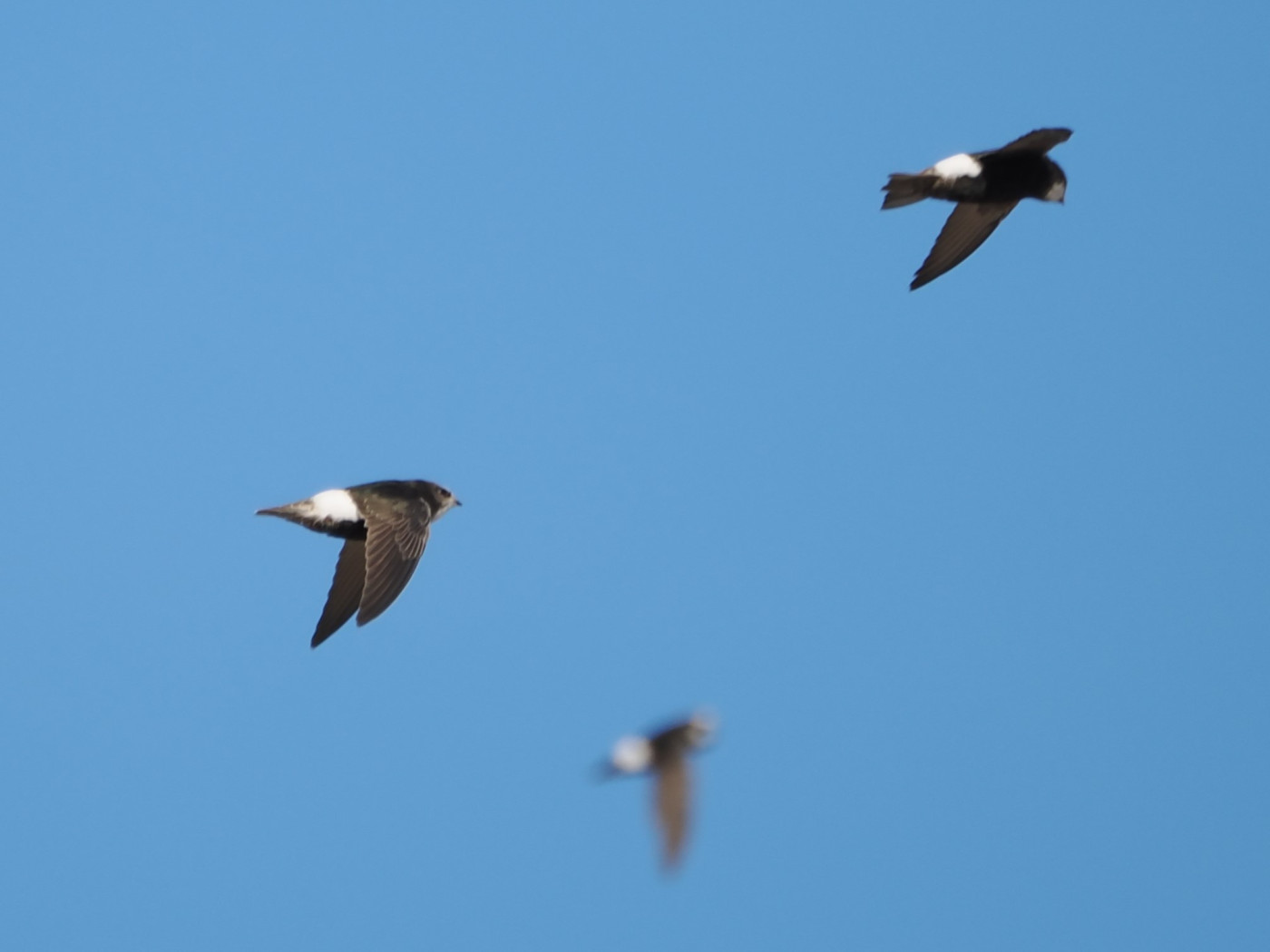
A very complete tour that allows us to discover the greatness of the Guadalquivir and its mouth. We appreciate the southern Doñana, which never disappoints, a classic Doñana… and with its own identity. First, the Chipiona lighthouse where the roost of rocky planes was already installed; of course you have to be very attentive to the passage of seabirds, in low numbers with a few Atlantic gannets and a Great Skua. Then, we set course for the port and the colony of Little swifts (Apus affinis), present on the European continent only in the province of Cadiz. They have short wings and stubby body, with a very prominent white spot on the obisple.
We observe Slender-billed Gulls in the Bonanza salt flats. Dragonflies abound in the Tarelo lagoon and also, in the distance, we can see the White headed Duck. The afternoon ends passing through the pine forest of La Algaida and the marshes of Trebujena, a point of interest where we could spend hours. An Osprey lands on a pole at a good distance and ends the day.
Day 4: Towards the Strait

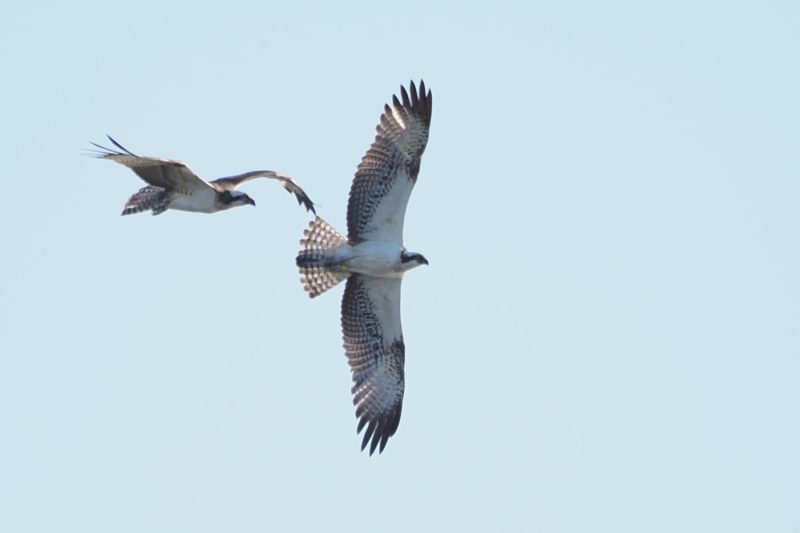
On the way south, we stopped at the salt flats of Chiclana de la Frontera… Again, shorebirds and waders, including a large group of Avocets. The Lesser Short-toed Lark vocalizes and a group of Shelduck fly away. The real spectacle turns out to be the interaction between two Ospreys. An individual installed in the salt marsh, with yellow PVC ring AV approaches a “visitor”. We witness a few bites, not very aggressive, and the two eagles fly side by side for a long time, then the second one disappears. Soon we follow suit.
We head towards Vejer de la Frontera. At this time the Northern bald ibis are not usually seen during the day in the Tajo known to all. We have to go looking for them and finally we locate a group of more than forty individuals that we could observe with enough time.
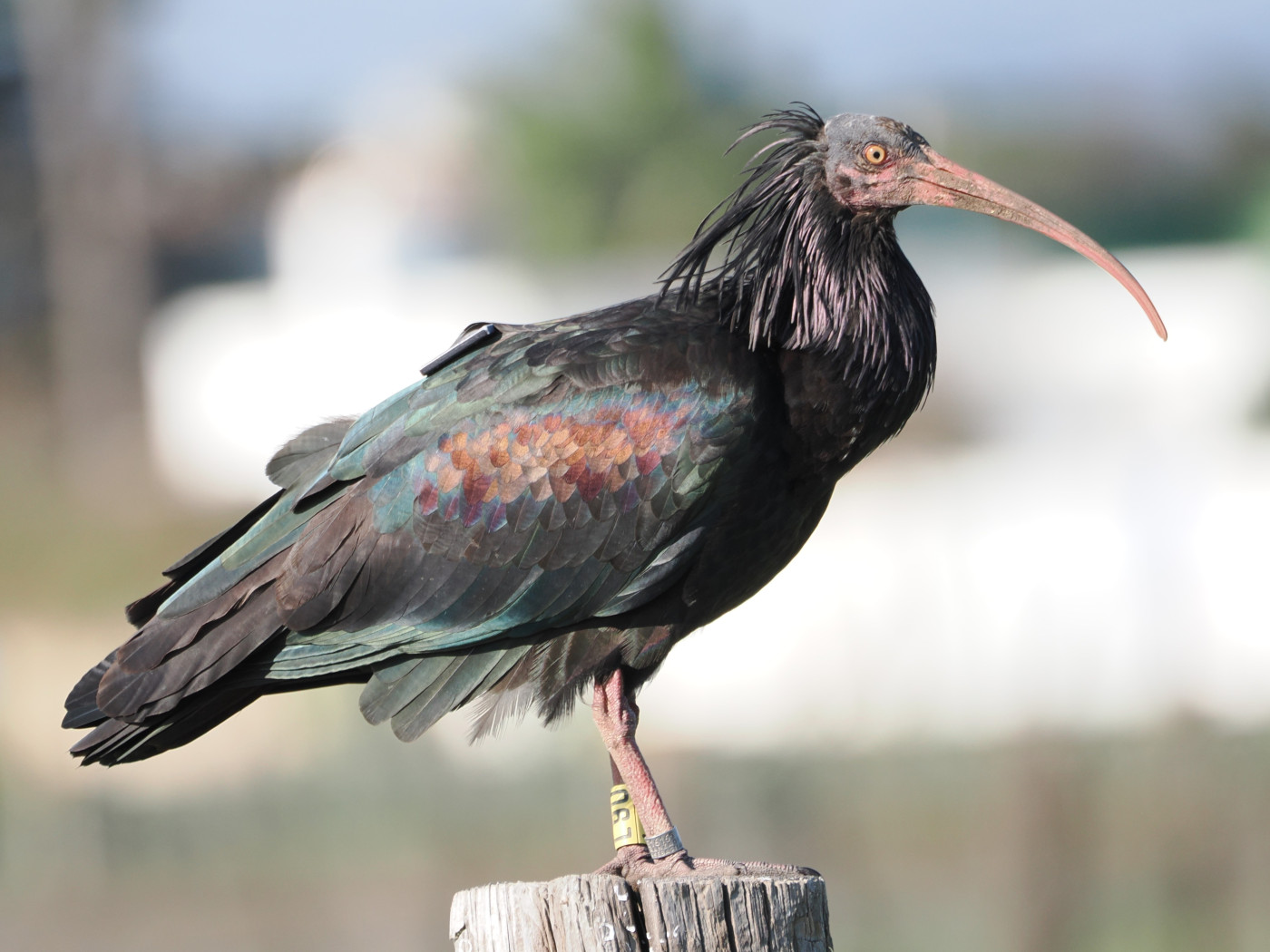
Pinto and black starlings share the same field. We can read rings and observe interesting behaviors. An ibis sunbathes almost statically and two birds fight over a huge beetle larva. At our feet, a brief and discreet crackling (= sound produced by an acridid as it flies away) gives away the wrinkled grasshopper (Morphacris fasciata), still an adult.
Later, we get lost in La Janda while looking for our lodging… and observe the vagrant emperor (Anax ephippiger) flying over a canal. More attractive for the birdwatcher, we contemplate a Black-shouldered Kite, it is perched on an electric cable.
Day 5: La Janda
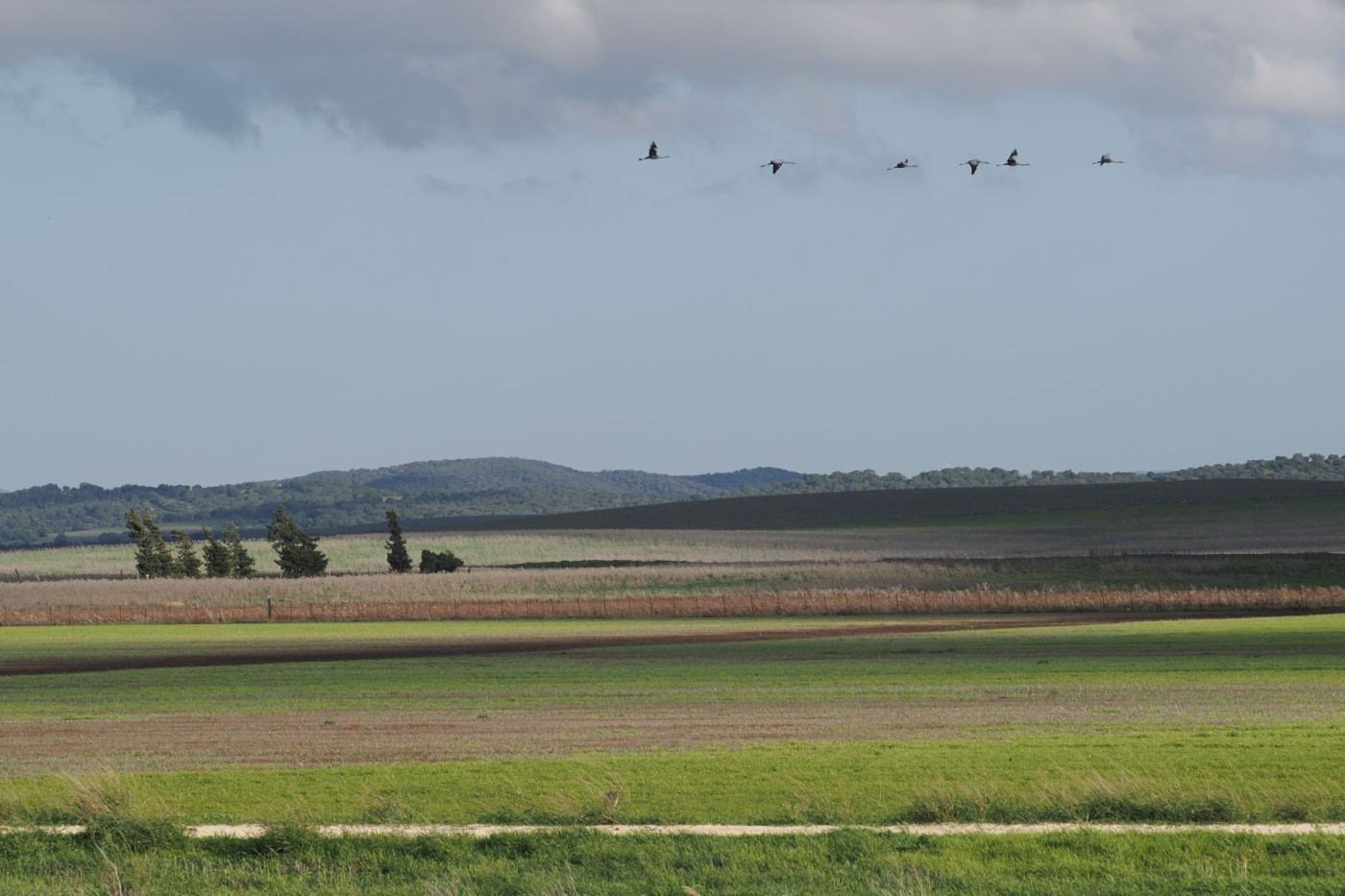
This former lagoon, one of the largest in Spain before being drained in the 1960s, is another very famous site for continental ornithology. And it does not disappoint… Again, in the newly harvested rice fields, we found White Storks, Spoonbills and more Ardeids in smaller numbers. We also observed approximately 120 Common Cranes…
As we walk, we see in the distance, not one, not two, but four Egyptian mongooses (Herpestes ichneumon) crossing the road… A Hen Harrier explores the steppes.
Following the advice of a friend we met on the way, we moved towards Medina Sidonia. That change did not disappoint us, as we soon came across two imperial eagles perched on pylons parallel to the road, which we watched from a distance without disturbing them. We watched them from a distance without disturbing them. What a pleasure!
During the day we noted two oriental hornets (Vespa orientalis), a species in full expansion in Andalusia. Finally, we returned to Vejer to contemplate the landscape from this natural vantage point.
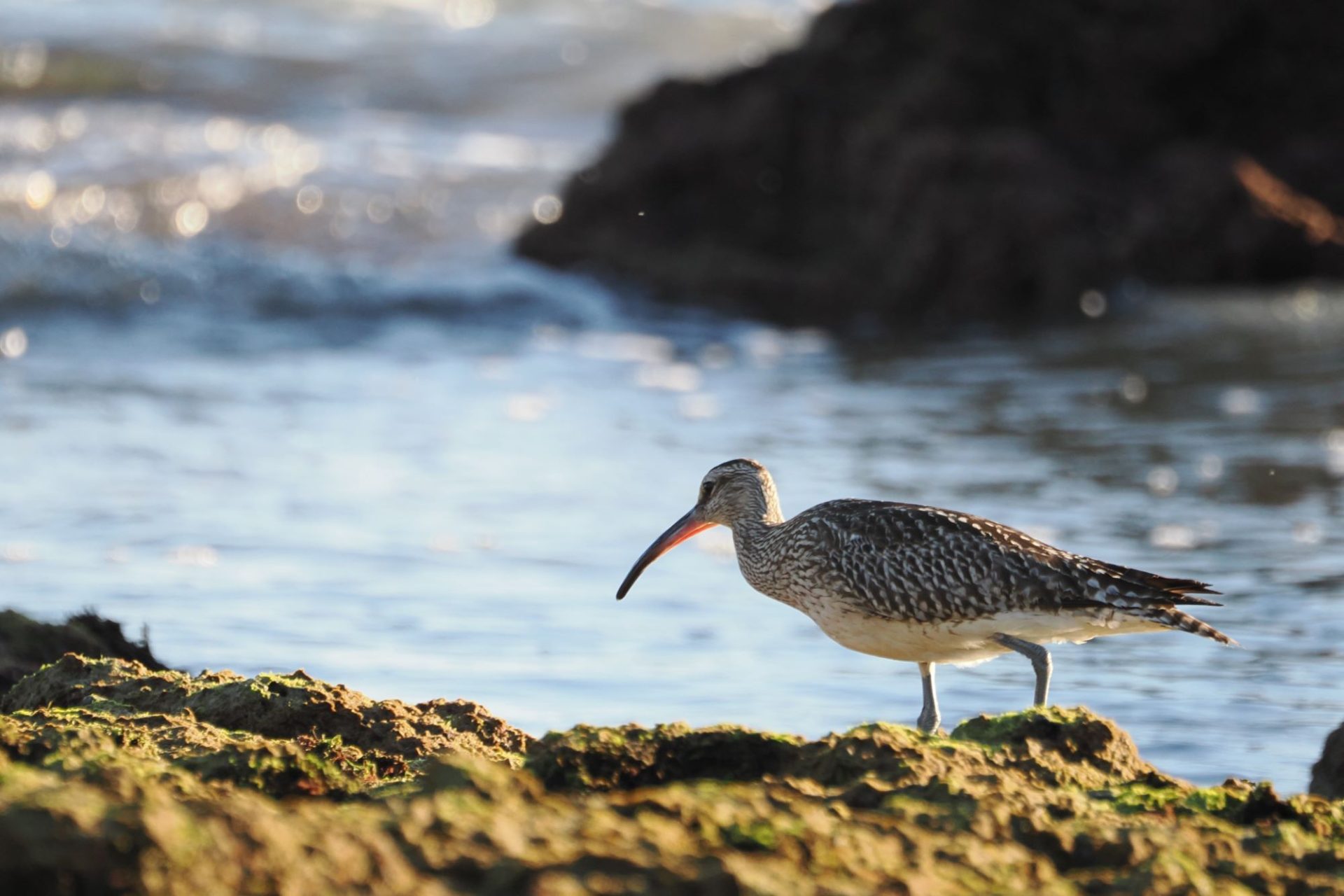
We head to the coast to walk along the beach where Ruddy Turnstones and Whimbrel feed among the rocks that dot the beaches of the coast near Barbate.
Day 6: Strait of Gibraltar
A very strong storm enters Andalusia and causes flooding in several places in the province of Malaga… The day is not conducive to birdwatching. We stop at the beaches of Bolonia, Valdevaqueros and Los Lances. The lagoon of Los Lances is immense. The birdlife is not very abundant, but some Audouin’s Gulls brighten up our morning. The sea lilies (Pancracium maritimum) are withered.
In November, glider migration is fairly limited… but can be spectacular late in the season with the passage of juvenile Griffon vultures, which can number in the hundreds. Although adults are resident, juveniles spend several years in the African savannas before returning as adults. After a long season rubbing shoulders with zebras, antelopes and other large animals of the savannahs, these vultures seem to be overcome with nostalgia for the Spanish country, goats and cows.
Given the weather conditions encountered, we did not observe any of these. However, we were pleasantly surprised to observe a group of more than 45 Griffon vultures in Bonanza (day 3).
We avoid the showers in Tarifa and dedicate ourselves to observe the coast of Morocco from the Mirador del Estrecho, and then we reach Getares. It’s time to leave the coast and head into the Mediterranean mountains, spotting a Short-toed Eagle on the way.
Day 7 : Serranía de Ronda
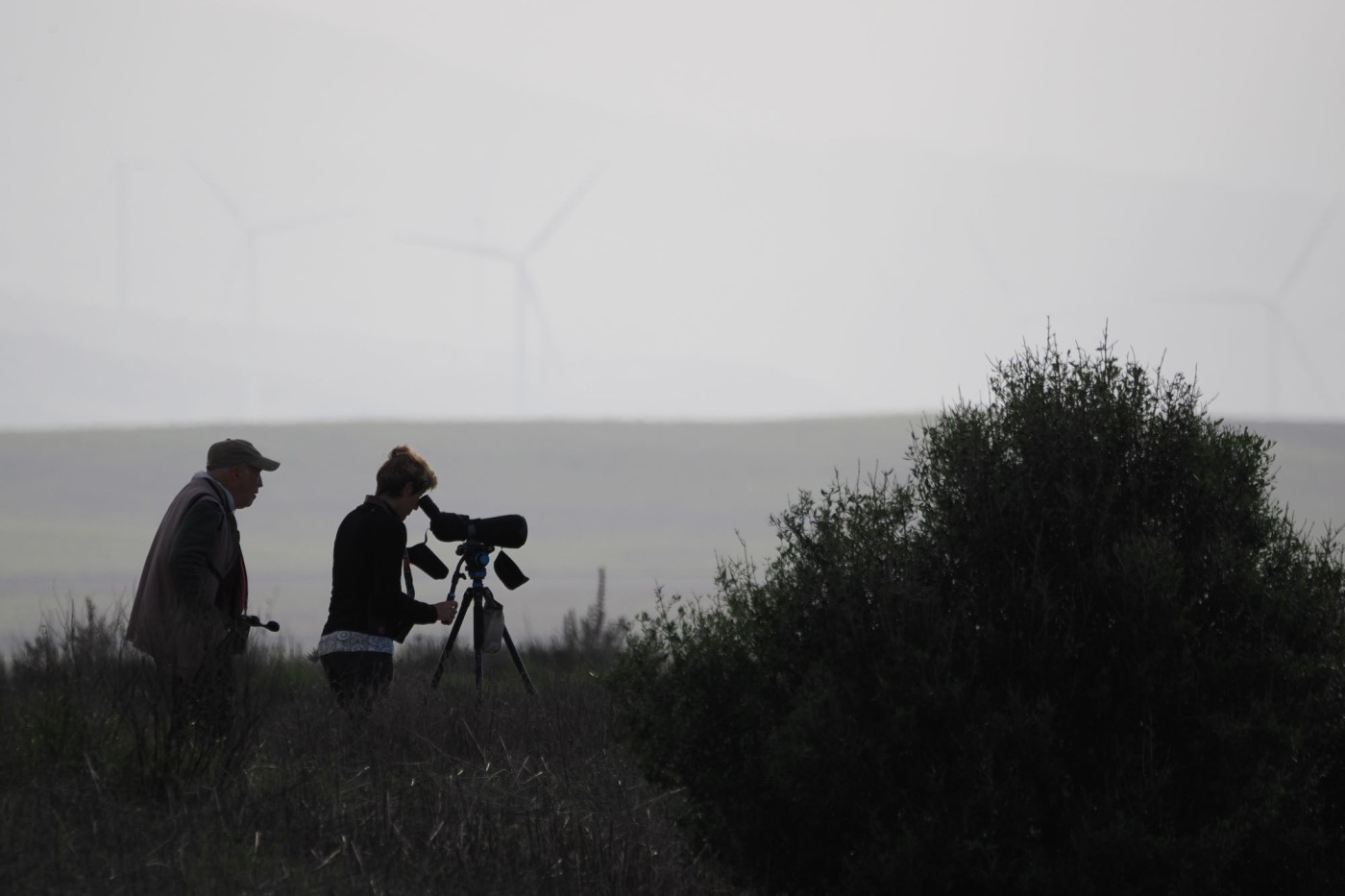
We are on yellow alert “extreme caution”. Early in the morning the sky is barely overcast and we set course for Grazalema. We encounter thicker and thicker clouds and drizzle. Before heading into the mountains, we visit a hospitable ranching family. But the weather worsens drastically and we have to retreat under heavy rain. Finally, we stop at Venta La Laja, next to the Sierra de Las Nieves, with its huge fireplace and a hot menu of the day.
After a long ornithological conversation and a summary of the observed species, we take the way back and take advantage of the afternoon to visit the Riscos de Cartajima… A pair of sub-adult Golden Eagles welcomes us under a shy sun, together with a mountain goat (Capra pyrenaica), a male with long horns… Then begins a festival of griffon vultures, lone rock-thrushes, black wheatears, blue rock trushes, Ring ouzels and a Southern grey shrike…. We saved the day and surpassed the 100 species observed.
Day 8: Pseudo-steppes of Osuna
The drive leaves enough time to discuss the existence of insect galls on oak and pistachio trees. A brief stop along the way facilitates the observation of Baizongia pistacea. Then we will have time to explore the agricultural areas of Osuna, accessible from the road. Great Bustards “brighten up” our visit to the agricultural pseudo-steppe. After lunch in La Lantejuela, we set up our telescope for the last time in front of the Laguna del Gobernador and its waterfowl. The Galapagos leprosa are resting in front of us. Suddenly the Black-winged Stilts disappear and remind us of our departure time.
All in all, this trip allowed us to observe many of the remarkable species of Andalusia, and to enjoy the landscapes, the white villages and the anecdotes with the welcoming people. November is both the time of a new spring in the Mediterranean, after the intense drought of the summer, and gives way to the autumn colors of chestnut, pistachio and poplar trees… What a picturesque mix! What a picturesque mix!
Leave a Reply