


[et_pb_section fb_built=”1″ admin_label=”section” _builder_version=”4.4.8″ background_color=”#d6d6d6″ locked=”off” collapsed=”on”][et_pb_row _builder_version=”4.4.8″ background_size=”initial” background_position=”top_left” background_repeat=”repeat”][et_pb_column type=”4_4″ _builder_version=”3.25″ custom_padding=”|||” custom_padding__hover=”|||”][et_pb_text admin_label=”Titulo” _builder_version=”4.4.8″ header_2_font=”Noto Sans||||||||” header_2_text_align=”left” header_2_line_height=”0.4em”]
[EN] Report of aquatic fauna at SIBELCO quarry of Arcos de la Frontera
[/et_pb_text][et_pb_divider divider_weight=”1px” admin_label=”linea separacion” _builder_version=”4.4.8″ background_color=”rgba(0,0,0,0)” locked=”off”][/et_pb_divider][/et_pb_column][/et_pb_row][et_pb_row column_structure=”1_5,1_5,3_5″ _builder_version=”4.4.8″ background_size=”initial” background_position=”top_left” background_repeat=”repeat” custom_margin=”-40px||||false|false”][et_pb_column type=”1_5″ _builder_version=”3.25″ custom_padding=”|||” custom_padding__hover=”|||”][et_pb_button url_new_window=”on” button_text=”2019″ admin_label=”PDF” _builder_version=”4.9.2″][/et_pb_button][/et_pb_column][et_pb_column type=”1_5″ _builder_version=”3.25″ custom_padding=”|||” custom_padding__hover=”|||”][/et_pb_column][et_pb_column type=”3_5″ _builder_version=”3.25″ custom_padding=”|||” custom_padding__hover=”|||”][et_pb_text admin_label=”Autores” _builder_version=”4.9.2″]
Unpublished report
[/et_pb_text][/et_pb_column][/et_pb_row][et_pb_row column_structure=”1_2,1_2″ _builder_version=”4.4.8″][et_pb_column type=”1_2″ _builder_version=”4.4.8″][et_pb_testimonial author=”Florent Prunier” url=”https://www.researchgate.net/profile/Florent_Prunier2″ url_new_window=”on” portrait_url=”https://g3-guides.com///wp-content/uploads/2020/11/IMG_51791-scaled.jpg” _builder_version=”4.4.8″ link_option_url=”https://www.researchgate.net/profile/Florent_Prunier2″ link_option_url_new_window=”on”][/et_pb_testimonial][/et_pb_column][et_pb_column type=”1_2″ _builder_version=”4.4.8″][et_pb_testimonial author=”Michel Huysmans” url=”https://www.researchgate.net/profile/Florent_Prunier2″ url_new_window=”on” portrait_url=”https://g3-guides.com///wp-content/uploads/2020/11/IMG_51791-scaled.jpg” _builder_version=”4.9.2″ link_option_url=”https://www.researchgate.net/profile/Florent_Prunier2″ link_option_url_new_window=”on”][/et_pb_testimonial][/et_pb_column][/et_pb_row][et_pb_row _builder_version=”4.4.8″ background_size=”initial” background_position=”top_left” background_repeat=”repeat”][et_pb_column type=”4_4″ _builder_version=”3.25″ custom_padding=”|||” custom_padding__hover=”|||”][et_pb_text admin_label=”RESUMEN” _builder_version=”4.4.8″]
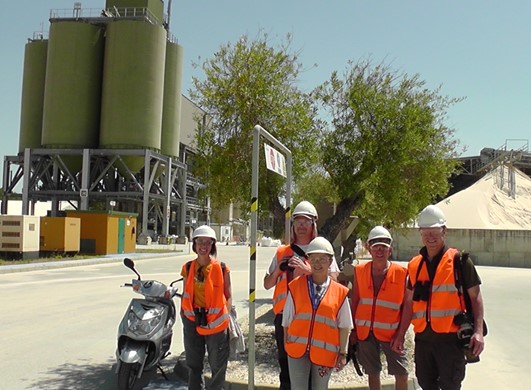
Summary: A visit was organized at SIBELCO’s quarry of Arcos de la Frontera the 2019, June 22 in order to assess the potential of the site for dragonflies (Odonata) and other aquatic fauna, especially bird species. The visit was carried out in early summer, from 14:00 to 17:00, with temperature 30-32º C. The timing was good for dragonflies and much less ideal for observations of vertebrates.
Note of interest. The quarry is situated near the Guadalete river where populations (of unknown size) of the rare dragonfly Faded Pincertail (Onychogomphus costae) are present.
[/et_pb_text][/et_pb_column][/et_pb_row][/et_pb_section][et_pb_section fb_built=”1″ _builder_version=”4.9.2″ _module_preset=”default” locked=”off” collapsed=”on”][et_pb_row _builder_version=”4.9.2″ _module_preset=”default” background_color=”#D6D6D6″][et_pb_column type=”4_4″ _builder_version=”4.9.2″ _module_preset=”default”][et_pb_image src=”https://g3-guides.com///wp-content/uploads/2021/06/SIBELCO-quarry-biodiversity-surevy.jpg” title_text=”SIBELCO quarry biodiversity surevy” _builder_version=”4.9.2″ _module_preset=”default”][/et_pb_image][et_pb_text _builder_version=”4.9.2″ _module_preset=”default”]
Sampling sites
[/et_pb_text][/et_pb_column][/et_pb_row][et_pb_row _builder_version=”4.9.2″ _module_preset=”default”][et_pb_column type=”4_4″ _builder_version=”4.9.2″ _module_preset=”default”][et_pb_text _builder_version=”4.9.2″ _module_preset=”default”]Within the site of Arcos, we visited 5 localities.
Locality A. A dry ditch with dense Phragmites australis. Next to a mature plantation of pines originated from the restauration of a previous quarry. The woodland’s vegetation structure is very homogeneous with trees planted in lines in a rather flat surface. It could be greatly improved with localized clearances of trees, letting spontaneous species of bushes to grow and digging shallow hollows to provide temporary ponds for amphibians and aquatic invertebrates.
Locality B. A large lake with open water and surrounded by dense reed (Phragmites australis). The lake is probably deep although it is possible to wade a few meters. Vegetation seems scarce within the lake: there was no sign of vegetation in the water column or sightings of specialist birds feeding on it; and no emergent plants detected other than the mentioned reed. Although the site is somewhat homogeneous at the moment, it has good potential for waterfowl, especially in winter for greater richness, and also in spring during the breeding season. This is the locality where more species of dragonflies were observed during the visit. Of special interest the detection of good population of the lentic specialist Diplacodes lefebvrii. Dense population of the invasive Mosquito fish (Gambusia holbrooki) was detected; with very negative impact on aquatic fauna. The site could be treated with rotenone in order to eliminate Mosquito fish.
Locality C. A large lake mostly covered by dense reed bed (Phragmites australis) and very little observed open water. Site with the best potential for nesting of reedbed specialists, such as Little Bittern (Ixobrychus minutus) or Purple heron (Ardea purpurea) among other bird species. No detected interest for dragonflies.
Locality D. A small pond with eutrophic water and steep slopes included within the fabric process. No ecological interest.
Locality E. A much more recent lake than B and C, of smaller surface and less emergent vegetation. We have detected a pair of Ferruginous Duck (Aythya nyroca), an extremely rare species in Andalucía. This observation is significant. The site provides diverse opportunity of foraging for birds with the detection of Cattle egret (Bubulcus ibis) and Common Moorhen (Gallinula chloropus). A family of Moorhen was feeding on Red Swamp Crayfish (Procambarus clarkii), which are apparently abundant within the sand (up to various meters).
[/et_pb_text][/et_pb_column][/et_pb_row][et_pb_row _builder_version=”4.9.2″ _module_preset=”default” background_color=”#D6D6D6″][et_pb_column type=”4_4″ _builder_version=”4.9.2″ _module_preset=”default”][et_pb_image src=”https://g3-guides.com///wp-content/uploads/2021/06/Sampling-dragonflies.jpg” title_text=”Sampling dragonflies” _builder_version=”4.9.2″ _module_preset=”default”][/et_pb_image][et_pb_text _builder_version=”4.9.2″ _module_preset=”default”]
RESULTS: one day biodiversity survey
[/et_pb_text][/et_pb_column][/et_pb_row][et_pb_row _builder_version=”4.9.2″ _module_preset=”default”][et_pb_column type=”4_4″ _builder_version=”4.9.2″ _module_preset=”default”][et_pb_text admin_label=”Titulo” _builder_version=”4.9.2″ header_2_font=”Noto Sans||||||||” header_2_text_align=”left” header_2_line_height=”0.4em” header_3_font=”Noto Sans||on||||||” header_3_text_align=”left” header_3_font_size=”20px” locked=”off”]
1 – DRAGONFLIES OBSERVED AT SIBELCO (22/6/2019)
[/et_pb_text][et_pb_text _builder_version=”4.9.2″ _module_preset=”default”]Seven species detected, highlighting the presence of Black Percher.
[/et_pb_text][et_pb_text _builder_version=”4.9.2″ _module_preset=”default” background_color=”#1FE0BA”]
| # | Vernacular name | Scientific name | A | B | C | D | E |
| 1 | Iberian Bluetail | Ischnura graellsii | X | ||||
| 2 | Blue Emperor | Anax imperator | X | ||||
| 3 | Lesser Emperor | Anax parthenope | X | ||||
| 4 | Broad Scarlet | Crocothemis erythraea | X | X | |||
| 5 | Black Percher | Diplacodes lefebvrii | X | ||||
| 6 | Violet Dropwing | Trithemis annulata | X | ||||
| 7 | Orange-winged Dropwing | Trithemis kirbyi | X |
Table 1. Dragonflies observed at SIBELCO (22/6/2019)
[/et_pb_text][/et_pb_column][/et_pb_row][et_pb_row column_structure=”1_3,2_3″ _builder_version=”4.9.2″ _module_preset=”default”][et_pb_column type=”1_3″ _builder_version=”4.9.2″ _module_preset=”default”][et_pb_image src=”https://g3-guides.com///wp-content/uploads/2021/06/Onychogomphus-uncatus.jpg” title_text=”Onychogomphus uncatus” _builder_version=”4.9.2″ _module_preset=”default”][/et_pb_image][/et_pb_column][et_pb_column type=”2_3″ _builder_version=”4.9.2″ _module_preset=”default”][et_pb_image src=”https://g3-guides.com///wp-content/uploads/2021/06/Brachythemis-leucosticta.jpg” title_text=”Brachythemis leucosticta” _builder_version=”4.9.2″ _module_preset=”default”][/et_pb_image][/et_pb_column][/et_pb_row][et_pb_row _builder_version=”4.9.2″ _module_preset=”default”][et_pb_column type=”4_4″ _builder_version=”4.9.2″ _module_preset=”default”][et_pb_text admin_label=”Titulo” _builder_version=”4.9.2″ header_2_font=”Noto Sans||||||||” header_2_text_align=”left” header_2_line_height=”0.4em” header_3_font=”Noto Sans||on||||||” header_3_text_align=”left” header_3_font_size=”20px” locked=”off”]
2 – BIRDS OBSERVED AT SIBELCO (22/6/2019)
[/et_pb_text][et_pb_text _builder_version=”4.9.2″ _module_preset=”default”]Worth of interest the detection of Ferruginous Duck during the breeding season.
[/et_pb_text][et_pb_text _builder_version=”4.9.2″ _module_preset=”default” background_color=”#1FE0BA”]
| # | Vernacular name | Scientific name | A | B | C | D | E |
| 1 | Mallard | Anas platyrhynchos | X | ||||
| 2 | Ferruginous Duck | Aythya nyroca | X | ||||
| 3 | Western Cattle Egret | Bubulcus ibis | X | ||||
| 4 | Purple Heron | Ardea purpurea | X | ||||
| 5 | Griffon Vulture | Gyps fulvus | X | ||||
| 6 | Booted Eagle | Hieraaetus pennatus | X | ||||
| 7 | Western Marsh Harrier | Circus aeruginosus | X | ||||
| 8 | Western Swamphen | Porphyrio porphyrio | X | ||||
| 9 | Common Moorhen | Gallinula chloropus | X | ||||
| 10 | Red-necked Nightjar | Caprimulgus ruficollis | X | ||||
| 11 | European Bee-eater | Merops apiaster | X | X | |||
| 12 | Lesser Kestrel | Falco naumanni | X | ||||
| 13 | Barn Swallow | Hirundo rustica | X | ||||
| 14 | Common House Martin | Delichon urbicum | X | ||||
| 15 | Red-rumped Swallow | Cecropis daurica | X | ||||
| 16 | Common Linnet | Linaria cannabina | X | ||||
| 17 | Little grebe | Tachybaptus ruficollis | X |
Table 2. Birds observed at SIBELCO (22/6/2019)
[/et_pb_text][/et_pb_column][/et_pb_row][et_pb_row column_structure=”3_4,1_4″ _builder_version=”4.9.2″ _module_preset=”default”][et_pb_column type=”3_4″ _builder_version=”4.9.2″ _module_preset=”default”][et_pb_image src=”https://g3-guides.com///wp-content/uploads/2021/06/Aythya-nyroca.jpg” title_text=”Aythya nyroca” _builder_version=”4.9.2″ _module_preset=”default”][/et_pb_image][/et_pb_column][et_pb_column type=”1_4″ _builder_version=”4.9.2″ _module_preset=”default”][et_pb_image src=”https://g3-guides.com///wp-content/uploads/2021/06/Porphyrio-porphyrio.jpg” title_text=”Porphyrio porphyrio” _builder_version=”4.9.2″ _module_preset=”default”][/et_pb_image][/et_pb_column][/et_pb_row][et_pb_row _builder_version=”4.9.2″ _module_preset=”default”][et_pb_column type=”4_4″ _builder_version=”4.9.2″ _module_preset=”default”][et_pb_text admin_label=”Titulo” _builder_version=”4.9.2″ header_2_font=”Noto Sans||||||||” header_2_text_align=”left” header_2_line_height=”0.4em” header_3_font=”Noto Sans||on||||||” header_3_text_align=”left” header_3_font_size=”20px” locked=”off”]
3 – OTHER FAUNA WORTH MENTIONING
[/et_pb_text][/et_pb_column][/et_pb_row][et_pb_row column_structure=”1_3,2_3″ _builder_version=”4.9.2″ _module_preset=”default”][et_pb_column type=”1_3″ _builder_version=”4.9.2″ _module_preset=”default”][et_pb_image src=”https://g3-guides.com///wp-content/uploads/2021/06/Sampling-aquatic-invertebrates.jpg” title_text=”Sampling aquatic invertebrates” _builder_version=”4.9.2″ _module_preset=”default”][/et_pb_image][/et_pb_column][et_pb_column type=”2_3″ _builder_version=”4.9.2″ _module_preset=”default”][et_pb_text _builder_version=”4.9.2″ _module_preset=”default”]
Beetles (Family Buprestidae): Chalcophora mariana, associated with pine woodlands.
Grasshoppers (Family Acrididae): the Mirgatory Locust (Locusta migratoria) and the African Garden Locust (Acanthacris ruficornis), one of the largest insects of the European continent and limited to Cádiz and Málaga.
Heteroptera. Aquatic bug. Plea minutissima.
[/et_pb_text][/et_pb_column][/et_pb_row][et_pb_row _builder_version=”4.9.2″ _module_preset=”default” background_color=”#D6D6D6″][et_pb_column type=”4_4″ _builder_version=”4.9.2″ _module_preset=”default”][et_pb_image src=”https://g3-guides.com///wp-content/uploads/2021/06/Hieraaetus-pennatus.jpg” title_text=”Hieraaetus pennatus” _builder_version=”4.9.2″ _module_preset=”default”][/et_pb_image][et_pb_text _builder_version=”4.9.2″ _module_preset=”default”]
IN CONCLUSION
[/et_pb_text][/et_pb_column][/et_pb_row][et_pb_row _builder_version=”4.9.2″ _module_preset=”default” custom_padding=”0px||27px|||”][et_pb_column type=”4_4″ _builder_version=”4.9.2″ _module_preset=”default”][et_pb_text _builder_version=”4.9.2″ _module_preset=”default”]
The most interesting feature of the site is the presence of various lakes of different ages which can provide complementary aquatic habitats for the fauna. Some typical lentic species has been observed, included rare and endangered birds which are probably breeding locally, giving a high ecological value of the site.
Proposal
#1. Complete a survey of aquatic invertebrates at the site, especially dragonflies. An Odonata survey should include the search of nymphs and exuviae in order to detect which species breed locally.
#2. A continuous survey of water birds given the potential of the site for many endangered and protected species. Estimate the population size of the breeding species.
[/et_pb_text][et_pb_image src=”https://g3-guides.com///wp-content/uploads/2021/06/Onychogomphus-costae.jpg” title_text=”Onychogomphus costae” _builder_version=”4.9.2″ _module_preset=”default”][/et_pb_image][et_pb_text _builder_version=”4.9.2″ _module_preset=”default”]Summary of companion and employee Michel Huysmans (Laboratory SCR-Sibelco Dessel, Belgium)
[/et_pb_text][et_pb_text _builder_version=”4.9.2″ _module_preset=”default”]
This resulted because of a privately planned expedition in search of rare odonata species and other biodiversity in the province of Cadiz and Malaga. When biodiversity became more and more important for our company Sibelco, the idea was to make a short sweep of the plant at Arcos de la Frontera on the last day.
Our group was well selected with 2 experienced nature photographers and 2 regional PhD biologists for an introductory survey of the Sibelco site. Our itinerary was easily matched because Arcos was on our way back to the airport. Thanks to Cathy Blervacq and Inez Goris to make this possible by contacting our sustainability manager at Arcos, Carmen Navarro, who experienced our survey with us.
We saw in a short period very interesting species. For myself, I only can conclude that there is great potential on site, given the diversity of biotopes around.
As you can read above, I therefore highly recommend the expertise of the local biologist Florent Prunier to further develop the plant and surroundings with highest worthwhile biodiversity possible by minimal interaction and costs. Greetings.
[/et_pb_text][et_pb_image src=”https://g3-guides.com///wp-content/uploads/2021/06/Merops-apiaster.jpg” title_text=”Merops apiaster” _builder_version=”4.9.2″ _module_preset=”default”][/et_pb_image][et_pb_text _builder_version=”4.9.2″ _module_preset=”default”]Pictures: Michel Huysmans
[/et_pb_text][/et_pb_column][/et_pb_row][/et_pb_section]
Leave a Reply