


Locally common “ghost” species: an excellent opportunity to discover a mythical group.
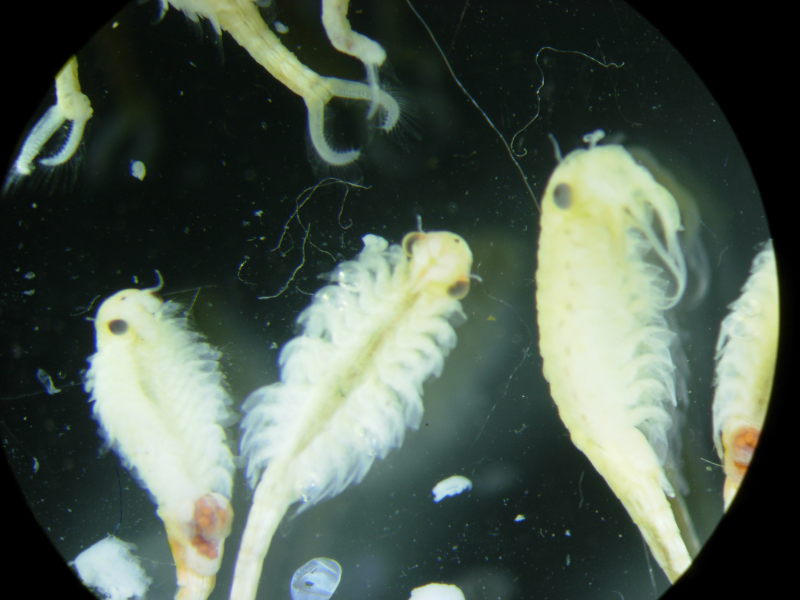

- 12 fairy shrimps (Anostraca)
- 2 clam shrimps (Spinicaudata)
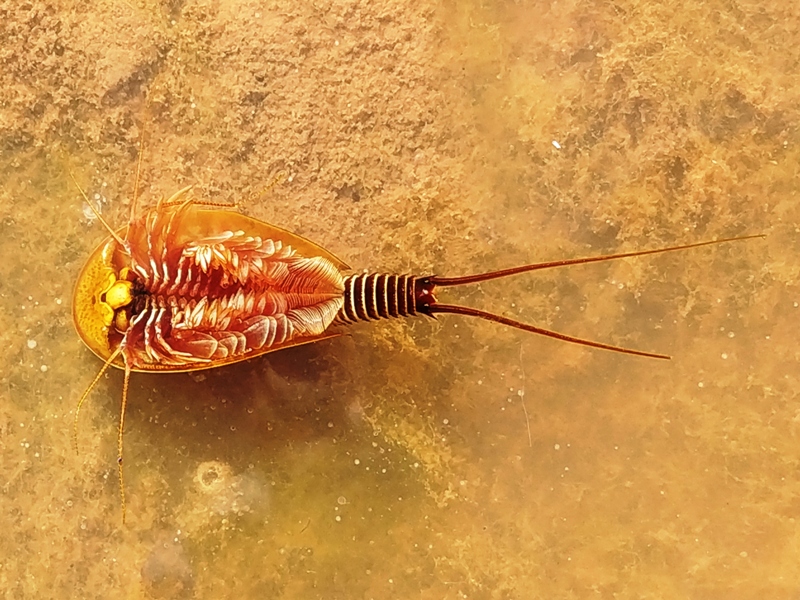
- Triops, tadpole shrimp (aggr. of cryptic species)
- Inhabitants of Mediterranean temporary ponds
- Extraordinary biology
_ Branchiopods are arthropods, i.e. invertebrates with an exoskeleton, whose abdominal legs serve as gills for breathing, and are linked to continental aquatic environments. They are also the most primitive class of the large group of crustaceans, which -we must remember- are especially diverse and abundant in the sea, while insects are abundant on the continents. “Surprising” is possibly the best word to define this group of animals whose biology often constitutes an exception. Of course, they attract the attention of the naturalist because of their scarcity, but also because of the curiosity of species that seem to survive against common sense.
With 15 detected species, Andalusia represents a diversity hotspot for the group in Europe.


Large branchiopods in Andalusia
Crustacea Branchiopoda
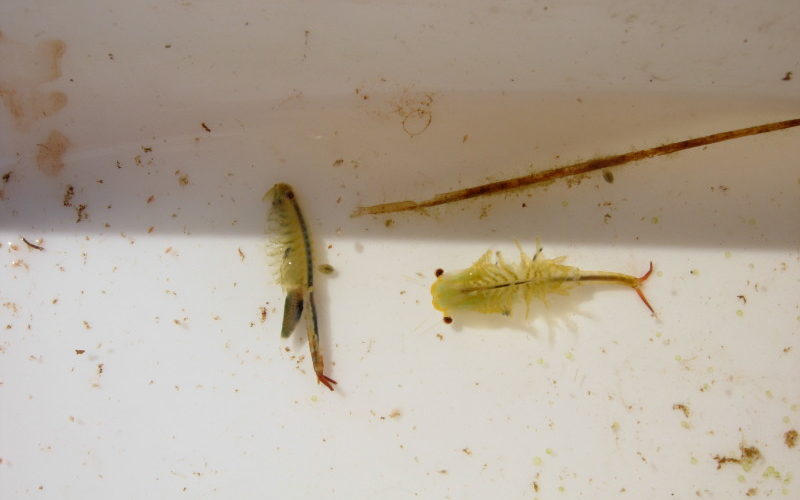
The Branchiopoda group is divided into four orders. We find larger species, rarer but easy to notice and informally coined Large Branchiopods.
NOTOSTRACA. Notostracaceans (literally “shield-shell”), represented by the Genus Triops and really primitive appearance.
SPINICAUDATA. Concostrata (“clam-crustaceans”) with bivalve protective shell,
ANOSTRACA. The defenseless Anostraceans (“shell-less”) also known as fairy shrimps.
ANOMOPODA. To complete this picture, add the broader order of cladocerans, or water fleas, microscopic and highly modified planktonic organisms within the class, also bivalves and provided with a terminal spine.
Iberian endemisms

The Andalusian Fairy Schrimp (Linderiella baetica) is the rarest and most threatened species by far, known from a single peri-urban locality and developing under specific hydrological conditions of low mineralization.
Other notable species are the Iberian Clam shrimp (Cyzicus grubei), Moorish Clam shrimp (Maghrebestheria maroccana), the aggregate of Mediterranean Triops species (Triops mauritanicus aggr.) and the Iberian Fairy Shrimp (Branchippus cortesi).
We must also mention the Brine shrimps (Artemia spp) well known to the public and restricted to salt flats and salty lagoons.
Temporary Mediterranean ponds
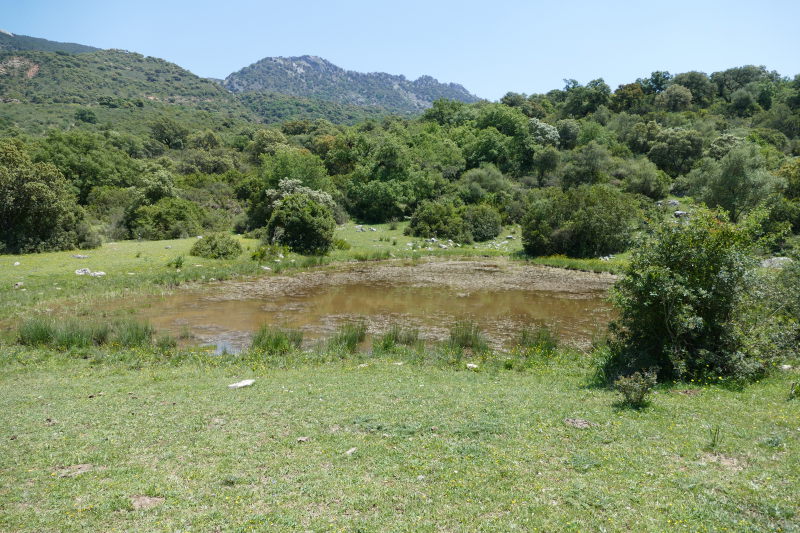
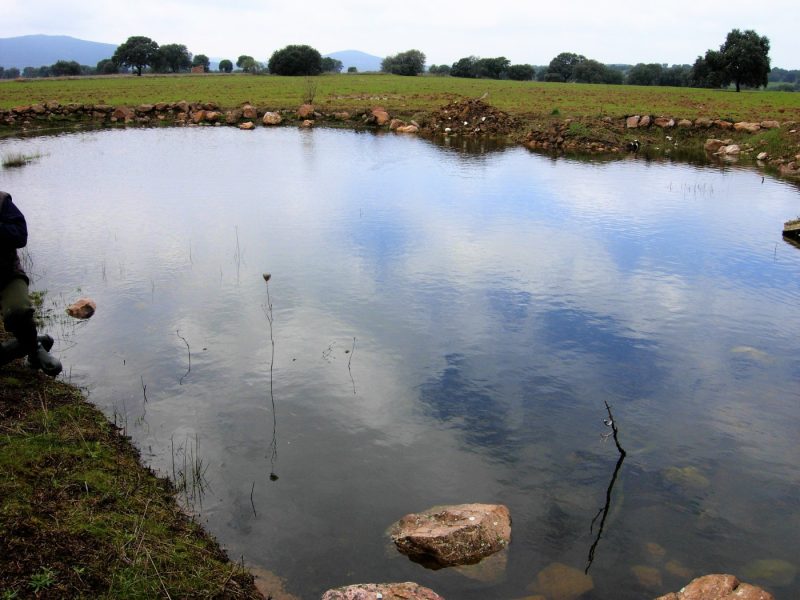
Along with amphibians and various atypical ferns (Marsilea, Isoetes), the Large Branchiopods are the true specialists of temporary Mediterranean ponds and lagoons. This habitat, more abundant in arid regions, is highly threatened by changes in land use and currently considered a priority for conservation.
We have been passionate about Mediterranean temporary pools and have carried out multiple inventories of large branchiopods in Andalusia.
Large branchiopods: list of species present in Andalusia
| # | FAMILY | SPECIES | COMMON NAME | ID | DISTRIBUTION | HABITAT | RARITY |
|---|---|---|---|---|---|---|---|
| ANOSTRACA | |||||||
| 1 | Artemiidae | Artemia franciscana | San Francisco Brine shrimp | Delicate | Cosmopolitan | Hipersaline | EXO |
| 2 | Artemiidae | Artemia parthenogenetica diploide | Diploid Brine shrimp | Delicate | Palearctic | Hipersaline | R |
| 3 | Artemiidae | Artemia parthenogenetica tetraploide | Tetraploid Brine shrimp | Delicate | Palearctic | Hipersaline | R |
| 4 | Artemiidae | Artemia salina | Brine shrimp | Delicate | Palearctic | Hipersaline | R |
| 5 | Branchipodidae | Branchipus cortesi ** | Iberian Fairy Shrimp ** | Easy | Iberian | Shallow Ponds | pC |
| 6 | Branchipodidae | Branchipus schaefferi | Puddle Fairy Schrimp | Easy | Palearctic | Shallow Ponds | C |
| 7 | Branchipodidae | Tanymastix stagnalis | Marsh Fairy Shrimp | Unmistakable | Western Palearctic | Shallow Ponds | C |
| 8 | Chirocephalidae | Branchinectella media | Mediterranean Fairy Schrimp | Delicate | Mediterranean, Central Asia | Hipersaline | R |
| 9 | Chirocephalidae | Chirocephalus diaphanus | Diaphanous Fairy Schrimp | Easy | Palearctic | Shallow Ponds | CC |
| 10 | Linderiellidae | Linderiella baetica ** | Andalusian Fairy Schrimp ** | Delicate | One pond in Cadix | Shallow Ponds | RR / CR |
| 11 | Streptocephalidae | Streptocephalus torvicornis | Tweezers Fairy Schrimp | Unmistakable | Palearctic | Deep ponds | R |
| 12 | Thamnocephalidae | Phallocryptus spinosa | Spiny Fairy Shrimp | Easy | Circum-Mediterranean | Hipersaline | R |
| NOTOSTRACA | |||||||
| 13 | Triopidae | Triops mauritanicus aggr. | Mediterranean tadpole shrimp agg. | Unmistakable/ Dificult | Ibero-maghrebian | Shallow Ponds | C |
| SPINICAUDATA | |||||||
| 14 | Cyzidae | Cyzicus grubei ** | Iberian Clam shrimp ** | Delicate | Ibero-balear | Shallow Ponds | R |
| 15 | Leptestheriidae | Maghrebestheria maroccana | Moorish Clam shrimp | Delicate | Ibero-maghrebian | Shallow Ponds | RR |
(1) SPECIES. * European endemism. ** Iberian endemism.
(2) PREFERED HABITAT. Pond: shallow water body. Hipersaline: extremelly salty waters.
(3) RARITY IN ANDALUSIA. C: common. pC: scarce R: rare. RR: very rare. CR: critically endangered.
Leave a Reply