


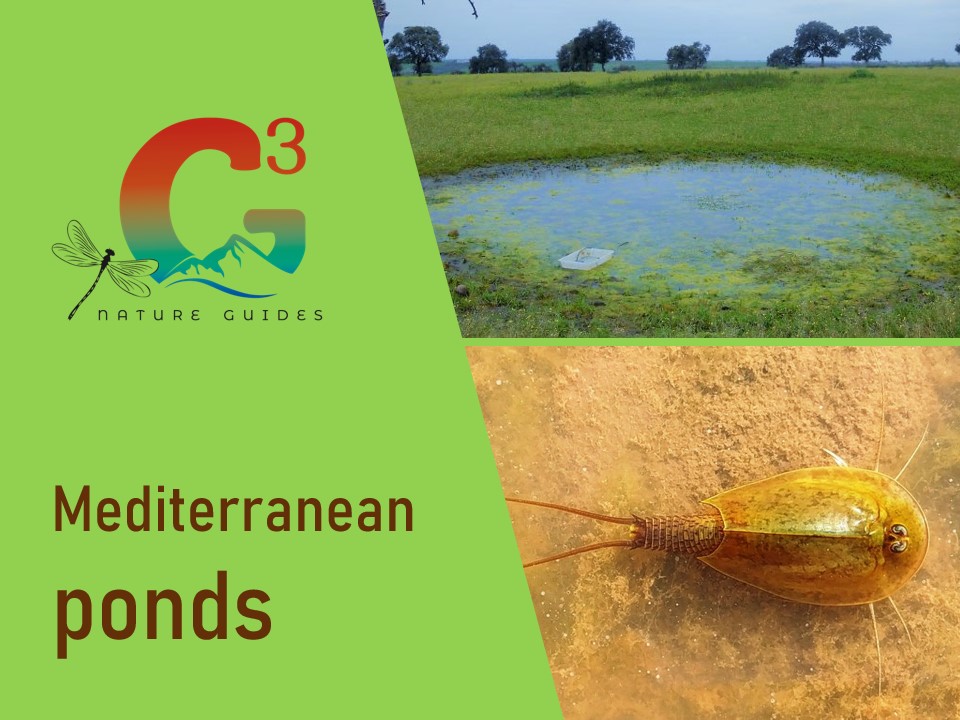
Mediterranean temporary ponds, a habitat of priority interest in Europe, are small wetlands that dry up during the spring. They are the source of a veritable explosion of life and species… where algae, zooplankton, branchiopods, aquatic insects, amphibians, dragonflies, aquatic ferns and other emergent plants thrive. It is really hard to find a habitat richer in biodiversity.
The surface and depth of the water body, the temperature of the water column, and the concentrations of oxygen and mineral salts are factors that vary more or less in synergy with the duration of the flood. Add in the geology of the soil (which can be very salty) and the year’s rainfall to create an
The more specialized and often threatened fauna and flora require a period of pond drying before hatching the following winter.


Step 1: Winter rains

Stage 1. Typical year: December – January. After prolonged rainfall throughout the winter, the depressions in the ground gradually fill with water and form puddles or even lagoons, depending on the size of the catchment area.
These water bodies occupy grasslands with mostly sparse terrestrial vegetation, holes dug for livestock, field bottoms, unprotected lagoon drainage ditches, roadside ruts, abandoned quarries or even basins on granite blocks (‘marmites’).
Although it goes completely unnoticed in the dry period, a seed bank of aquatic plants and branchiopod eggs is waiting for the right conditions to arise.
Step 2: After a few days of flooding…

Stage 2: Typical year: January – February. At this stage, the water bodies are poorly mineralized, cool at night and lack vegetation and animal life.
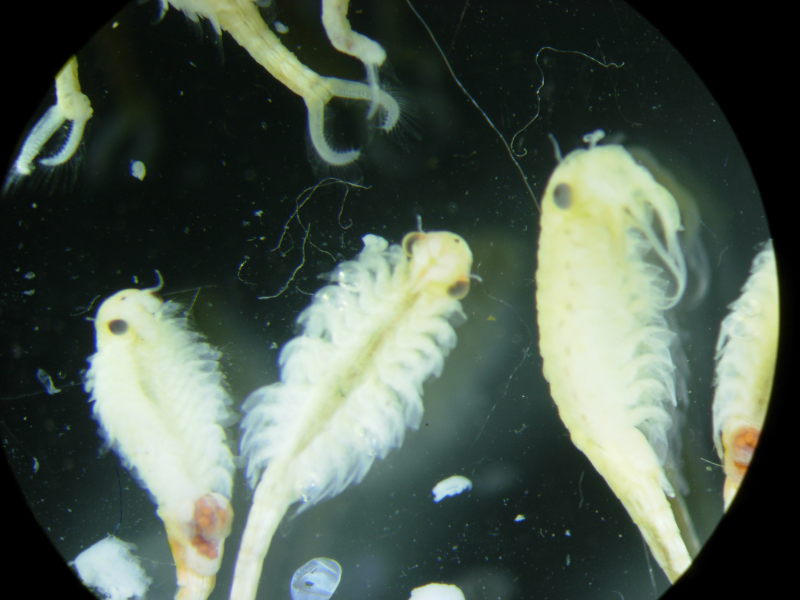
And yet… After only a few days of flooding, the gill plates eggs hatch in large numbers and the larvae develop massively, feeding on algae and organic debris.
Soon after, small planarians appear. Finally, the first
Stage 3: the explosion of life

Typical year: February – March. Stage 3: Highly variable period depending on factors such as water volume, physicochemical conditions and rainfall regime. Heavy rains return the pond to its previous state while high temperatures accelerate its evolution.
Amphibians eventually colonize the ponds, in particular, southern frogs(Hyla meridionalis) and Iberianribbed newts(Pleurodles waltl) are abundant in deeper conditions. Most of the branchiopods are adults, and the saline species typical of deep water develop later.

In shallow ponds, the water warms up, but does not cool down as much during the night. A veritable
Waterfowl are frequent visitors to the wetlands: storks, Cattle Egrets and Little Egrets prey on abundant prey, especially amphibian larvae and Triops.
Step 4: The first heat

Typical year: March – April. Stage 4: The pond has passed its peak. and it is starting to dry out… Noticeably lower water level, warm temperature and signs of eutrophication.
Branchiopods have become very rare, as they cannot withstand high temperatures and predation. However, a few individuals survive and reach large sizes. On the other hand, the growth of other aquatic organisms is accelerated.
Aquatic insects and amphibians have metamorphosed in large numbers, plants have completed their life cycle. Dragonflies generally need prolonged flooding. New rains could prolong this stage but the end of a season is already perceived.
Step 5: low water level and (temporary) end of ponding

Typical year: late April through May (rainy years; large ponds). Stage 5: the pond eventually dries out. At first, persistent moisture in the soil favors dense herbaceous vegetation (it is different in saline soils). Domestic animals take advantage of this herbaceous bonanza when the environment is already withered. Quickly, aridity gains ground and the soil becomes arid again and hides its riches… until the next rains.


- ¿Cuánto tiempo pueden durar los huevos en el sustrato?
- ¿Cuál es la preferencia de especies en función de la profundidad y la salinidad de la columna de agua?
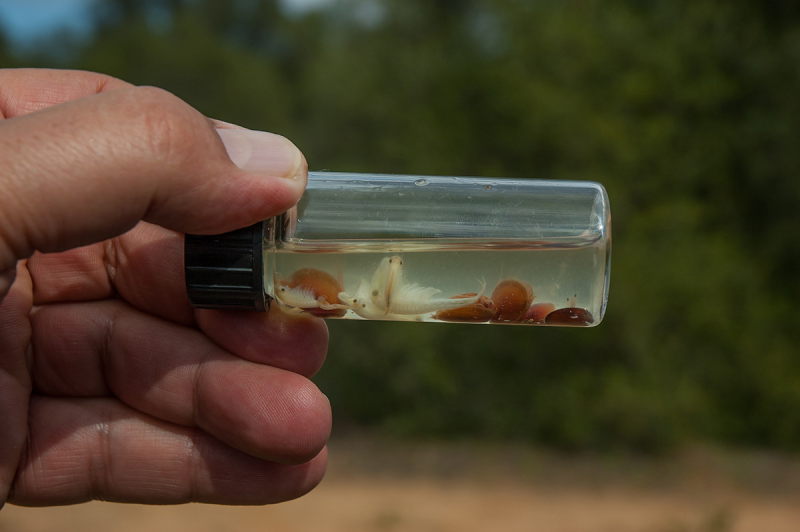
- ¿Por qué hay una coloración particularmente brillante en el abdomen de las hembras?
- ¿Cuántas especies pueden vivir en el mismo estanque?
- ¿Cómo colonizan estas especies nuevos cuerpos de agua, por aire y por tierra?
Leave a Reply