


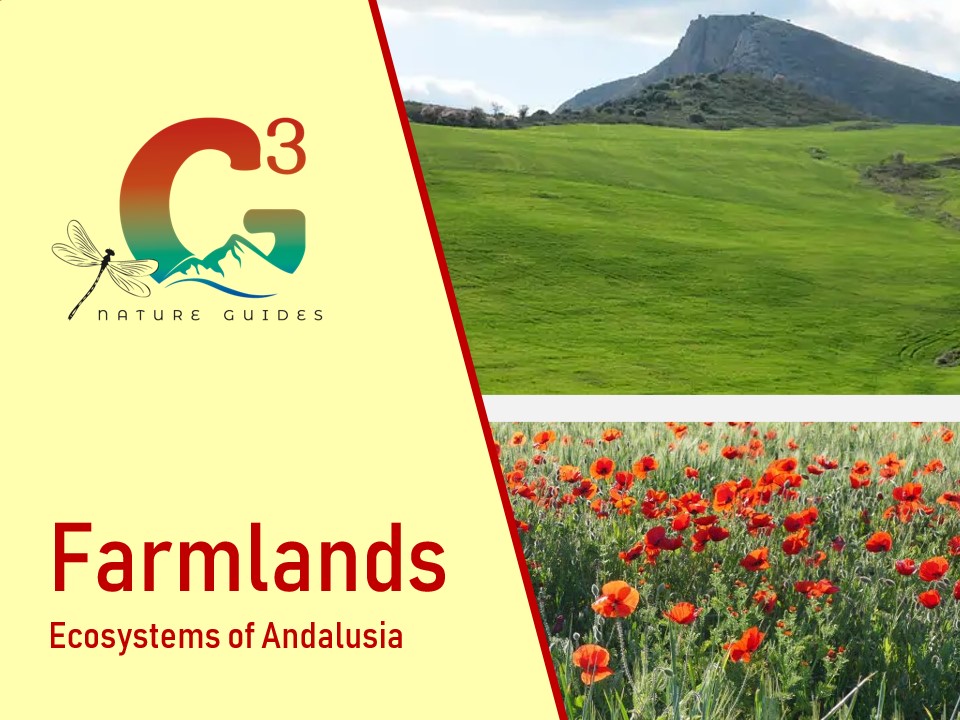
Human-created habitats that can support rich biodiversity, especially in pseudosteppes.

Andalusia’s crops are very varied. Simplistically, they can be divided into two groups:
perennial plantations of fruit trees and herbaceous crops , mainly grasses. Agriculture greatly affects biodiversity, especially depending on the mode of production and whether these crops are grown in small plots or in large monocultures.
Perennial crops: fruit orchards
The most abundant fruit trees in Andalusia are typical of the Mediterranean climate.
- Olive tree(Olea europaea)
- Almond tree(Prunus amygdaloides)
- Citrus(Citrus spec.)
- Grapevine(Vitis vinifera)
- Avocados(Persea americana), mangoes (Mangifera indica) and other tropical fruits
- Chestnut(Castanea sativa).
Flowering of fruit trees. is one of the most spectacular due to its long phenology throughout the year.

Chestnut groves are very naturalized crops with very old and large trees. It is a deciduous species limited to the most humid Andalusian mountain ranges. The almond trees bloom in January or February and are an important winter source of nectar for hymenoptera and butterflies. The vineyards host small populations of alzacolas(Cercotrichas galactotes).
Annual crops: cereals and grasses

- Wheat(Triticum spec.)
- Sunflower(Helianthus annuus)
- Cotton(Gossypium spec.)
- Rice(Oryza sativa)
Harvesting and crop rotation maintain a simplified vegetation of herbaceous strata comparable to some extent to the great plains of Asia. These pseudo-steppes are very favorable for steppe birds:Great Bustards(Otis tarda), Little Bustards(Tetrax tetrax), lapwings(Vanellus vanellus), etc.

On the other hand, Seville’s rice fields are regularly flooded in autumn for cultivation and also receive numerous waterfowl, gulls and waders.

One of the beautiful discoveries of my stop in Córdoba: the location of a rather dense population of Alzacolas in the countryside near Fernán Núñez. This not very shy insectivorous species is becoming extremely rare.
Leave a Reply