


Although European avian diversity is lower than in other regions, including North America, the continent offers unique attractions for North American birders. Europe is home to endemic species, varied ecosystems, and well-organized birding tourism opportunities. All in all, it is very easy to enjoy birds absent in North America and to improve your overall ornithological knowledge.
Spain’s interest for birdwatching
Spain offers a very interesting ornithological experience for North American birders, even though European bird diversity may seem modest compared to other regions. Spain is undoubtedly the most attractive and most visited country in the Old Continent for its birding.
- International recognition: Spain is the first country in Europe and the fifth in the world in registered bird sightings, which reflects its importance in the ornithological field.
- Unique species: Observers may encounter birds not seen in North America.
- Habitat diversity: Spain has a variety of ecosystems, from mountains and forests to steppes and coasts, providing a wide range of environments for birdwatching.
- Migratory routes: Spain is a strategic point for observing migratory routes between Europe and Africa, offering unique sighting opportunities.
- Sighting infrastructure: The country has excellent locations for sightings, such as the Doñana National Park or the Picos de Europa.
- Organised tours: There are numerous options for guided ornithological tours, adapted to different levels of experience and areas of interest.
- Cultural enrichment: In addition to the ornithological experience, visitors can enjoy the rich Spanish culture and history.
This combination of factors makes Spain an attractive destination for North American birdwatchers, allowing them to broaden their ornithological knowledge and enjoy unique species in a European context.
Bird orders absent or rare in North America
Traditionally, the world’s more than 10,000 species of birds have been grouped into 28 zoological orders, which group families of birds that are very similar to each other. Likewise, the orders reflect the evolutionary history of the group and morphological similarities among its species. Today, the development of genetics and modern methods point to as many as 40 orders, which represent as many stories of “How to be a bird”, hence the interest in observing representatives to broaden the ornithological experience.
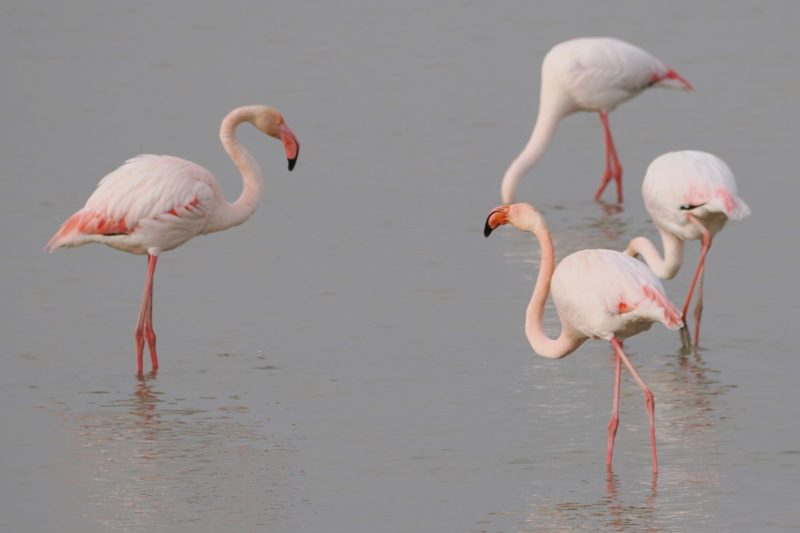
PHOENICOPTERIFORMES (Greater Flamingoes). Large waterfowl, characterized by pink plumage, extremely long neck and legs, and a curved bill adapted for filtering food in shallow water. Six species worldwide. The only Greater Flamingo species found naturally in the Americas is the American Greater Flamingo (Phoenicopterus ruber), which is found mainly in the Caribbean, Central and South America. In comparison, the Greater Flamingo (Phoenicopterus phoenicopterus) is abundant in the Mediterranean basin.
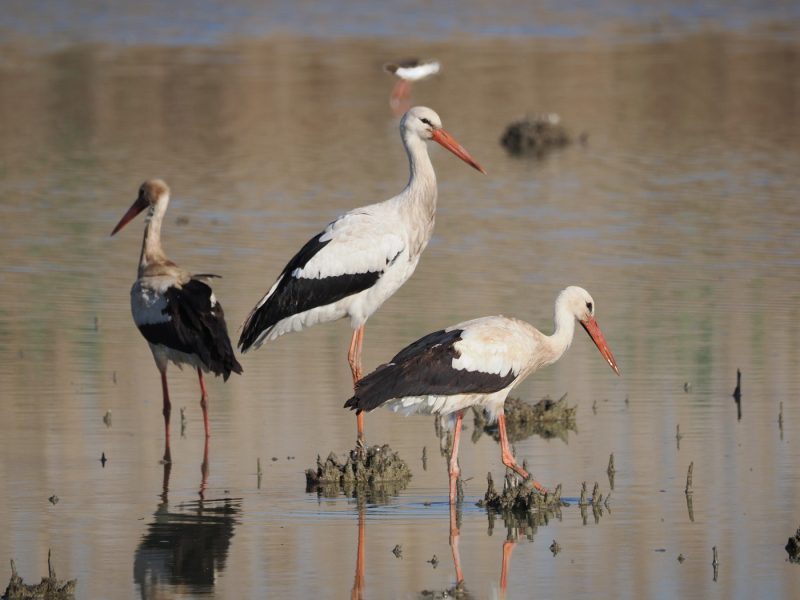
CICONIIFORMES (storks). Medium to large wading birds, characterised by long bill, neck and legs, short body, broad rounded wings, and adaptations to aquatic life. 19 species worldwide. Ibis and spoonbills (Threskiornithidae) and herons (Ardeidae) are members of the Pelecaniformes. In North America, only one species, the wood stork (Mycteria americana). In Spain, the white stork (Ciconia ciconia) is common while the black stork (Ciconia nigra) is more localised.
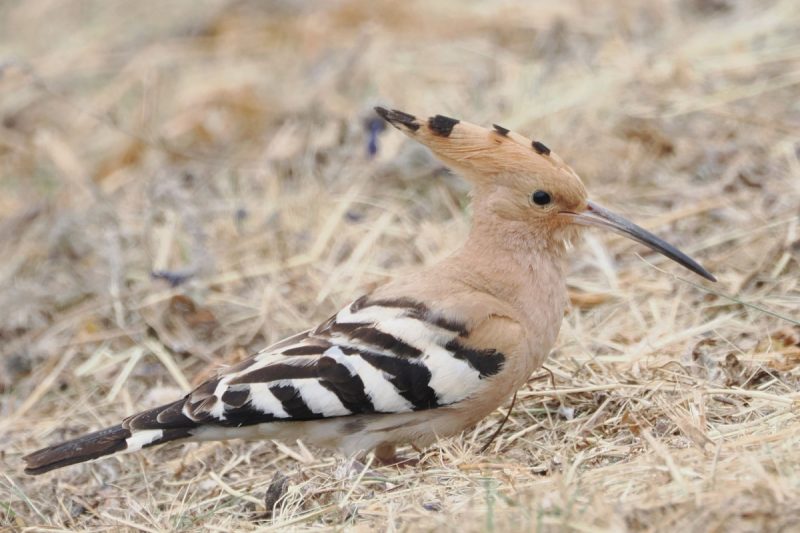
BUCEROTIFORMES (calaos). Medium to large birds, characterised by large, curved bills, casques in some species, and varied plumage. Recently separated from the kingfisher group (CORACIIFORMES) and a close relative of the woodpeckers (PICIFORMES). With more than 70 species worldwide, this order is absent from North America and is represented only by the hoopoe (Upupa epops) in Europe.
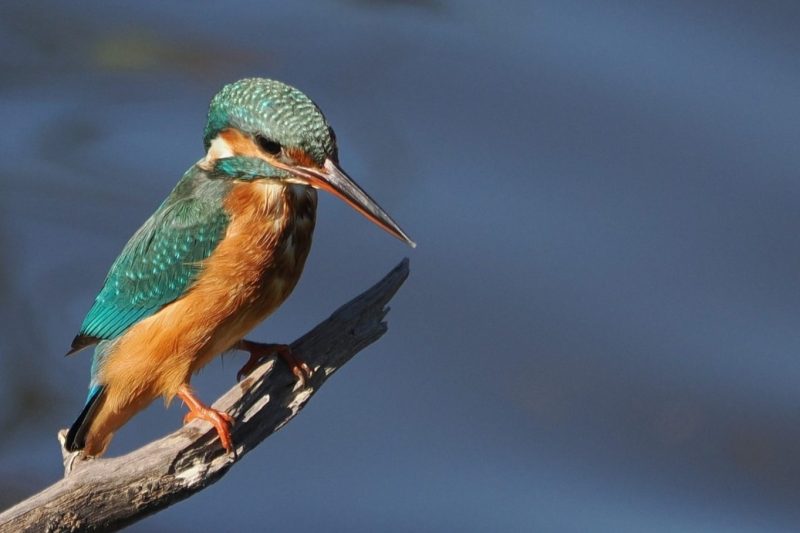
CORACIIFORMES (kingfishers, bee-eaters and caracaras). Generally colourful neognathous birds, robust and varied bills, short legs, lustrous and showy plumage. Around 180 species in the world. In Spain, we find the bee-eater (Merops apiaster) and the roller (Coracias garrulus), both absent from North America, as well as a single species of kingfisher (Alcedo athis) but with ‘glorious’ plumage.

PTEROCLIFORMES (gangas). Medium-sized birds adapted to arid areas, characterized by their robust body, long pointed wings, cryptic plumage and short legs, including 16 species distributed in steppes and semi-deserts of Eurasia and Africa.

OTIDIFORMES (bustards). Large land birds, including great bustards (Otis tarda) and little bustards (Tetrax tetrax), with robust bodies, long legs, elongated necks, cryptic plumage, adaptations to open and dry environments, and marked sexual dimorphism. 26 species worldwide. Found in Africa, Europe, Asia and Australia, but not in the Americas.
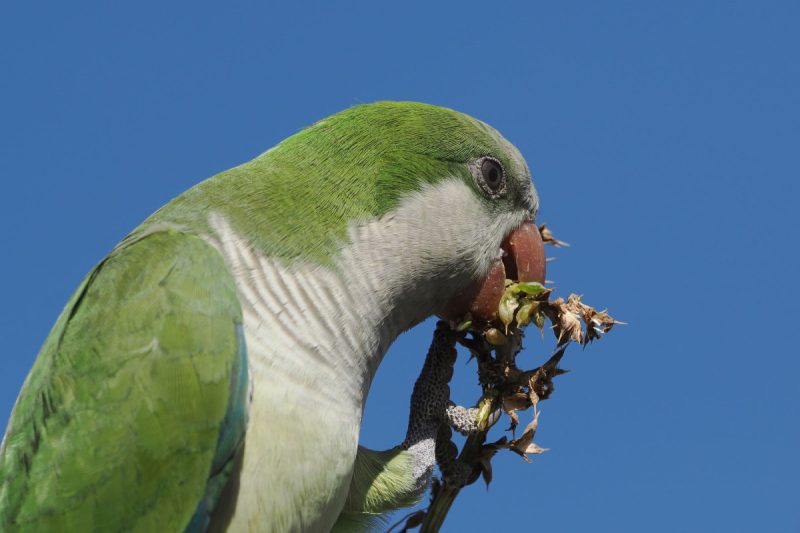
PSITTACIFORMES (parrots and parakeets). Tropical and subtropical birds characterised by their robust, curved beaks, zygodactyl legs, generally colourful plumage and great intelligence. More than 400 species in the world. Two species introduced and established in Spain: the Monk Parakeet (Myiopsitta monachus), also present in Florida, and the Rose ringed Parakeet (Psittacula krameri).
These seven orders are well represented in the Iberian fauna, with species widely distributed throughout its geography, especially in Andalusia. However, OTIDIFORMES and PTEROCLIFORMES, steppe and agricultural birds, are the most difficult to observe, both because of their cryptic habits and their specialization in a type of habitat artificialized by industrial agriculture. It is not uncommon to detect members of the other five orders in a single field day.
Entire families not present in North America
Obviously, the families integrate the missing US orders such as Hoopoes (Upupidae), Bee-eaters (Meropidae), Rolers (Coraciidae), Great Bustards (Otitidae) and Gangas (Pteroclidae). Among the huge order of PASSERIFORMES, we find several families not represented in North America.
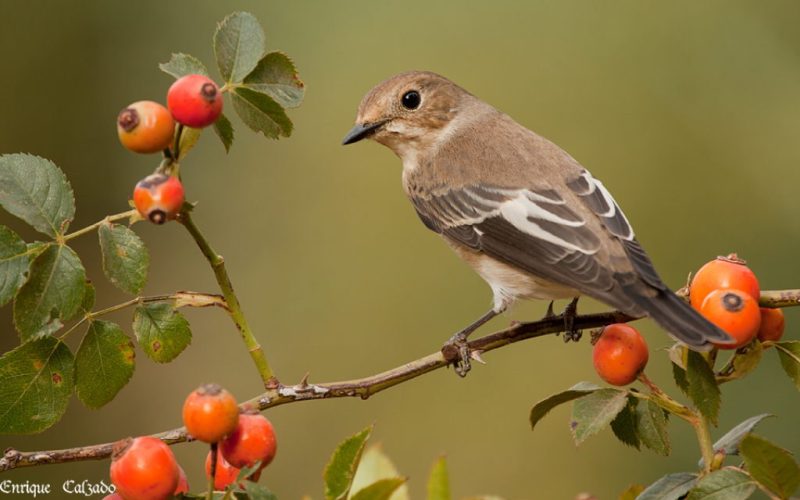
- Old World Flycatchers (Muscicapidae): this Family includes species such as the European Robin and several flycatchers. The phylogeny of this family has changed profoundly.
- Old world Warblers (Sylviidae): many warbler species in Europe belong to this family, which is distinct from the New World warblers.
- Acentors (Prunellidae).
- Old World Oropendolas (Oriolidae): the European oriole belongs to a different family from the New World oropendolas.
- Larks (Alaudidae): while there are a few lark species in North America, the family is much more diverse in Europe.
- Remizidae.
- Panuridae: this unique species is found in Europe, but has no close relatives in North America.
Monotypic genera
Not necessarily endemic to Europe, some bird genera include only a single species. These birds are truly unique, with no ‘twin’ relatives, and are called monotypic. In Europe, this is the case for the following species.
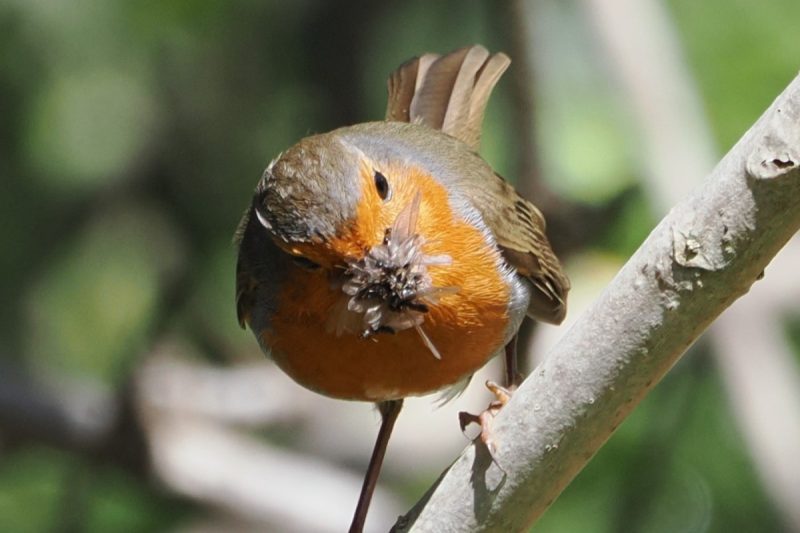
- The genus Erithacus (robin) contains only one species, the European robin (Erithacus rubecula), which is widespread throughout Europe.
- The wallcreeper Tichodroma is also the only known genus within the family Tichodromidae.
- Marble teals (Marmaronetta angustirostris) are truly unique and only one species has been described in the genus (‘monotopic’).
- Otis is a genus of bustard that contains only one living species, the Great Bustard (Otis tarda).
- Lullula is a genus of larks, songbirds of the family Alaudidae. Only one species remains alive, the wood lark.
- Razorbill is a Genus of caradriform bird that contains a single living species, the Razorbill (Razorbill torda). Many fossil species.
- Black vulture (Aegypius monachus).
- Bearded Tit (Panurus biarmicus) is the only species of the Family Panuridae.
- Widely distributed in North America, Pandion is a genus of piscivorous raptors, known as ospreys, with only one species and the only genus in the family Pandionidae.
Bird species endemic to Spain
The new European Breeding Bird Atlas (EBBA2) recorded 539 species of native birds breeding in Europe, of which 59 are near-endemic (mainly concentrated in Europe) and 40 are found only in Europe. Birds endemic or near-endemic to Europe that can be seen in Spain.
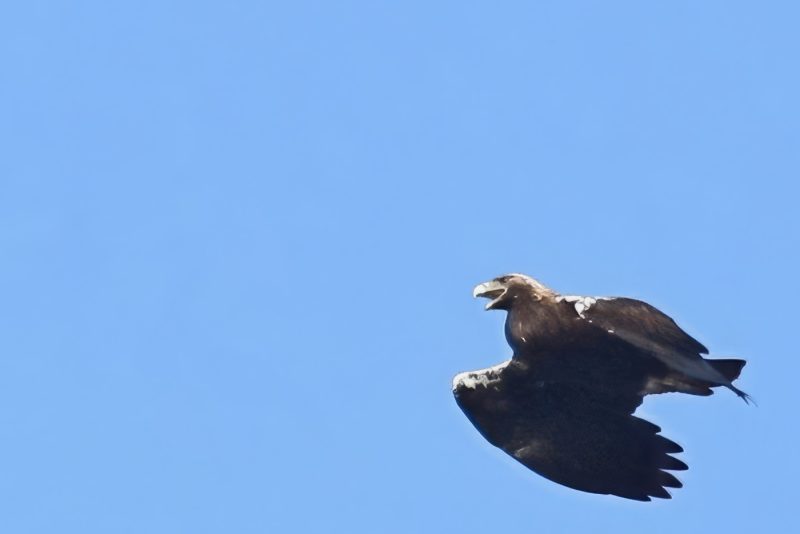
Endemic species of the Iberian Peninsula that are mainly found in Spain.
- Iberian imperial eagle (Aquila adalberti).
- Iberian green woodpecker (Picus sharpei): a separate species from the European green woodpecker.
- Iberian chiffchaff (Phylloscopus ibericus): this species breeds in northern Spain and Portugal.
- Balearic warbler (Sylvia balearica): endemic to the Balearic Islands
- Iberian Azure-winged Magpie (Cyanopica cooki): formerly considered a subspecies of Cyanopica cyanus (Asiatic Azure-winged Magpie).
- Balearic Shearwater (Puffinus mauretanicus): widely distributed outside the breeding season, but breeds exclusively on the Balearic Islands.
- Iberian grey shrike (Lanius meridionalis).
- Cantabrian capercaillie (Tetrao urogallus cantabricus), a critically endangered subspecies of the western capercaillie, endemic to the Cantabrian mountain range in northern Spain.
Endemic species of the Canary Islands
- Canary’s chifchaff (Phylloscopus canariensis).
- Tenerife blue Chaffinch (Fringilla teydea)
- Blue Chaffinch Gran Canaria (Fringilla polatzeki)
- Fuerteventura Stonechat (Saxicola dacotiae)
Other European endemisms present in Spain
- Citril finch (Carduelis citrinella) is distributed in northern Spain, southern France and the Alps.
More taxa you won’t find in North America
15 common birds not found in America
Species common in most European gardens but not naturally occurring in North America:
- European Robin (Erithacus rubecula)
- Blackbird (Turdus merula)
- Great Tit (Parus major)
- Blue Tit common (Cyanistes caeruleus)
- Goldfinch European (Carduelis carduelis)
- Chaffinch (Fringilla coelebs)
- Eurasian Magpie (Pica pica)
- Common swift (Apus apus)
- Green woodpecker (Picus viridis) [no presente en España]
- Eurasian Jay (Garrulus glandarius)
- Rufous Nightingale (Luscinia megarhynchos)
- Eurasian nuthatch (Sitta europaea)
- European Greenfinch (Chloris chloris)
- Common Chiffchaff (Phylloscopus collybita)
- Common lark(Alauda arvensis) [not so common nowadays]
More than 40 Genus not present in the USA.
- Otis (Great Bustard) – Family Otididae
- Upupa (hoopoe) – Family Upupidae
- Merops (bee-eater) – Family Meropidae
- Coracias (roller) – Family Coraciidae
- Picus (green woodpecker) – Family Picidae
- Jynx (Jynx) – Family Picidae
- Erithacus (European robin) – Family Muscicapidae
- Luscinia (nightingale) – Family Muscicapidae
- Saxicola (stonechat) – Family Muscicapidae
- Oenanthe (wheatear) – Family Muscicapidae
- Ficedula (flycatcher) – Family Muscicapidae
- Phoenicurus (redstart) – Family Muscicapidae
- Sylvia (warbler) – Family Sylviidae
- Phylloscopus (chiffchaff) – Family Phylloscopidae
- Regulus (ryezuelo) – Family Regulidae
- Parus (Tits) – Family Paridae
- Cyanistes (Blue Tit) – Family Paridae
- Periparus (Coal Tit) – Family Paridae
- Lophophanes (Crested Tit) – Family Paridae
- Poecile (Tit) – Family Paridae
- Sitta (Nuthatch) – Family Sittidae
- Certhia (Treecreeper) – Family Certhiidae
- Garrulus (Jay) – Family Corvidae
- Magpie (Magpie) – Family Corvidae
- Pyrrhocorax (Chough) – Family Corvidae
- Corvus (Crows) – Family Corvidae
- Passer (Old World Sparrow) – Family Passeridae
- Petronia (Rock Sparrow) – Family Passeridae
- Fringilla (Chaffinch) – Family Fringillidae
- Chloris (Greenfinches) – Family Fringillidae
- Linaria (Linnets) – Family Fringillidae
- Acanthis (linnets) – Family Fringillidae
- Loxia (crossbills) – Family Fringillidae
- Carduelis (Goldfinches) – Family Fringillidae
- Serinus (serines) – Family Fringillidae
- Pyrrhula (bullfinches) – Family Fringillidae
- Emberiza (buntings) – Family Emberizidae
- Plectrophenax (snow buntings) – Family Calcariidae
- Motacilla (wagtails) – Family Motacillidae
- Anthus (pipits) – Family Motacillidae
Very distinctive species
Spain is famous for the richness of its diurnal raptor populations. The number of species is around 30 species similar to those in the USA, although they are 20 times larger in size. No wonder Spain is considered a paradise for raptors.
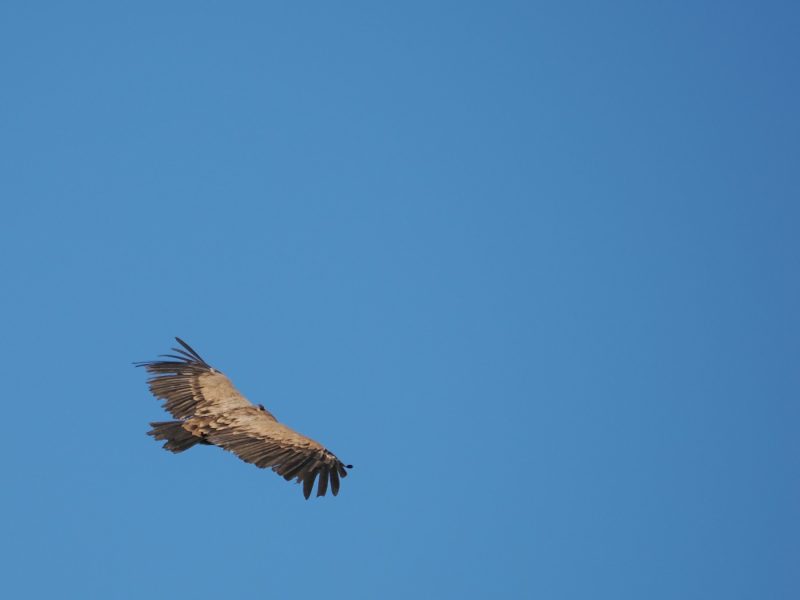
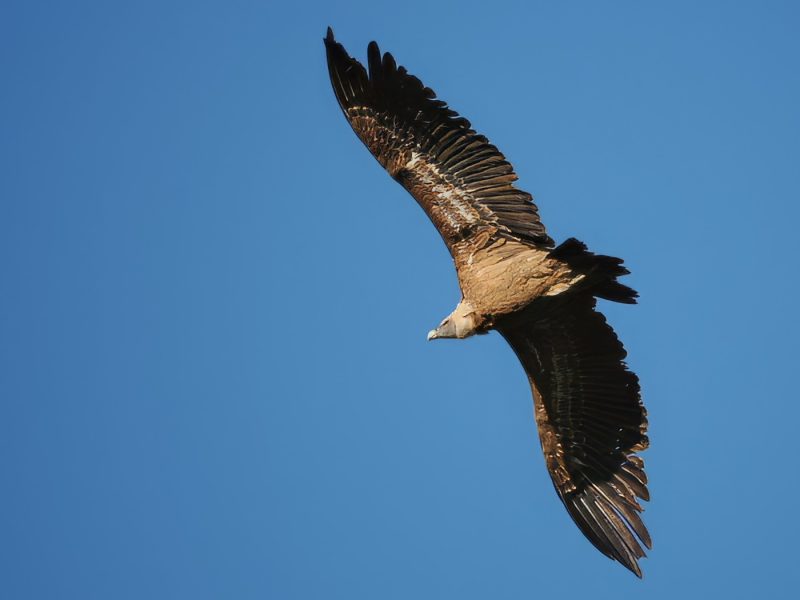
Griffon vultures (Gyps fulvus): the size of European vultures is often impressive.
Stone Curlew Eurasian(Burhinus oedicnemus): not present in the USA.
Black-winged Stilt (Himantopus himantopus) is widespread, while the similar species found in the U.S., Himantopus mexicanus, is found mainly on the coast.
Swifts(Apus spec): Four spp in all of North America vs. five species in the province of Cadiz (Andalusia).
Leave a Reply