


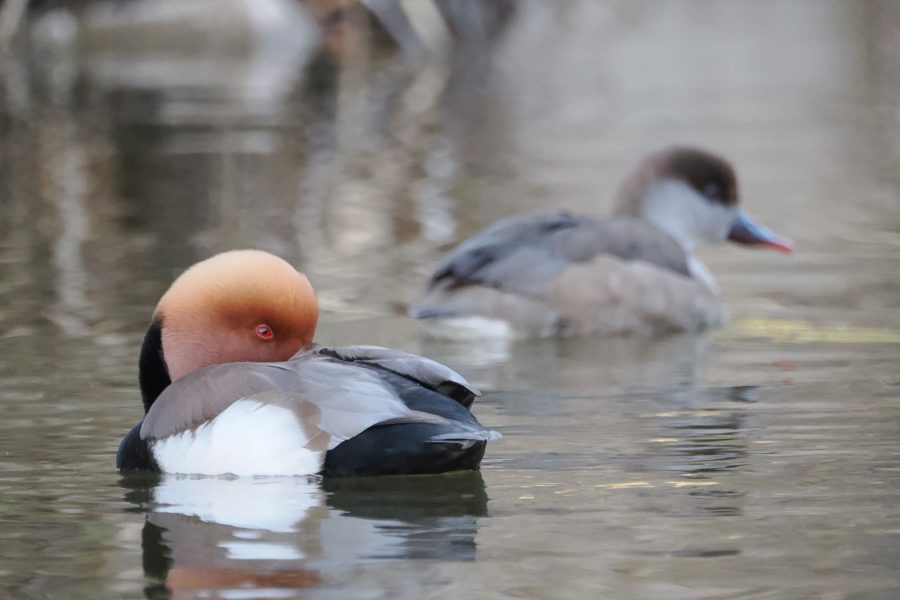
Bird paradise Can you imagine a place where more than 300 species of birds coexist in a single year, where the sky is painted pink with thousands of Greater Flamingoes and the marshes buzz with the flapping of imperial eagles, cranes and Crane?
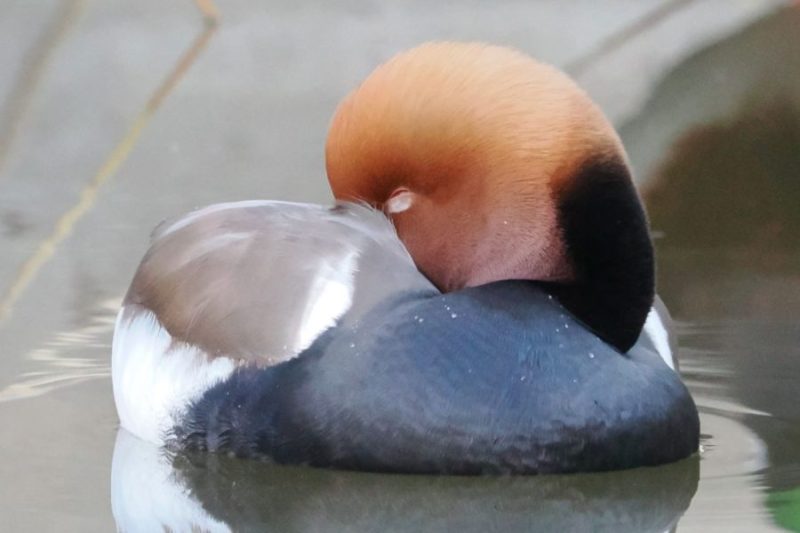
Doñana represents for the ornithologist one of the most important living sanctuaries in Europe, where continental migrations converge and where the greatest diversity of birds in Spain is concentrated in a unique mosaic of ecosystems.
Tours and information about Doñana

Waterfowl status in Doñana
The Guadalquivir estuary, together with the marshes and lagoons of the Aeolian mantle, form one of the largest wetland extensions in Europe, a magnet for tens of thousands of waterfowl.
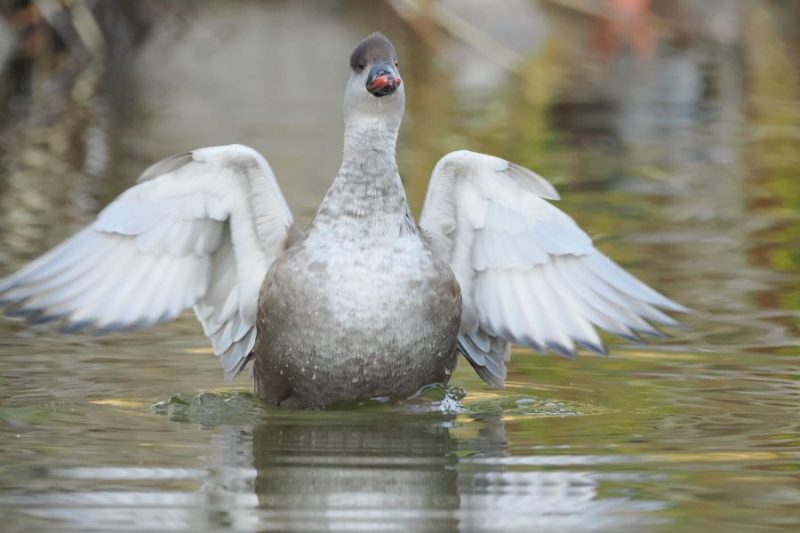
Population monitoring data (2008-2024) reveal a community in transition, where conservation successes coexist with alarming declines, and where prolonged drought (2020-2024) has acted as an additional stress that has exacerbated previous trends.
Wintering avifauna in Doñana
The winter waterfowl community in Western Andalusia is a spectacle of massive abundance, dominated by migratory birds from Northern Europe.
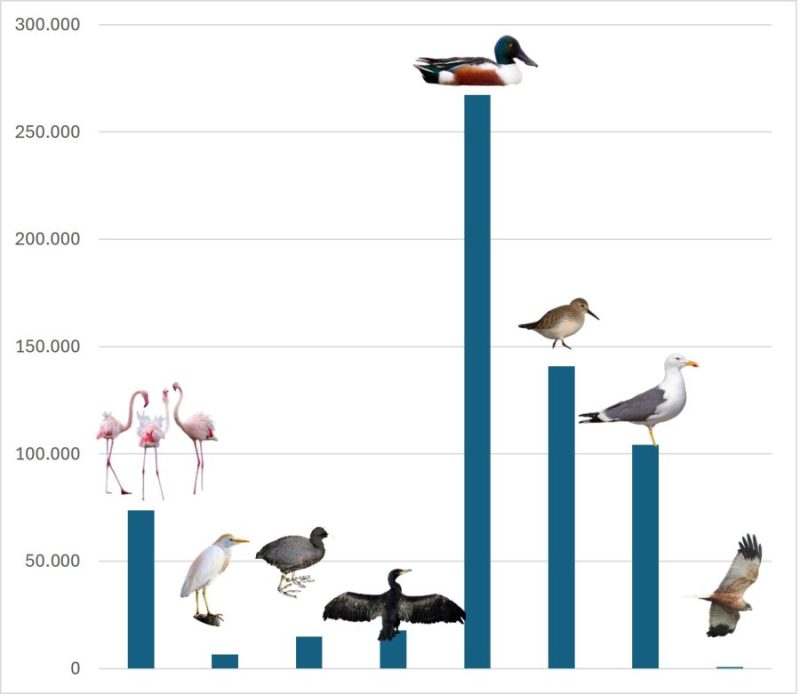
Geese and ducks (>250,000 individuals) cover the marshes, accompanied by huge flocks of waders (>140,000) that sweep the silts, while thousands of Greater Flamingoes, Spoonbills, Greater Flamingoes, Cranes and Herons (>80,000) define the landscape.
The cormorants, very active, gather in their roosts near the heron roosts. This concentration, which includes more than 100,000 gulls, turns the wetland into a gigantic winter feeding and shelter, showing its crucial role as the winter quarters of the western Mediterranean.
Breeding birds in Andalusia
The waterfowl breeding community in Doñana and its surroundings is a phenomenon of concentrated intensity with showy courtships and extreme specialization.
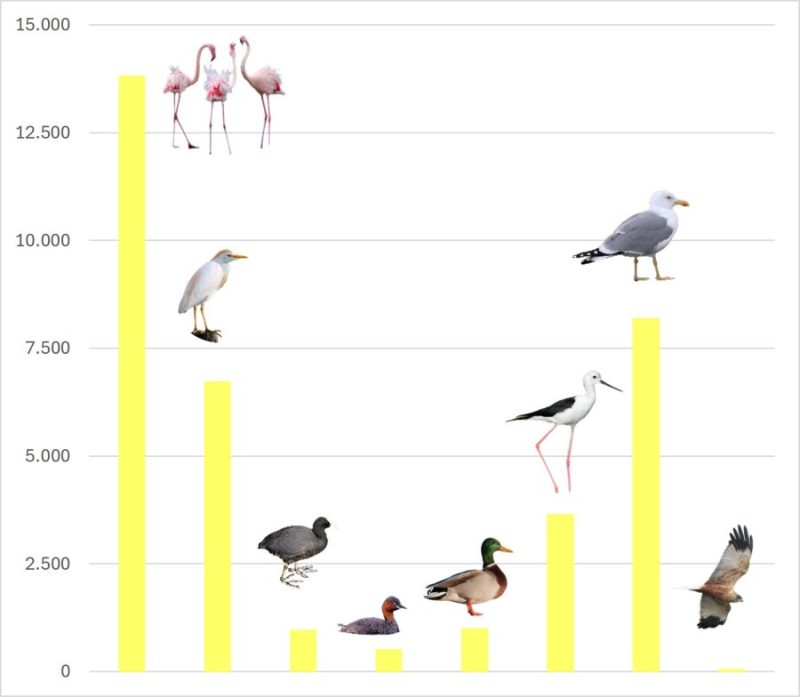
Abundances and success depend on the availability of water in the wetlands and the timing of desiccation of these mostly temporary ponds. Resident great waders and colonial herons nest in remote colonies and bustling aviaries.
In stark contrast to the winter, ducks and Common Coots are reduced to a few thousand: they are resident and generally endangered species, accompanied by grebes. The populations of waders, gulls and raptors decrease drastically but are still remarkable. In favorable years, the sector hosts large colonies of rare birds such as pagazas, fumarelles and Collared Pratincole.
Wealth as a function of presence status
The aquatic avifauna of Doñana is composed of approximately 90 species, whose phenological composition reveals the complexity of this wetland.
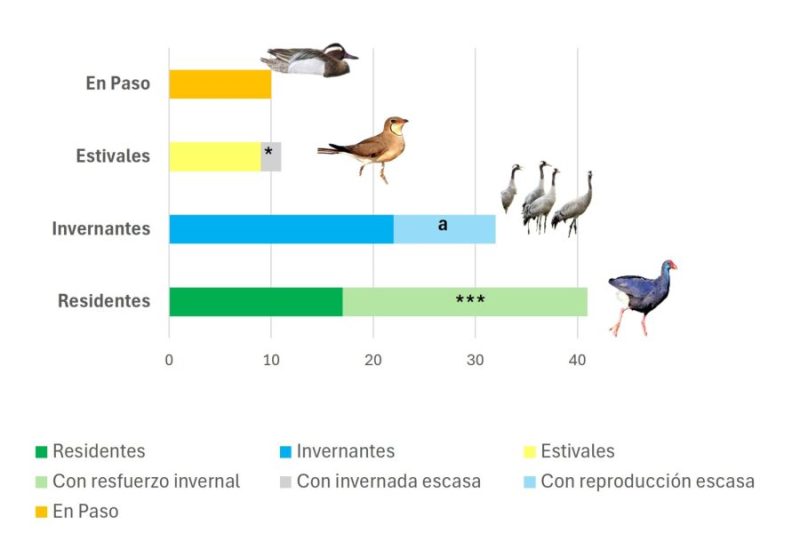
Nearly half are resident species, whose breeding populations are significantly strengthened by the massive arrival of wintering individuals.
One third corresponds to typical wintering birds, although some, such as certain ducks, can establish sporadic and reduced breeding nuclei in years of exceptionally favorable hydrological conditions. The rest are summer and migratory species, whose occasional presence completes the annual cycle of the avifauna in this ecosystem.
Aerial surveys in Doñana
Since 1974, the Doñana Biological Station has organized aerial censuses from a light aircraft that methodically flies over the Doñana marshes, generating one of the longest time series of waterbirds in the Mediterranean.
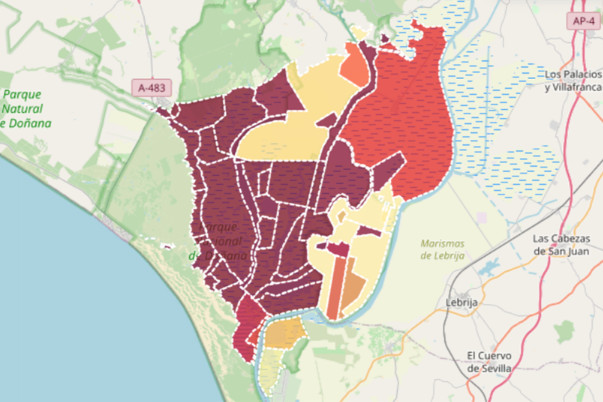
Its essential value is to disaggregate natural fluctuations from long-term trends, making it possible to differentiate a single bad year from a structural decline, which is key for wetland diagnosis and management.
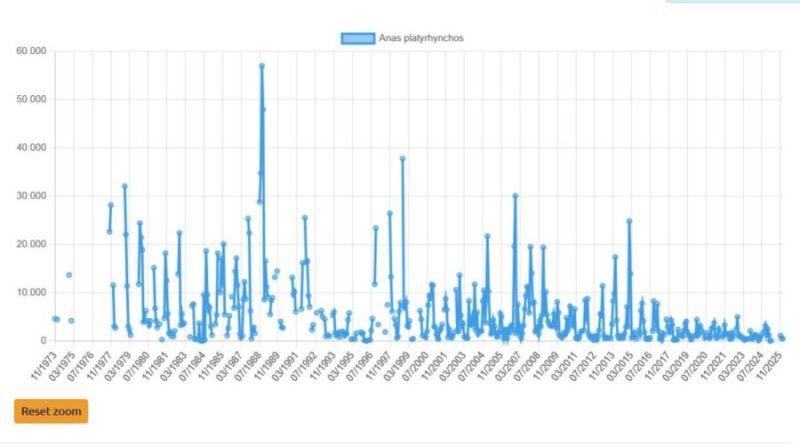
These censuses can be consulted on the Doñana ICTS website, with the possibility of creating personalized graphs.
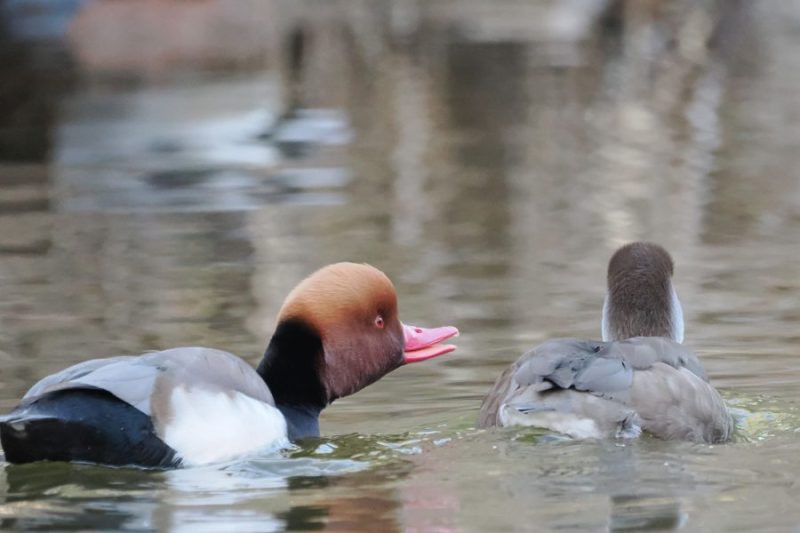
Evolution of the duck community in the Guadalquivir marshes.
Fascinating article describes the trajectory of waterfowl populations in the Guadaluqivir marshes (2024) Habitat Changes at the Local Scale Have Major Impacts on Waterfowl Populations Across a Migratory Flyway.
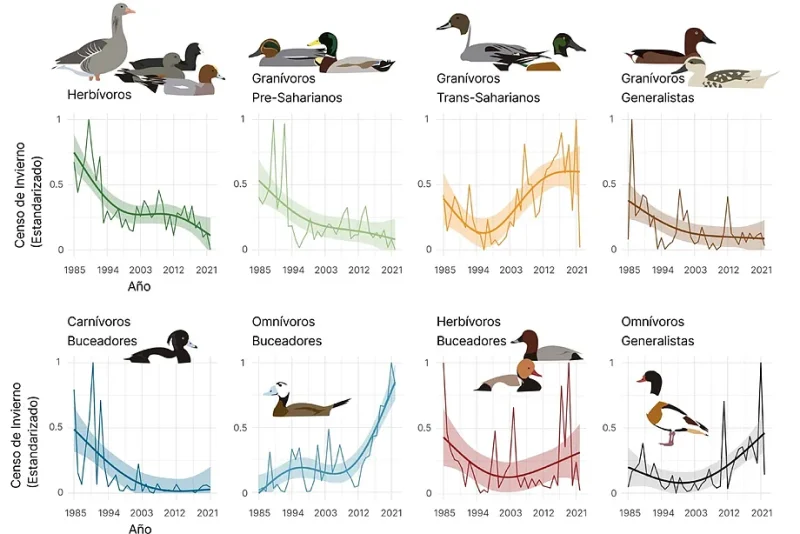
Species have been classified according to their food type and migration type to try to understand if they explain the evolution of their populations. The wintering community has changed from being dominated by herbivorous and short-migrating species to currently being dominated by granivorous and long-migrating species. In short, the Mallard has been replaced by the Northern Shoveler.
Ornithological sources of Doñana
- Junta de Andalucía. International Water Bird Census (IWC), February census of wintering birds: Cádiz-Sevilla-Huelva.
- Junta de Andalucía. Breeding bird data: Andalusia.
- ICTS-Doñana (EBD-CSIC). Monthly waterfowl censuses since 1974.
- Doñana Biological Station (EBD-CSIC). Doñana Ornithological Yearbook. Nº 0, December 2000. Doñana’s Birds Prontuary. .
Status of avifauna presence
- Residents: Species present all year round, breeding and wintering in Doñana. Resident birds *** with winter reinforcement increase their numbers by several orders of magnitude in winter.
- Summer birds: Birds that arrive in spring-summer to breed, spending the winter in Africa. Summer birds * have small wintering populations that often go unnoticed.
- Wintering: Species that arrive in autumn from northern Europe to spend the winter, leaving in spring. Wintering birds also breed locally with very low and anecdotal numbers.
- Passage migrants: They use Doñana exclusively as a resting and feeding area during their migratory journeys (pre-breeding in spring, post-breeding in autumn). Migratory ª migrants may breed locally with minimal numbers or even exceptionally (ª). Migratory * migrants maintain only very small groups throughout the winter.
- Erratic or Wandering: Birds that appear occasionally, outside their usual range, often due to storms or disorientation.
The impacts of prolonged drought (2020-2024) and agricultural intensification, which is still underway, may be offset by the historically very wet winters and springs of 2025 and 2026. Finally, the catastrophic cycle has been broken and restored much of its past glory to the Doñana wetland and surrounding areas.
Evolution by waterfowl group
Most recognizable icons of Doñana, whose ecology is intimately linked to the availability of extensive shallow water areas. Their large historical population sizes are a direct testimony to the importance of these feeding areas.
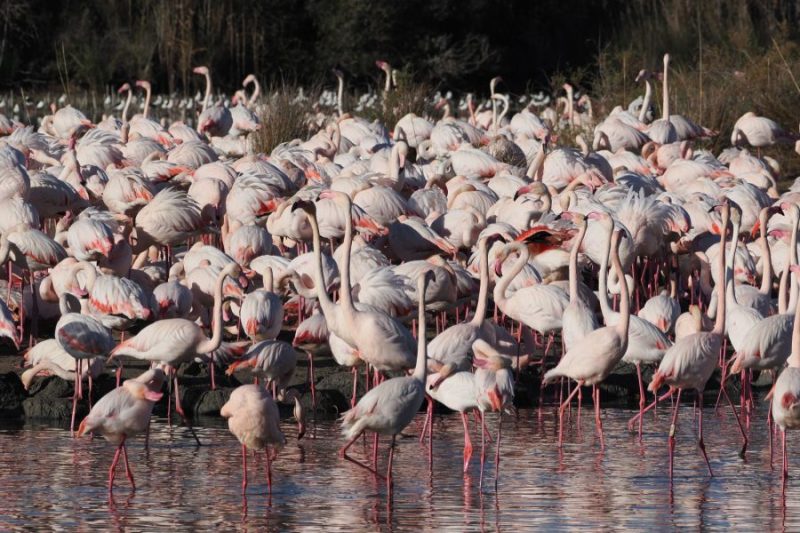
However, the drastic reproductive decline observed during the extended drought period (2020-2024), with reductions exceeding 70% in species such as Greater Flamingo and Glossy Ibis, strongly evidences their extreme vulnerability to the lack of flooding and the consequent reduction of available habitat.
| SPECIES | STATUS |
|---|---|
| White Stork | Resident *** |
| Black Stork | In Step * |
| Common Spoonbill | Resident *** |
| Glossy Ibis | Resident |
| Greater Flamingo | Resident |
| Lesser Flamingo | Resident |
| Common Crane | Wintering (ª) |
Most species in this group are resident and present year-round in large numbers, although with notable seasonal variations. Greater Flamingo(Phoenicopterus roseus) and White Stork(Ciconia ciconia) show complex migration patterns, with dispersive movements and a mix of sedentary and migratory populations. In contrast, local populations of Glossy Ibis(Plegadis falcinellus) and Spoonbill(Platalea leucorodia) are more sedentary, although their numbers are also higher during wintering. For its part, the common Crane(Crane grus) only appears during the winter, moving in large and noisy flocks only during the cold months, with a maximum census that can exceed 7,000 birds.
In the breeding context, colonies of large waders dominate the total numbers of nesting birds in Doñana and the rest of Andalusia, especially the huge Greater Flamingo colony in the Laguna de Fuente de Piedra (Málaga), which historically has been home to up to 35,000 breeding pairs.
The ardeid community shows a pyramidal structure, with a broad base of generalist (but declining) species and a very narrow apex of critical specialists.
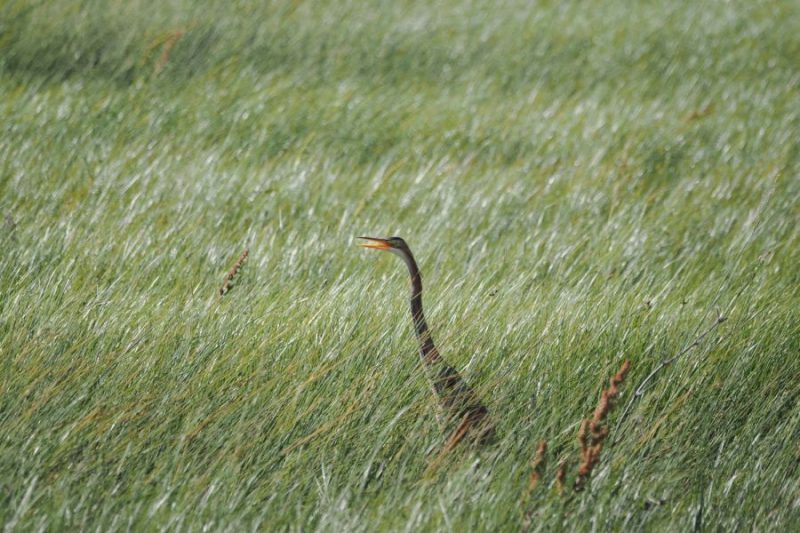
Their success depends on the availability of prey (fish, amphibians, invertebrates) in accessible waters.
| SPECIES | STATUS |
|---|---|
| Cattle Egret | Resident |
| Grey Heron | Resident |
| Little Egret | Resident |
| Common Night Heron | Estival * Estival * Estival * Estival * Estival * Estival * Estival |
| Squacco Heron | Estival * Estival * Estival * Estival * Estival * Estival * Estival |
| Purple Heron | Summer |
| Bitterns | Summer |
| Little Bittern | Summer |
| Great White Egret | Resident *** |
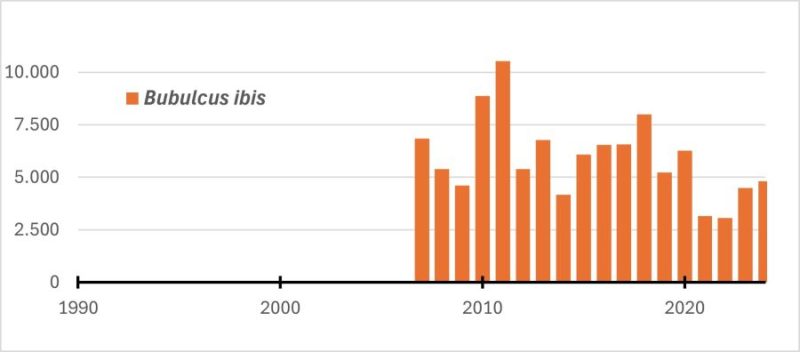
The ardeid populations in Doñana revolve around the large breeding colonies or “aviaries”, which historically concentrate most of their biomass and the other large waders. The Cattle Egret (Bubulcus ibis), a generalist species feeding in grasslands, has been the numerical core of these colonies, with censuses exceeding 10,000 pairs. However, its breeding population has been reduced by more than 50% during the drought, with a recent average of only 4,360 pairs.
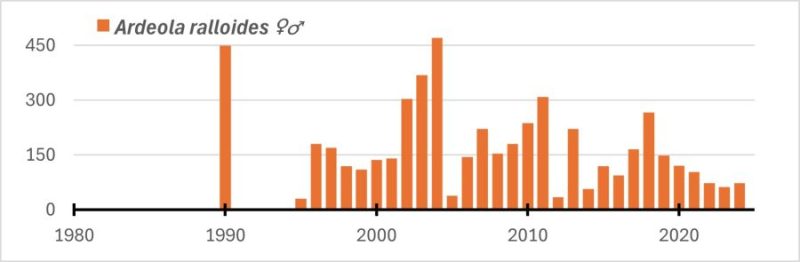
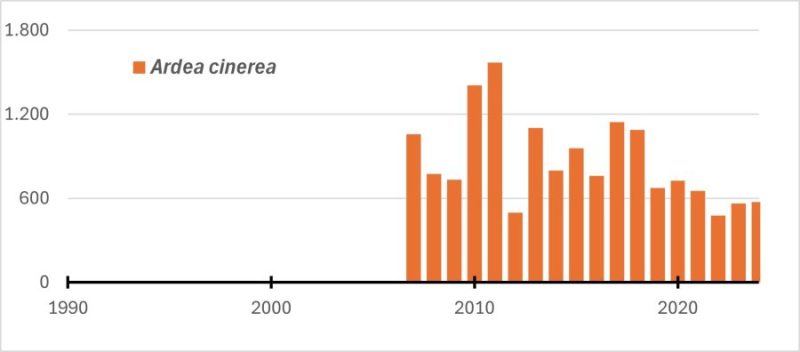
The group of the strict piscivorous herons shows an even more severe decline, evidencing the crisis of the aquatic habitats. The Little Egret (Egretta garzetta) has gone from about 4,000 to 773 breeding pairs, and the Grey Heron (Ardea cinerea) from 1,500 to 598. The situation is critical for specialists such as the Purple Heron (Ardea purpurea), which has suffered a 94% collapse, from 4,000 (maximum census under optimal conditions) to just 232 pairs, and the Squacco Heron (Ardeola ralloides), which has fallen from 300 to 87 pairs.
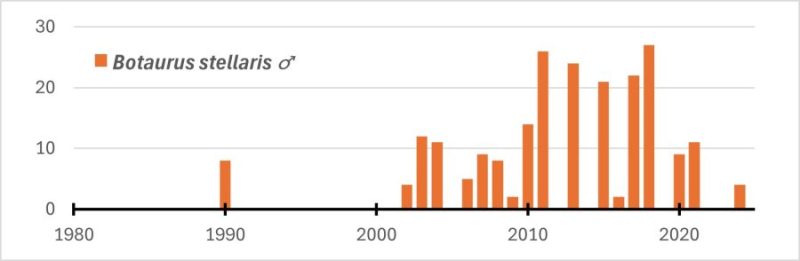
At the extreme end of the specialization is the common Bittern (Botaurus stellaris), an emblematic species whose breeding population is minimal and erratic, depending entirely on years with exceptional water conditions in the marsh.
This group, composed mostly of resident species of discrete habits, is made up of birds adapted to life in reeds, bulrushes and dense aquatic vegetation.
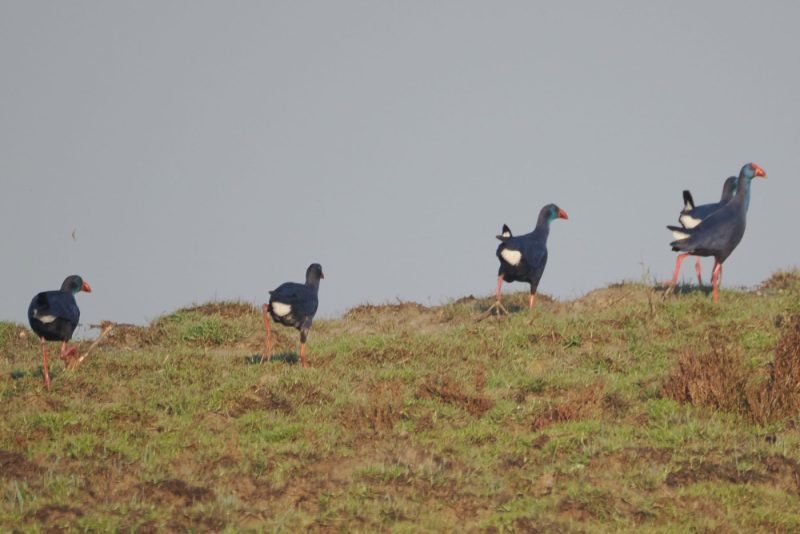
Their ecology makes them sensitive indicators of the health, extent and connectivity of marsh habitats.
| SPECIES | STATUS |
|---|---|
| Common Coot | Resident *** |
| Red-knobbed Coot | Resident |
| Moorhen | Resident *** |
| Purple Swamp-hen | Resident |
| European Water Rail | At Paso ª |
| Spotted Crake | In Paso (ª) |
| Little Crake bastard | In Paso (ª) |
| Baillon’s Crake girl | In Paso (ª) |
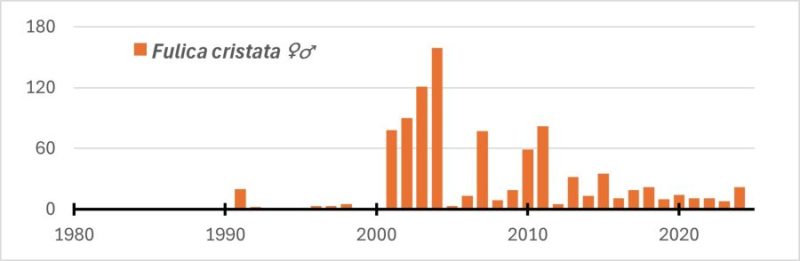
The community structure is dominated by formerly common but now strongly declining species. Common Coot (Fulica atra) and Moorhen (Gallinula chloropus) are the most abundant. However, both show a very pronounced negative trend (↓↓), reflecting the deterioration of their habitat. The situation is even more critical for the Common-knobbed Coot (Fulica cristata), a globally threatened species whose already scarce breeding population in Doñana (with a maximum of 80 pairs) has been reduced to an average of only 13 pairs during drought years, underlining its precarious conservation status.
The Purple Swamp-hen (Porphyrio porphyrio) is experiencing a particularly severe decline, with its breeding population shrinking from as many as 500 pairs to an average of just 103 pairs during the drought period, evidence of the critical vulnerability of this iconic species to reedbed degradation.
The general decline of the entire group is a warning sign of the loss of quality and fragmentation of the marsh vegetation stands in the wetland.
This group of aquatic birds, fish-eaters and divers par excellence, is made up of species totally adapted to life in free waters, where they capture their prey by diving.
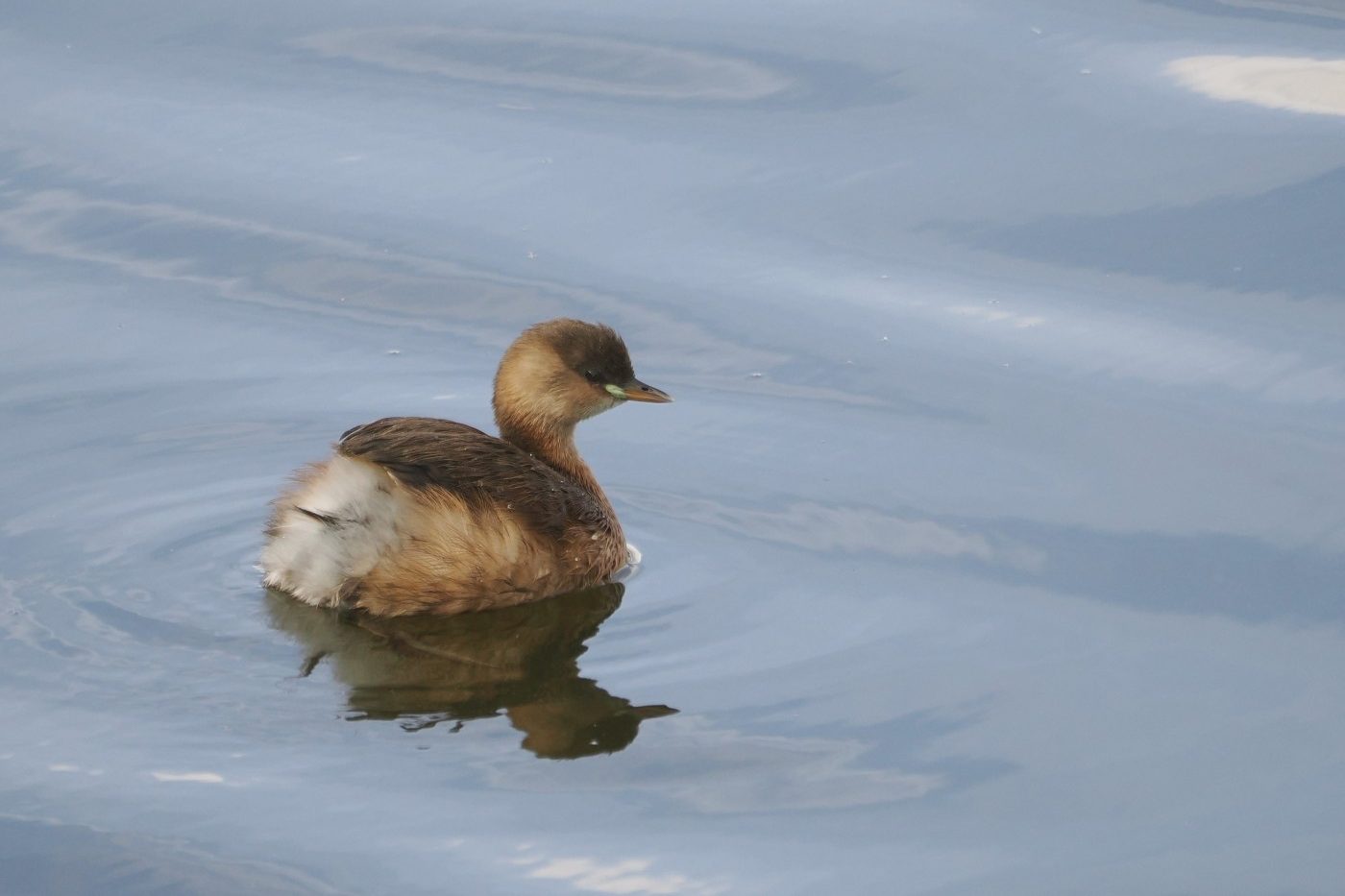
Their success depends directly on the trophic quality, transparency and depth of the water masses. These species are residents with very important population reinforcement during wintering.
| SPECIES | STATUS |
|---|---|
| Little Grebe | Resident *** |
| Black-necked Grebe | Resident *** |
| Great crested Grebe | Resident *** |
| Great Cormorant | Resident *** |
On the one hand, grebes and great crested gre bes are suffering a catastrophic reproductive collapse. Black-necked Grebes (Podiceps nigricollis) have gone from a high of 1,500 to only 104 breeding pairs, and Great crested Grebes (Podiceps cristatus) from 800 to 153 pairs, trends that reflect the disappearance or degradation of the shallow, well-vegetated lagoons they need for breeding.
On the other hand, the Great Cormorant (Phalacrocorax carbo), a species with a very important population size during wintering, and until a few years ago, only present in this season in the territory of Andalusia, presents the strongest positive trend (↑↑) of the entire aquatic community, increasing its reproductive presence.
This contrast underscores their greater adaptive capacity, their trophic plasticity and their ability to exploit more artificial or altered environments, especially large reservoirs, thriving where other specialized divers disappear. This divergence is a clear indication of the loss of specific quality of aquatic habitats in the wetland.
The anatidae group illustrates the fundamental duality of Doñana: its irreplaceable role as a globally important wintering area versus a highly threatened breeding community.
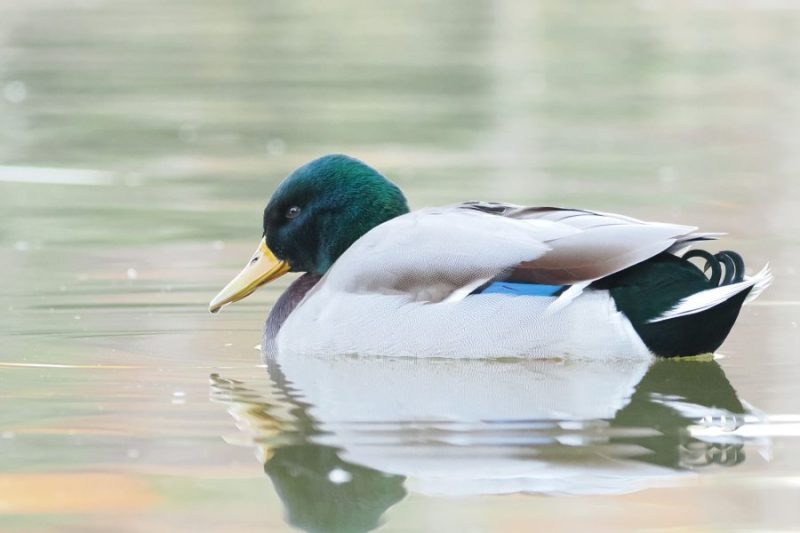
The true magnitude of this group is revealed in the cold months, when hundreds of thousands of ducks find refuge in the marshes.
| SPECIES | STATUS |
|---|---|
| Mallard | Resident *** |
| Shelduck | Resident *** |
| Common spoon | Resident *** |
| European Porron | Resident *** |
| Tufted Duck | Overwintering |
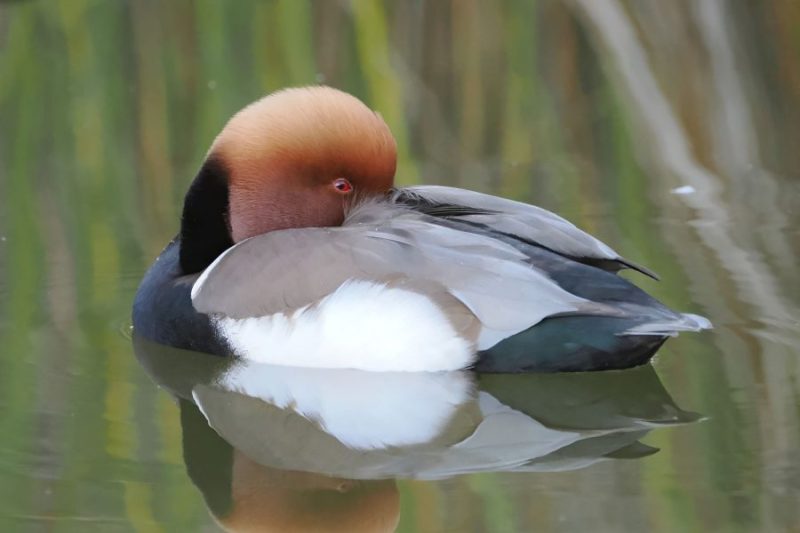
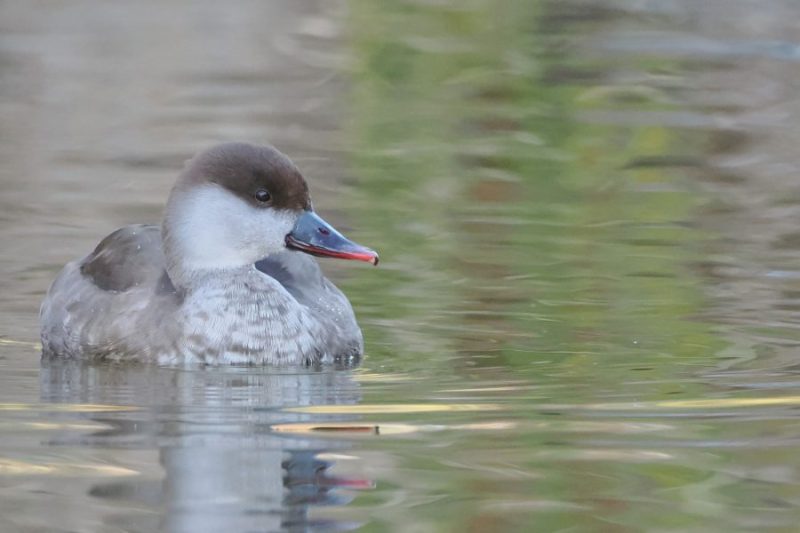
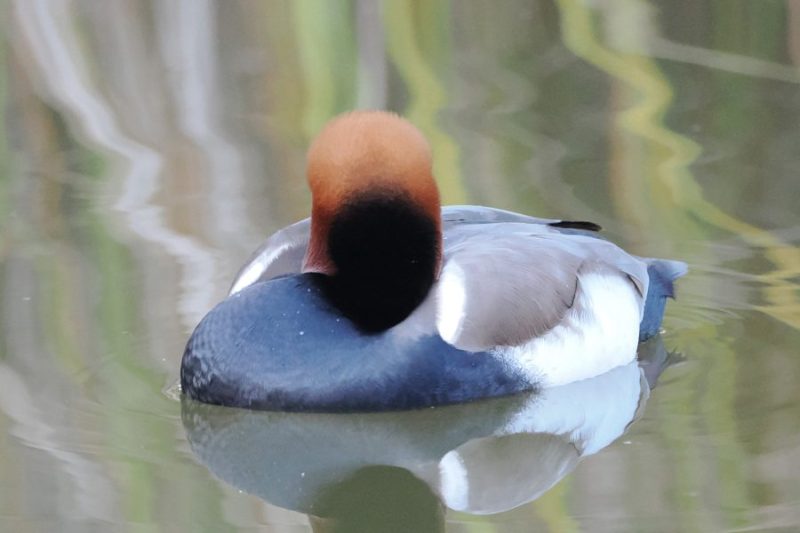
| Red-crested Pochard | Resident *** |
| White-headed Duck | Resident |
| Marble Teal | Resident |
| Ferruginous Duck | Resident *** |
| Greylag Goose | Overwintering ª |
| Common Teal | Overwintering |
| Gadwall frieze | Overwintering ª |
| Pintail | Overwintering |
| European whistle | Overwintering |
| Garganey | In Paso (ª) |
| Nile Goose | Resident |
Wintering is spectacular in scale. Ten species have averaged 250,000 birds during the dry period (2020-2024), with the 2023/2024 winter being the worst since records have been kept. Species such as the Northern Shoveler (Spatula clypeata) and the Greylag Goose (Anas acuta) form concentrations of up to 200,000 and 80,000 individuals, respectively, while the Greylag Goose (Anser anser) fills the grasslands and dunes, reaching 80,000 individuals in the most favorable years. These numbers make Doñana one of the main wintering grounds in the western Palearctic.
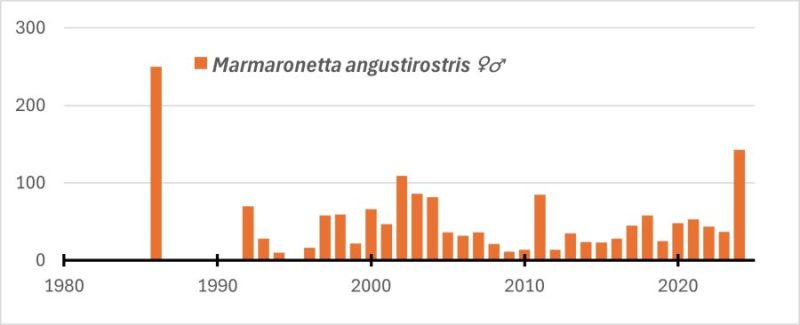
In stark contrast, resident and breeding populations show a general downward trend. The Mallard (Anas platyrhynchos), the breeding duck par excellence, has seen its population reduced by half with less than 500 pairs counted in the main Andalusian wetlands. However, Doñana retains its importance for globally declining species that remain restricted. The White headed Duck (Oxyura leucocephala) with a current breeding population of 40 pairs throughout Andalusia. A hopeful exception is represented by the Iberian arched-mouth nase (Marmaronetta angustirostris), which, thanks to intensive conservation programs, shows a positive trend (↑) amidst the general decline, with some 65 pairs.
This highly mobile and specialized group of birds acts as an accurate bioindicator of sediment dynamics and the availability of mudflats and exposed banks.
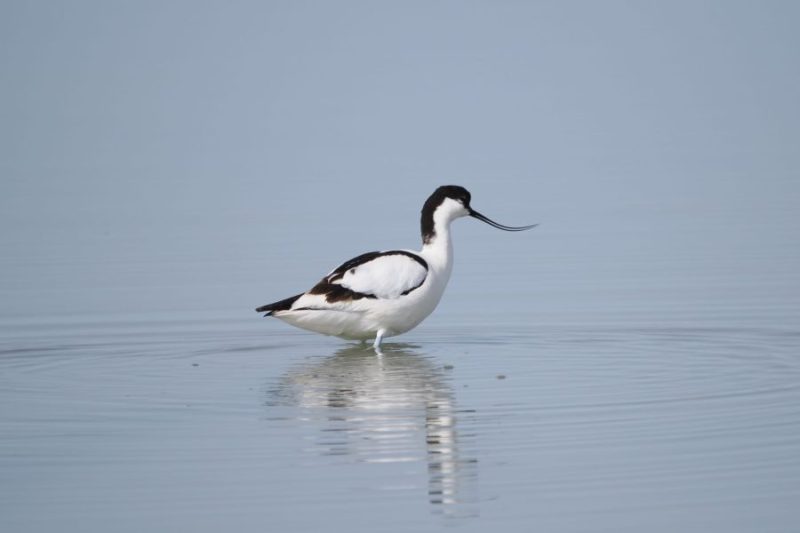
Waders are a group that mainly winter and migrate in Doñana. The vast majority of the more than 20 species recorded use the wetland as a resting and feeding area during the cold months or during their migratory passages.
| SPECIES | STATUS |
|---|---|
| Avocet | Resident *** |
| Black-winged Stilt | Resident *** |
| Black-tailed Godwit Needle | Overwintering |
| Bar-tailed Godwit | Overwintering |
| Eurasian Curlew | Overwintering |
| Whimbrel | Overwintering |
| Common Redshank | Resident *** |
| Spotted Redshank dark | Overwintering |
| Common Sandpiper | Resident *** |
| Ruff | Overwintering |
| Large Green Sandpiper | Overwintering |
| Wood Sandpiper | Overwintering |
| Common Greenshank | Overwintering |
| Marsh Sandpiper | In Step * |
| European Lapwing | Overwintering ª |
| European Golden Plover | Overwintering |
| Grey Plover | Resident |
| Great Ringed Plover | Overwintering |
| Little Ringed Plover | Resident *** |
| Kentish Plover | Resident *** |
| Common Snipe | Overwintering |
| Jack Snipe | Overwintering |
| Common Collared Pratincole | Summer |
| Dunlin | Overwintering |
| Tridactyl Sanderling | Resident |
| Curlew Sandpiper | Migradora de Paso* (Migradora de Paso *) |
| Red Knot | Overwintering |
| Little Stints often | Overwintering |
| Corr. de Temminck | In Step * |
The wetland acts, first and foremost, as a first-rate wintering ground for thousands of birds from northern and central Europe. Species such as the Dunlin (Calidris alpina), with 86,000 individuals, and the Black-tailed Godwit (Limosa limosa), with 57,000, form here concentrations that stand out at a pan-European level, taking advantage of the trophic resources of the marshes and rice fields.
Simultaneously, Doñana is a critical node in the Atlantic Flyway, which connects Eurasian breeding areas with wintering wetlands in West Africa (such as the Banc d’Arguin National Park in Mauritania). For species such as the Common Redshank (Tringa totanus) and Whimbrel (Numenius phaeopus), the marshes are an indispensable way station on their trans-Saharan journeys.
However, recent breeding – of both resident and summer species – starkly reflects the prolonged drought and drastic loss of suitable breeding habitat. Among the residents, the Avocet (Recurvirostra avosetta) and Black-winged Stilt (Himantopus himantopus) have seen their colonies collapse. Others, such as the Kentish Plover (Charadrius alexandrinus), nest more and more dispersed. The Collared Pratincole (Glareola pratincola), a summer visitor, has fallen from 3,000 to an average of only 413 pairs.
Thanks to their high dispersal capacity, these birds retain the potential to recolonize the wetland quickly when ecological conditions – especially the hydrological regime – are restored and become favorable again.
The láridos (gulls, terns and terns) are opportunistic waterbirds with a great capacity for dispersal. Their population dynamics reveal a clear dichotomy between the success of generalists and the collapse of specialists in Doñana.
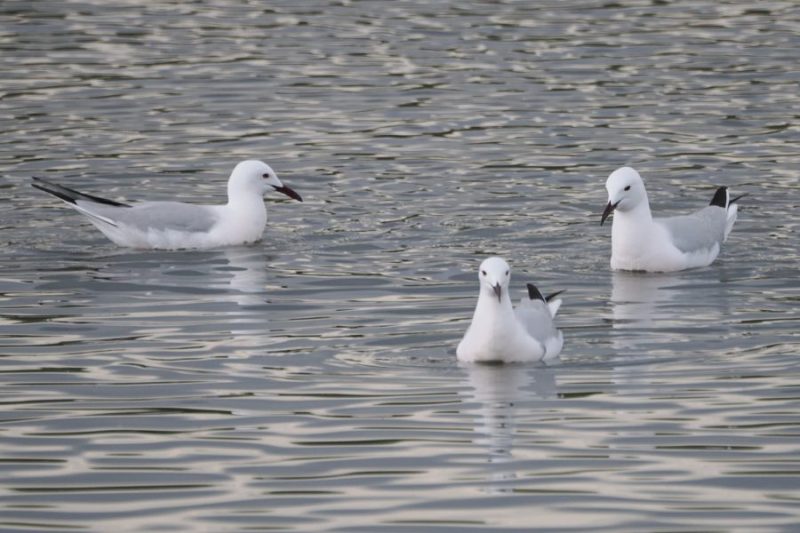
As overwinterers, they are dominant and resilient, constituting the third most abundant group during wintering. This is mainly due to the large congregations of the Black-backed Gull (Larus fuscus), which reaches 105,000 individuals, and the Black-backed Gull (Chroicocephalus ridibundus), with 30,000 individuals. Both make intensive use of the wetland’s winter productivity and landfill resources. They are also very abundant during the summer period, especially the Yellow-legged Gull (Larus michahellis), which has essentially coastal habits.
| SPECIES | STATUS |
|---|---|
| Whiskered Tern | Summer |
| Black Tern | Summer |
| Common Tern | Resident |
| Sandwich Tern | Resident *** |
| Little Tern | Summer |
| Gull-billed Tern | Summer |
| Caspian Tern | Overwintering |
| Black-headed Gull | Resident *** |
| Slender-billed Gull | Resident |
| Audouin’s Gull | In Step * |
| Mediterranean Gull | Overwintering ª |
| Black-backed Gull | Overwintering ª |
| Yellow-legged Gull | Resident *** |
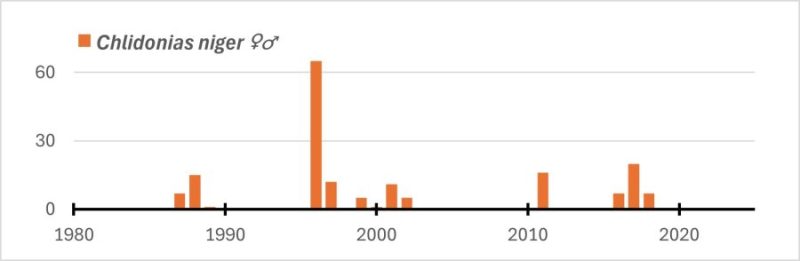
In contrast, the specialist breeding species of freshwater wetlands have had their worst time during the drought. The Whiskered Tern (Chlidonias hybrida) has gone from a recorded high of around 7,000 to only 385 pairs, and the Common Tern (Chlidonias niger) has not reproduced in recent years. Terns, such as the Gull-billed tern (Gelochelidon nilotica), have seen their colonies reduced by more than 60%.
A note of relative stability is offered by the Slender-billed Gull (Chroicocephalus genei), whose population in hypersaline lagoons seems to remain stable, suggesting an adaptation to extreme conditions that other species do not tolerate.
This group has a low biomass but a disproportionate ecological impact. Its structure is simple, with few specialized species. The positive trend of the Osprey shows that, with strict conservation measures, it is possible to reverse declines even in a generally adverse context.
The western Marsh Harrier (Circus aeruginos) is the typical specialist of extensive reedbeds. Its breeding population, which reached over 100 pairs, has declined to an average of 42 pairs during the drought, showing a negative trend (↓). This decline points directly to the loss of quality and fragmentation of their hunting and nesting habitat, aggravated by the lack of water.
| SPECIES | STATUS |
|---|---|
| Marsh Harrier | Resident *** |
| Osprey | Resident *** |
| Short-eared Owl | Overwintering |
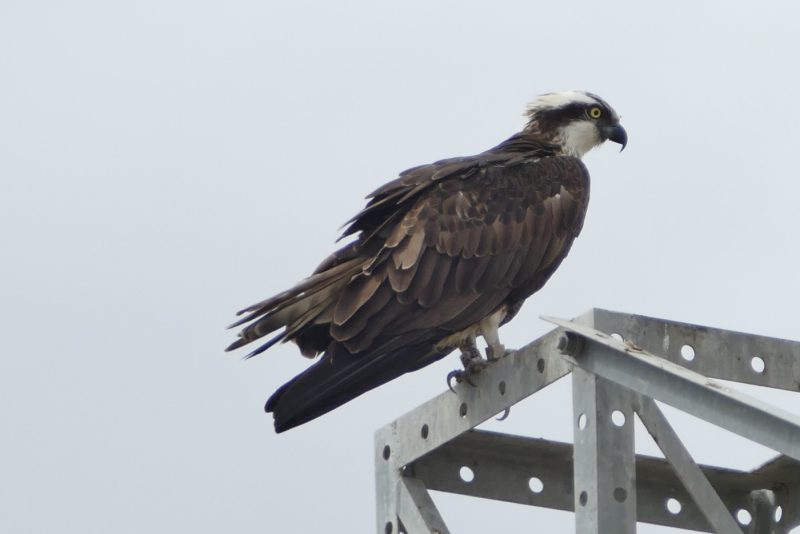
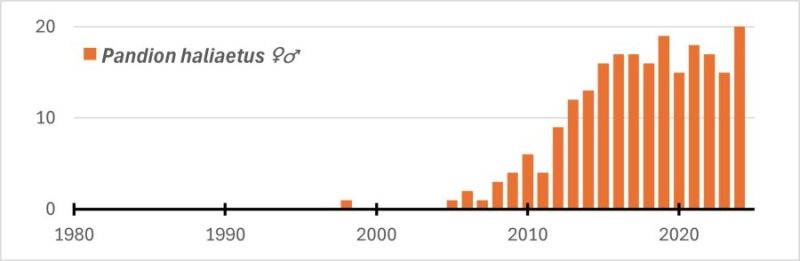
At the opposite extreme is the Osprey (Pandion haliaetus), which represents a success story of active conservation in Andalusian wetlands. Thanks to a reintroduction program and strict protection, it has gone from being a scarce wintering bird to a consolidated breeding resident, with a very positive trend (↑↑) and an average of 17 pairs, especially in the Odiel marshes. Its recovery demonstrates that, with proper management, it is possible to reverse declines even in an adverse general context.
Finally, the Short-eared Owl (Asio flammeus) completes this trio as a scarce wintering and open terrain specialist, with an average presence of less than 20 individuals censused. Its rarity underlines the vulnerability of steppe and open grassland habitats within the Doñana complex.
Threatened breeding waterfowl in Andalusia
Doñana es la gran cuna de las aves acuáticas en España. En sus marismas y lagunas han encontrado refugio especies iconicas, verdaderos símbolos de la biodiversidad mediterránea. Sin embargo, la crisis ecológica que vive el humedal está poniendo en jaque el futuro de algunas de sus más emblemáticas reproductoras.
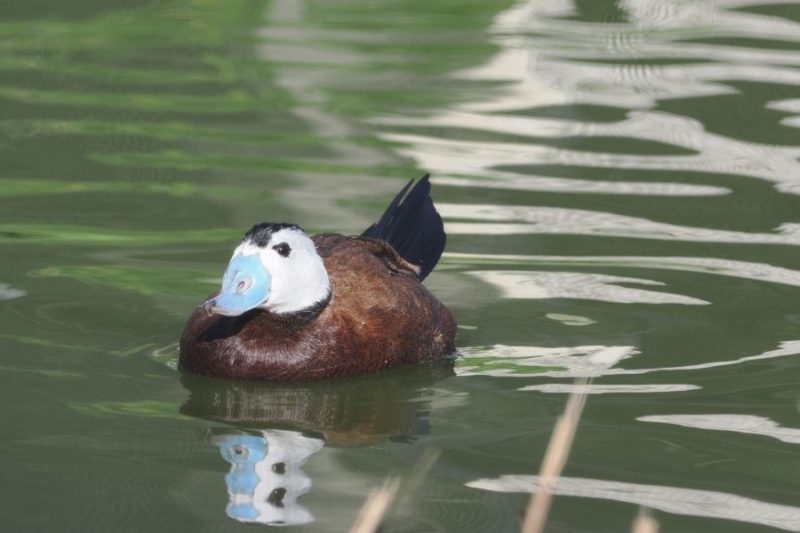
From the discreet and elusive White headed Duck, which sees the disappearance of the natural lagoons where it used to breed, to the Bittern, whose reproduction in Doñana is an exceptional event linked to years of optimal water conditions, each species tells a similar story.
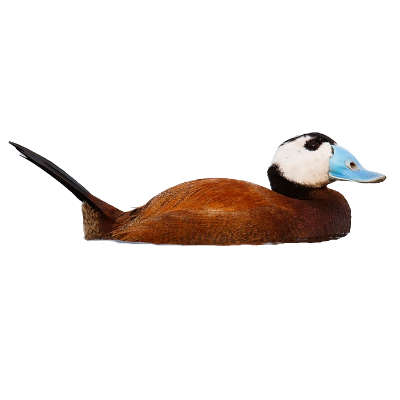
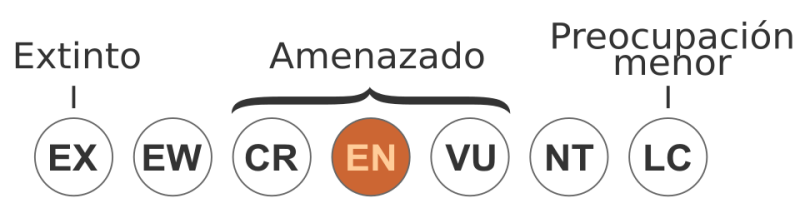
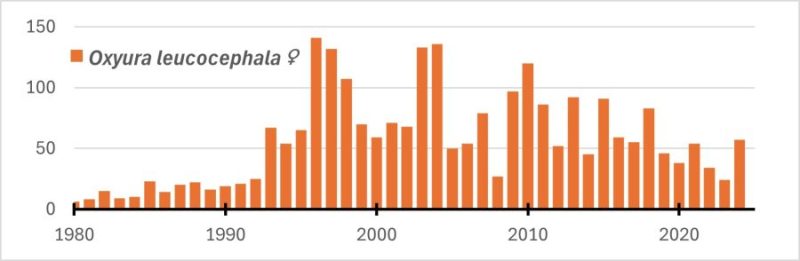
White headed Duck(Oxyura leucocephala)
Although it experiences ups and downs, its overall long-term trend is negative. It is increasingly dependent on reservoirs and artificial ponds, as many of the natural ponds where it used to breed have been degraded or have lost their ecological functionality.

Marbled Teal (Marmaronetta angustirostris)
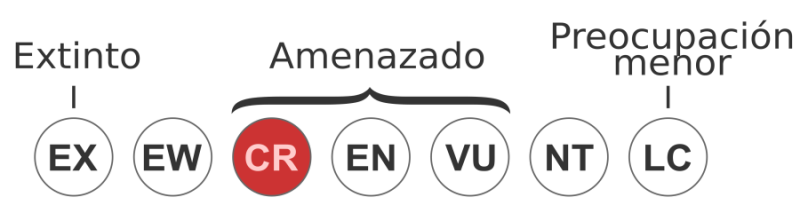
A critically endangered bird showing a clear recovery after a breeding program and captive release. Its future depends directly on the conservation of the Guadalquivir marshes.

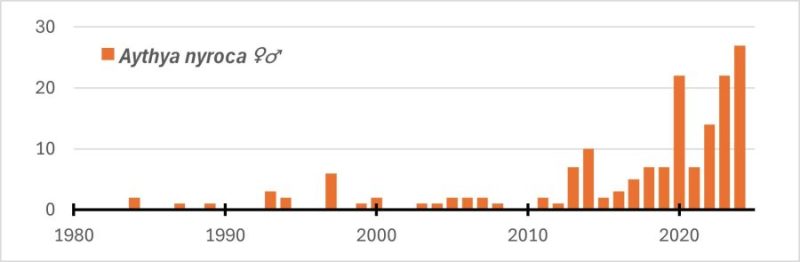
Ferruginous Duck(Aythya nyroca)
Lorem ipsum

Red-knobbed Coot(Fulica cristata)
One of the most critically endangered waterbirds. Its population, very scarce and concentrated, suffers a sharp long-term decline. Its survival is linked to a few wetlands that maintain water artificially, since the natural areas where it used to breed have been disappearing.
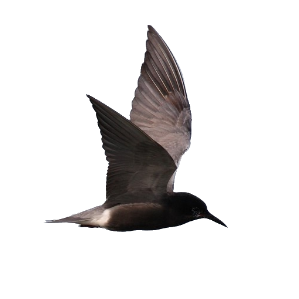
Black Tern(Chlidonias niger)
On the verge of extinction as a breeder in the region. Its presence is sporadic and it no longer breeds regularly, reflecting the loss of the shallow, good quality wetland habitats it needs.

Squacco Heron(Ardeola ralloides)
This colonial heron is in decline. It forms unstable colonies that move between the marsh and artificial wetlands, which makes it very vulnerable to periods of drought and the alteration of the wetlands where it nests.
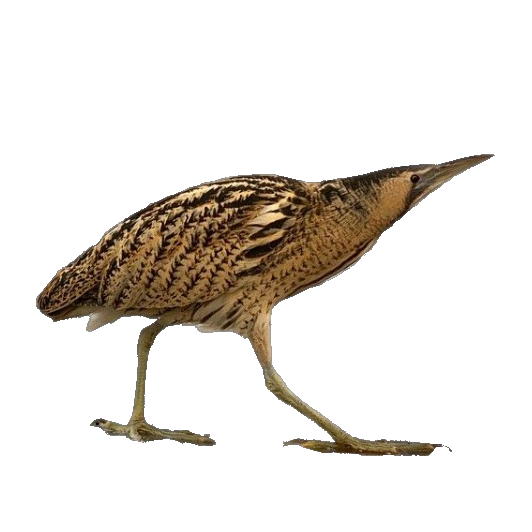
Bittern(Botaurus stellaris)
Extremely discreet and difficult to observe. Its breeding population in Andalusia is minimal and its presence, limited almost exclusively to Doñana, is erratic. Its reproduction only occurs in those years when the marsh has exceptional water conditions.
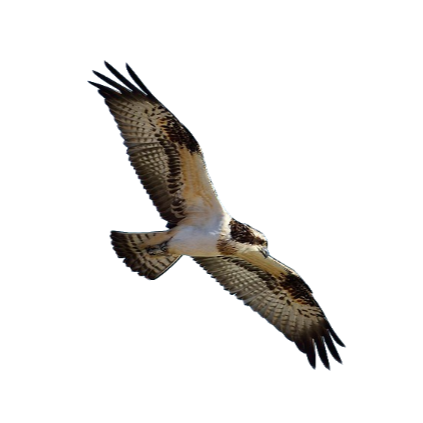
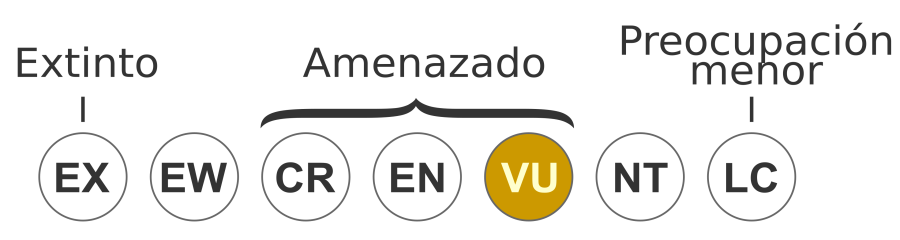
Osprey(Pandion haliaetus)
A specialist in catching fish with its claws, it is one of the most widely distributed birds of prey in the world. In Doñana, it is a winter visitor but nests in Odiel and Janda.

La Cerceta pardilla y la Focha moruna dependen hoy de intensos programas de conservación y de la gestión artificial del agua para evitar su extinción. El Porrón pardo (Aythya nyroca) comparte amenazas: la pérdida de vegetación palustre, la competencia con especies invasoras y la alteración de los niveles hídricos han reducido notablemente sus posibilidades de reproducción estable en la región.
Se suma la regresión de la Garcilla cangrejera (Ardeola ralloides), cuya delicada dependencia de zonas encharcadas y carrizales la hace extremadamente vulnerable a las sequías recurrentes.
Otras, como el Fumarel común, están al borde de desaparecer como reproductoras en la región. Un signo de esperanza, lo representa el Águila pescadora (Pandion haliaetus), que ha vuelto a criar en el Odiel tras décadas de ausencia en la península.
These birds are not only threatened by their own biological difficulties. Their decline points to underlying environmental problems: the degradation and loss of natural habitats, increasing dependence on artificial water infrastructure for breeding, and vulnerability to drought cycles aggravated by climate change and overexploitation of aquifers.
Wintering waterfowl
Climate change is making itself strongly felt on waterfowl populations in Andalusia.
The dominance of ducks during the wintering season
Durante la invernada, las anátidas más numerosas en Doñana están encabezadas con claridad por el pato cuchara (Spatula clypeata), que domina el grupo con cerca de 40% de los efectivos en el periodo 2004-2023, seguido por el ánsar común (Anser anser) y el ánade rabudo (Anas acuta).
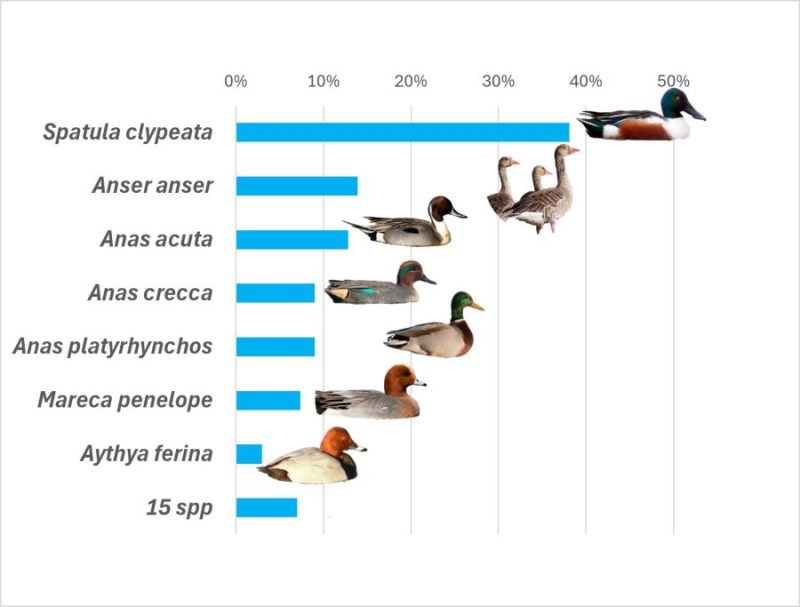
Tras ellos se sitúan en cifras similares la cerceta común (Anas crecca) y el ánade azulón (Anas platyrhynchos), mientras que el silbón europeo (Mareca penelope) y el porrón europeo (Aythya ferina) completan el elenco de especies habituales, de modo que estas siete especies concentran alrededor del 90 % de las anátidas que pasan el invierno en las marismas y lagunas de Doñana. Las completan quince especies regulares durante la invernada con 7% de los efectivos totales.
… Followed by the abundant waders
Entre las limícolas invernantes de Doñana, el protagonismo recae en el correlimos común (Calidris alpina), que forma los bandos más numerosos y la abundante aguja colinegra (Limosa limosa), muy ligada a las marismas abiertas. Estas dos especies totalizan más de la mitad de todas las limícolas.
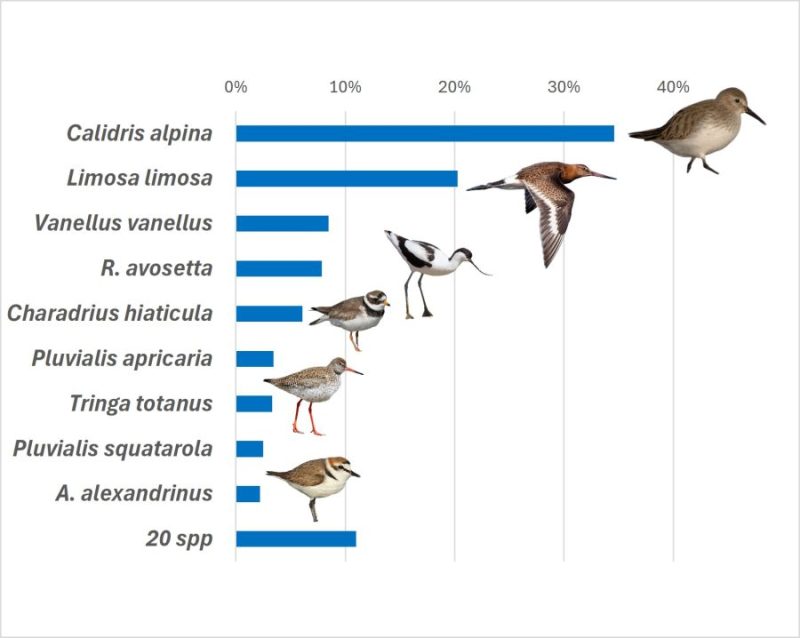
Con efectivos menores pero siempre consecuentes, el avefría europea (Vanellus vanellus) y la avoceta común (Recurvirostra avosetta) se desplazan en grupos compactos. Junto a ellas se distribuyen el chorlitejo grande (Charadrius hiaticula), los chorlitos dorado europeo (Pluvialis apricaria) y gris (Pluvialis squatarola), el archibebe común (Tringa totanus) y el chorlitejo patinegro (Charadrius alexandrinus) , que aprovechan la diversidad de hábitats en el humedal. Una veintena de especies adicionales de limícolas menos abundantes (11% del total de individuos) visitan las marismas durante la invernada.
Rarezas en Doñana
Entre las aves divagantes y de presencia muy rara en Andalucía durante la invernada, algunas se registran con algo más de regularidad y resultan ligeramente más previsibles, como el ánsar careto (Anser albifrons), la barnacla cariblanca (Branta leucopsis), la barnacla carinegra (Branta bernicla) y el chorlito carambolo (Charadrius morinellus).
Long-term evolution
Después de una espectacular recuperación de las aves invernantes, asistimos en la actualidad a una importante perdida de su población. Esto se deben a una sinergia de factores negativos.
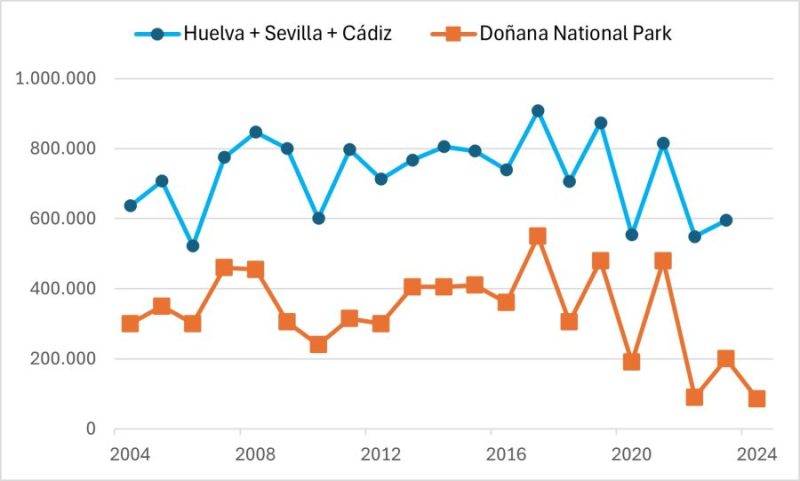
Por un lado, las temperaturas más suaves favorecen la estancia de las aves más al norte de su distribución previa durante el invierno. Por otro lado, las sequías prolongadas y sobreexplotación del acuífero han deteriorado los humedales. Se han escuchado repetidas alarmas en los últimos años.
Pero Doñana sigue siendo Doñana, y en pocos sitios de Europa pueden verse grandes concentraciones de aves y aburmadora diversidad de especies.
The Guadalquivir aviaries
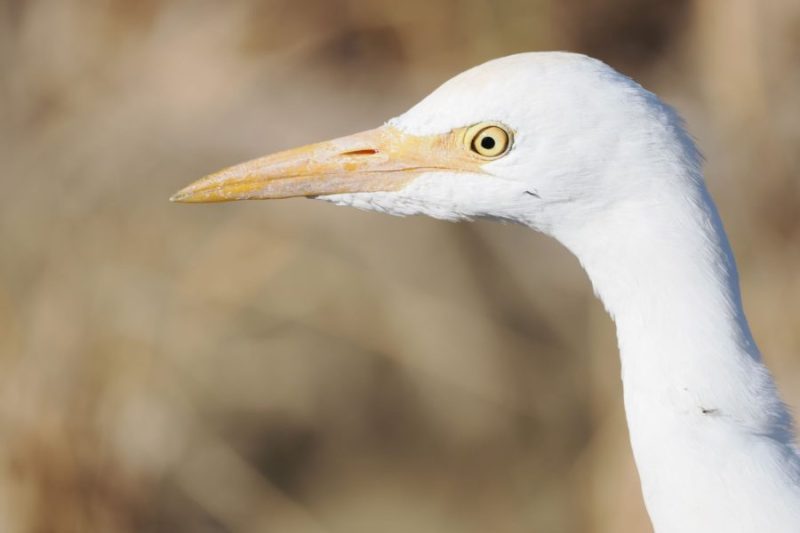
At the end of the 19th century, the British naturalist Abel Chapman acted as the great popularizer of Doñana to the world. In his work “Wild Spain” (1893), he described with poetic wonder the colony, which he called “The Heronry”.
His gaze, halfway between hunter and conservationist, captured the essence of the place: the deafening bustle, the impossible density of nests in the cork oaks and the marsh as an infinite pantry.
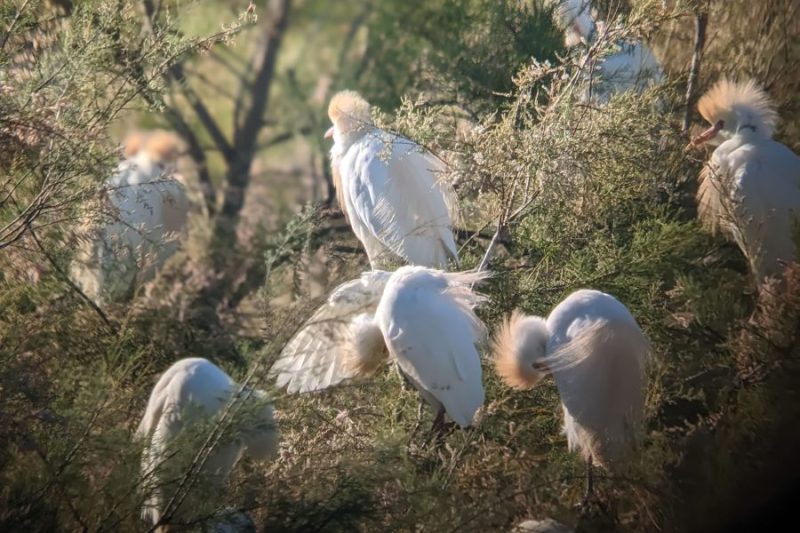
Later, the Spanish ecologist José Antonio Valverde conducted the first systematic studies in the 1950s and 1960s on the largest colony of herons and Spoonbills in Western Europe. Its location in La Vera, between the mountain and the marsh, and the stratification of the species in the trees responded to an ecological logic, a science that was taking off at the time.
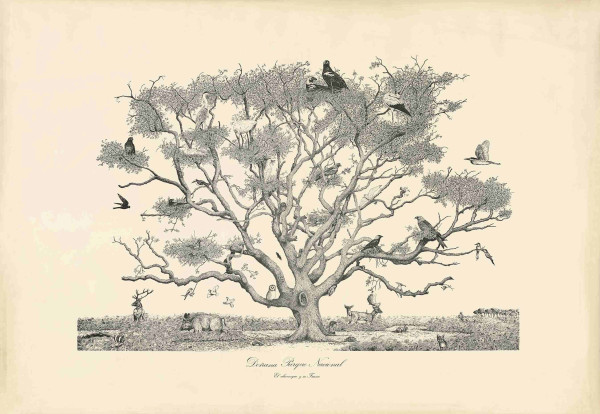
Since then the aviary acquired an almost mythical status, an emblem of Doñana par excellence. Its location in the relict cork oak forest (Quercus suber) of La Vera, the ecosystem meandering between marshes and dune system, allows access to fresh water and the development of an exceptional animal community. A true ecstasy for nature lovers. The iconic engraving “The cork oak and its fauna” captures this essence.

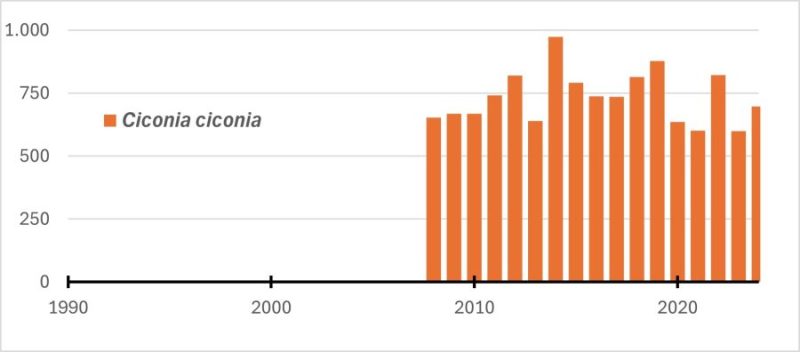
White Stork(Ciconia ciconia)
It is the architect of the largest and most prominent nests. It occupies the upper part of trees (cork oaks and eucalyptus), building platforms of branches of more than one meter in diameter that it usually reuses and enlarges year after year. Its large size and striking behavior make it one of the most visible and emblematic species in the aviary.

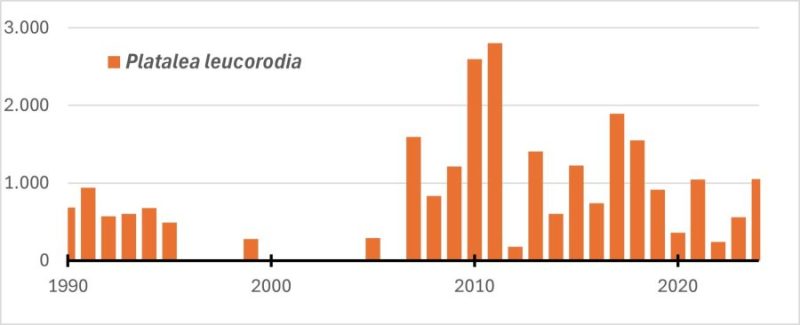
Spoonbill(Platalea leucorodia)
Emblematic and highly visible species. It nests in the upper-middle part of trees, often near storks. Its unmistakable silhouette and Spoonbill-shaped bill make it unique. It forms dense and noisy colonies inside the aviary.
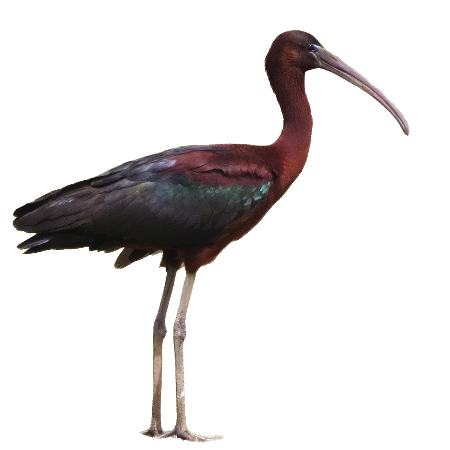
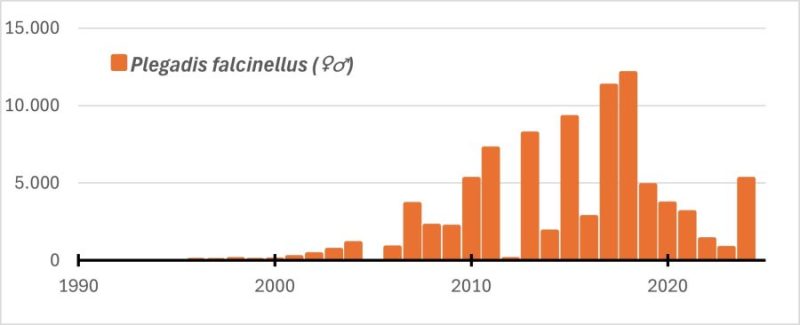
Glossy Ibis(Plegadis falcinellus)
Recent successful colonizer, with the first nests detected in 1996. It nests high up in trees, or in tamaracks, building robust nests, often in association with storks. It forms noisy and very visible colonies.

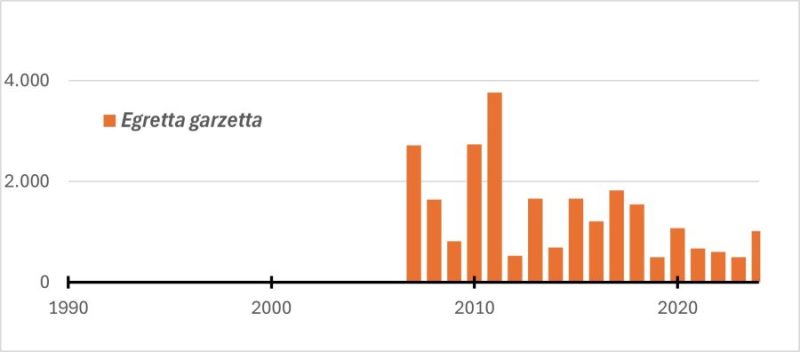
Little Egret(Egretta garzetta)
One of the most numerous and gregarious species. Forms dense clusters of small, crowded nests on branches in the middle part of trees, often mixed with Cattle Egrets.

Cattle Egret (Bubulcus ibis)
The most adaptable and expansive species. It forms massive and overcrowded colonies in any available stratification, from low to high branches. It is the one that provides the highest density of individuals. Originally from the savannahs of sub-Saharan Africa, it was the protagonist of one of the largest and fastest natural expansions of the 20th century.

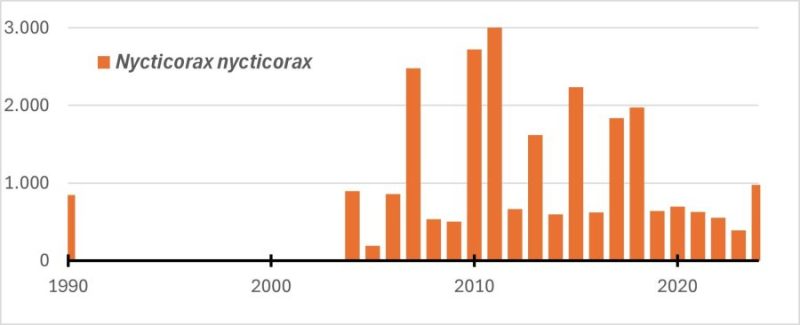
Night Heron(Nycticorax nycticorax nycticorax)
Nocturnal and crepuscular species. It nests in the lower, interior and shady part of trees, in dense areas, forming discrete colonies. It leaves the colony at dusk to hunt at night.

Grey Heron(Ardea cinerea)
The large piscivorous predator of the colony. Nests in tall, robust trees, often in dominant positions. It is more solitary in its nesting within the colony, keeping some distance from other species.
Squacco Heron(Ardeola ralloides)
It nests in low branches or dense thickets near water in the aviary. Its breeding plumage (ochre, white and blue) is spectacular, but out of season it is very cryptic.
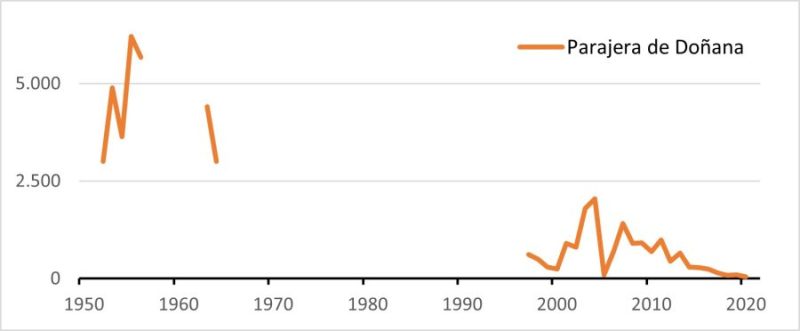
Unfortunately, this unique forest faces critical threats that compromise its future due to aging and lack of regeneration: Many of the cork oaks of La Vera are decayed centennial veterans. Today the aviary is a shadow of its former self.
Natural regeneration is scarce due to severe soil drought , which prevents acorns from germinating and surviving. Overexploitation of the aquifer has lowered the water table, depriving these deeply rooted trees of the water they need, especially in summer. Symptoms of decay and lighter canopies are observed in many specimens.
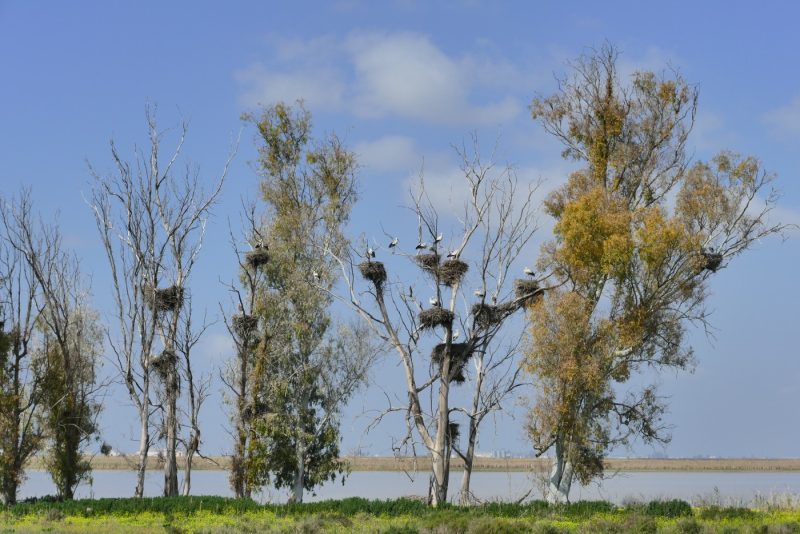
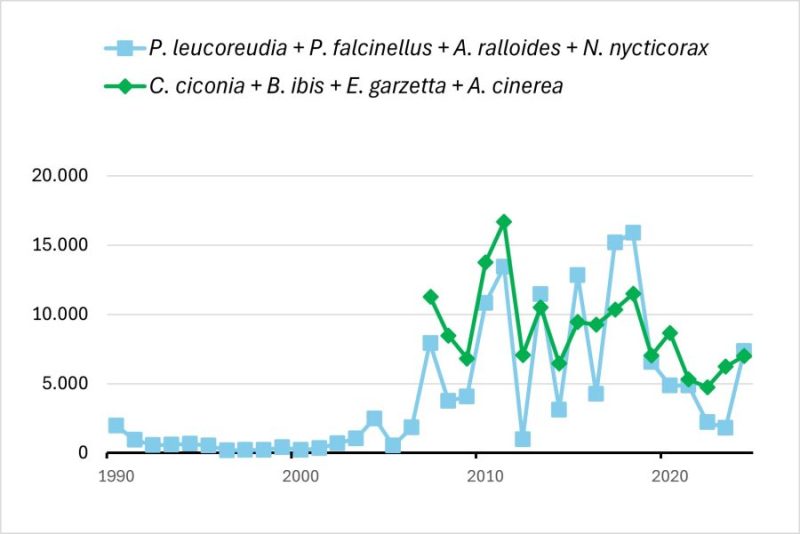
Posteriormente, nuevas pajareras han surgido en otros lugares de Doñana, remontando el río Guadalquivir, incluso hasta Córdoba, reflejando el éxito de las poblaciones de zancudas y ardeídas. Las aves se instalaron en lugares seguros para ello, principalmente en grandes eucaliptos, una especie invasora de porte formidable y muy frecuente en las orillas andaluzas.
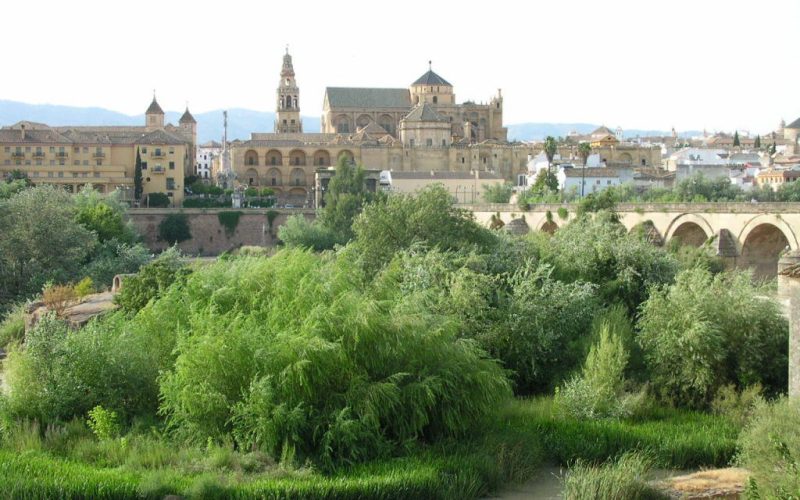
Las garzas y zancudas asentaron sus dormideros y colonias en espacios urbanos y peri-urbanos (Parque del Alamillo de Sevilla, Sotos de la Albolafia de Córdoba) y la recuperación de humedales restaurados (Dehesa de Abajo de Sevilla).
It was deliberately introduced into the Guadalquivir marshes in 1973-74, with the main objective of commercial exploitation. After its introduction, the crab expanded massively, creating a superabundant, predictable and available food source throughout the year. This greatly benefited generalist and opportunistic species. The American red crab was a key factor, albeit accidental and ecologically undesirable, in the numerical recovery of several ardeids and waders in the last quarter of the 20th century. But important impacts: Predation and Competition: the crab is a voracious omnivore.
Paseriformes de las marismas
Los paseriformes acuáticos explotan hábitats ribereños y humedales, desde carrizales densos hasta vegetación emergente y matorrales de ribera. En Andalucía, especialmente en espacios como Doñana, actuan como indicadores clave de la salud de los ecosistemas ribereños.
Tabla resumen de los paseriformes
| SPECIES | STATUS | REPRODUCCIÓN | INVERNADA | MIGRACIÓN | HÁBITAT | |
|---|---|---|---|---|---|---|
| Pechiazul | Luscinia svecica | Invernal | Común | Orillas fangosas | ||
| Bisbita alpino | Anthus spinoletta | Invernal | Varios cientos | Orillas fangosas | ||
| Carricero tordal | Acrocephalus arundinaceus | Summer | Común | Vegetación palustre | ||
| Carricerín común | Acrocephalus schoenobaenus | Migrador | Abundante | Vegetación palustre | ||
| Carricero común | Acrocephalus scirpaceus | Summer | Muy común | Vegetación palustre | ||
| Buscarla unicolor | Locustella luscinioides | Summer | Rara | Vegetación palustre | ||
| Buscarla pintoja | Locustella naevia | Migrador | Rara | Vegetación palustre | ||
| Escribano palustre | Emberiza schoeniclus | Invernal | Frecuente | Vegetación palustre | ||
| Buitrón | Cisticola juncidis | Sedentario | Muy común | Ambientes abiertos húmedos | ||
| Bisbita campestre | Anthus campestris | Summer | Muy común | Ambientes abiertos húmedos | ||
| Bisbita pratense | Anthus pratensis | Invernal | Varios cientos de miles | Ambientes abiertos húmedos | ||
| Lavandera boyera | Motacilla flava | Summer | Común | Rara | 30.000 | Ambientes abiertos húmedos |
| Lavandera blanca | Motacilla alba | Sedentaria | Muy común | 150.000–500.000 | Ambientes abiertos | |
| Ruiseñor bastardo | Cettia cetti | Sedentario | Común | Muy común | Bosque de ribera | |
| Pájaro moscón europeo | Remiz pendulinus | Sedentario | Localizado | Común | Bosque de ribera | |
| Zarcero políglota | Hippolais polyglotta | Summer | Muy común | Bosque de ribera | ||
| Zarcero bereber | Iduna opaca | Summer | Bosque de ribera | |||
| Bisbita arbóreo | Anthus trivialis | Migrador | Muy común | Bosque de ribera |
Estas especies combinan residentes sedentarios, estivales migratorias y poblaciones invernantes.
Solo señalar los paserifores más especializados y comunes, entre ellos los carriceros del género Acrocephalus, el carricero tordal (Acrocephalus arundinaceus) es un estivales común en carrizales altos, mientras que el carricero común (Acrocephalus scirpaceus) domina los tarajales y juncales extensos, y el carricerín común (Acrocephalus schoenobaenus) aparece como migrador abundante en paso. Especies más raras como la buscarla unicolor (Locustella luscinioides) y la buscarla pintoja (Locustella naevia) prefieren vegetación densa y húmeda durante su breve paso estival o migratorio. El escribano palustre (Emberiza schoeniclus) inverna con frecuencia en carrizales.
Imperial eagle in Doñana
Doñana is home to one of the most stable and best studied breeding populations, the result of decades of scientific efforts and protection measures. Its presence is a biological indicator of the first order: where the imperial eagle breeds successfully, the ecosystem still retains its integrity.
The Spanish Imperial Eagle, supreme symbol of Doñana. Its population, far from expanding in other areas, is stagnant and in productive decline. The key to this paradox lies in its unique feeding strategy, a delicate balance between two worlds that today are failing.
The main resource: the wild rabbit.
As a specialist, their reproductive success depends critically on the abundance of this lagomorph. However, successive viral epidemics (myxomatosis and hemorrhagic disease) have collapsed their populations in the dunes and reserves of Doñana, without having been able to recover after decades.
The alternative resource: waterfowl
This is Doñana’s distinctive adaptation. For much of the year, especially in winter, the eagles hunt ducks, Common Coots and other birds in the marsh, a supplement that historically provided them with a safety net.
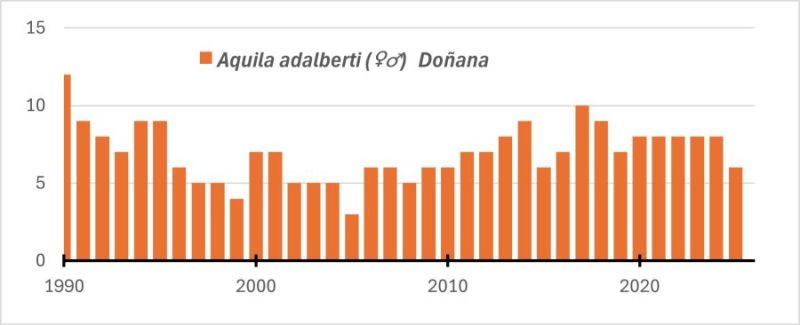
Evolution of imperial eagle population in Doñana
Doñana is suffering a synchronized ecological crisis: in the mountains, the rabbit is scarce and its recovery is elusive. In the marshes: structural drought, aggravated by overexploitation of the aquifer, drastically reduces waterfowl populations.
The result is that imperial eagles in Doñana have stagnated and are far from their historical maximum. The survival of the imperial eagle in its historical stronghold no longer depends only on protecting its nests, but also on improving environmental conditions for its prey.
Steppe birds in Doñana
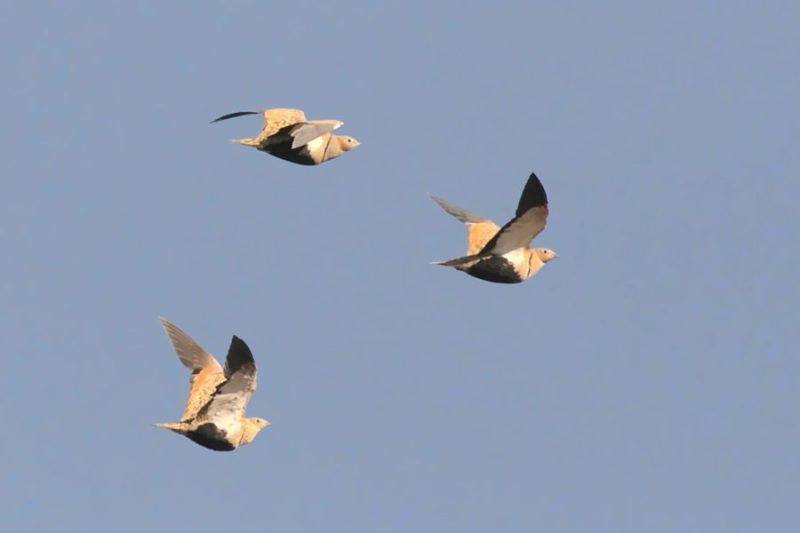
Hidden in its southern and eastern flank, there is another Doñana, dry, open and beaten by the wind: that of the steppe birds.
Steppe ecosystems are mainly located in salt marsh areas. These pseudo-steppe patches are home to a unique and highly specialized ornithological community, whose most emblematic members are the Little Bustard(Tetrax tetrax), the Iberian Pin-tailed Sandgrouse(Pterocles alchata) and the Black-bellied Sandgrouse(Pterocles orientalis), the Little Stone Curlew(Burhinus oedicnemus) and the European Pin-tailed Sandgrouse(Coracias garrulus). They are birds with cryptic plumage, low flying and discreet habits, true ghosts of the plains.
These species, typical of cereal drylands and inland moorlands, find a last refuge in the arid edges of the wetland. The reason is twofold: on the one hand, these marginal habitats offer the open structure and clear soil they need to feed (on seeds and insects) and nest on the ground. On the other hand, traditional extensive management – grazing by marsh and equine cattle – kept these grasslands open, preventing scrub from invading them.
Steppe birds in the Guadalquivir dry marshes
The Pin-tailed Sandgrouse (Pterocles orientalis), a fast-flying steppe bird with cryptic plumage, is a unique case: the population inhabiting the Doñana Natural Area constitutes practically the entire breeding population of Andalusia.
The marshEurasian Skylark (Alaudala rufescens), a passerine endemic to the Iberian Peninsula and North Africa, is a strict specialist of saline wetlands and salt marshes.
Guide to Doñana: the five zones and their ornithological interest
Doñana reveals itself as a unique mosaic of landscapes, each with its own cast of birds. These five areas will open the doors to its natural theater.
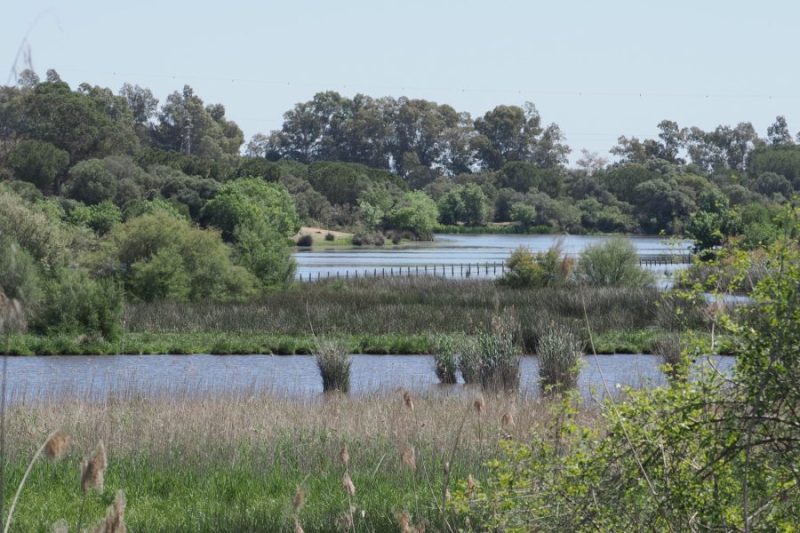
A detailed description of the Doñana park and its five main areas is available.
The southern flank of Doñana, in the province of Cadiz, offers a unique ornithological experience focused on the estuarine ecosystem and tidal marshes, habitats absent in the north. This coastal front is a corridor for thousands of migrating seabirds and waders.
The Bonanza Salt Flats, active and of great ecological value, are a magnet for specialized avifauna. Its crystallizers of different salinity attract flocks of Greater Flamingoes (Phoenicopterus roseus) and waders such as the Avocet (Recurvirostra avosetta) and the Kentish Plover (Charadrius alexandrinus). It is also a key site for the scarce Slender-billed Gull (Chroicocephalus genei).
In contrast, the Tarelo Lagoon, a restored freshwater lagoon, is a refuge for the White headed Duck (Oxyura leucocephala) and other aquatic birds such as the Common Coot (Fulica atra). The Pinar de La Algaida, with its unique mixed forest of stone pine and juniper, is home to forest birds such as the common Ghoshawk (Accipiter gentilis) and the Great Sp. Woodpecker (Dendrocopos major).
The Trebujena Marshes complete the mosaic with a complex of brackish lagoons, salt marshes and the active river bank. This diversity attracts a wide variety of birds, from herons and Spoonbills to mallards, while offering the most direct and evocative view of the wild heart of the National Park on the opposite shore.
To the east of Doñana, outside its formal boundaries but essential to its ecology, lies the Brazo del Este – a unique ornithological sanctuary born of the human transformation of the landscape. This vast agricultural polder has become the most important alternative refuge for aquatic birdlife when the marshes of the national park dry up.
Here, the scale of avian concentrations is dazzling. At dusk, the sky darkens with immense flocks of Glossy Ibis (Plegadis falcinellus) and White Storks (Glossy Ibis cic onia ) heading for their roosts. The marshes and permanent channels are home to large populations of Purple Swamp-hens (Porphyrio porphyrio), whose metallic call echoes through the reeds, and massive concentrations of geese, ducks and waders.
Riverine aviaries: The well-preserved groves along the Guadalquivir are home to breeding colonies of Purple Heron (Ardea purpurea) and Squacco Heron (Ardeola ralloides). In winter, the area is a main hunting ground for the Osprey (Pandion haliaetus), which fishes in the canals always with water.
Critical Refuge: Even the central channel of the main ditch, by retaining water year-round, attracts flocks of waders, Little Egret and waterfowl that do not find space in the dry heart of the national park, acting as a vital artery of biodiversity.
The Dehesa La Atalaya, with its temporary ponds, completes this unique ecosystem.
Overall, Doñana Norte shows a landscape management that benefits birdlife, from monumental colonies to man-made wetlands, being a complementary and essential area for birdwatching in the Doñana complex.
Dehesa de Abajo is a very visited enclave where a wooded hill dominates the marshy plain. Its main attraction is the largest natural colony of white storks (Ciconia ciconia) on trees in Europe, a spectacle of hundreds of nests. The lagoon at the foot of the hill attracts waterfowl such as flamingos (Phoenicopterus roseus) and a variety of ducks, including the Iberian arched-mouth n ase (Marmaronetta angustitris ).Marmaronetta angustirostris) and the Red-knobbed Coot(Fulica cristata).
Centro de Interpretación José Antonio Valverde is the ornithological heart of the north. After a secluded access, you reach a permanent lagoon with one of the most important breeding colonies in Doñana, where Purple Herons (Ardea purpurea), Squacco Herons (Ardeola ralloides) and Glossy Ibis (Plegadis falcinellus) nest. The elevated trail over the Caño del Guadiamar offers endless views to observe waterfowl and birds of prey.
Isla Mayor and Finca Veta La Palma form an extensive sea of rice fields that, after harvest, becomes a crucial refuge for thousands of wintering and passage waterfowl, such as Greylag Goose(Anser anser) and waders. This artificial wetland is of vital ecological importance.
The Pinares de Aznalcázar offer a forest contrast, being a key habitat for the Iberian lynx ( Azure-winged Magpie (Lynx pardinus) and for Mediterranean scrubland birds such as the Dartford Warbler (Sylvia undata) and forest birds of prey. The sandy clearings and roadside slopes are the ideal habitat for the colorful European Bee-eater (Merops apiaster).
In essence, this area concentrates the contrast between the common migratory avifauna and the most emblematic Mediterranean species, being an ornithological destination of the first order due to its scale and diversity.
El Rocío and the Marismas de La Madre are the great theater of European aquatic avifauna. For the northern European observer, this wetland offers a reverse seasonal spectacle: in winter, massive flocks of GreylagGoose (Anser anser), all species of ducks such as Lapwings (Anas crecca) and Cranes (Grus grus) cover the marsh, along with waders such as the Lapwing (Vanellus vanellus). In summer, the scene is dominated by Purple Herons (Ardea purpurea) and Spoonbills (Platalea leucorodia).
The streams of La Rocina and El Acebrón are home to more discrete but sought-after species, such as the Little Bittern (Ixobrychus minutus) in the reed beds and the colorful Kingfisher (Alcedo atthis). White Storks (Ciconia ciconia) and Glossy Ibis (Plegadis falcinellus) can be seen feeding avidly on red crabs.
El Acebuche Center is a spot to observe Mediterranean scrubland birds, such as the Sardinian Warbler (Sylvia melanocephala).
The western fringe of Doñana, marked by the long virgin beach between Matalascañas and Mazagón and the imposing fossil cliff of Asperillo, presents an avian community specialized in coastal ecosystems, dunes and pine forests. It is the least visited area, but crucial for species adapted to the aridity and the Atlantic coast.
The wild coastline of Playa de Castilla is an essential corridor for coastal seabirds and waders. It is a feeding and resting area for gulls (such as the Yellow-legged Gull Larus michahellis), Common Tern Sterna hirundo and, especially in migratory passage, for flocks of Eurasian Oystercatchers Haematopus ostralegus and Ruddy Turnstones Arenaria interpres. The mobile dunes are home to species such as the Thekla Lark Galerida theklae.
Inland, the extensive pine forest of El Abalario, with centenary specimens such as the Mazagón pine, supports a typical Mediterranean forest community. Common here are the Great Sp. Woodpecker Dendrocopos major, the Long-tailed Tit Aegithalos caudatus and raptors such as the Sparrowhawk Accipiter nisus. Temporary ponds and lagoons (such as Laguna de Moguer) are vital ephemeral oases for ducks, terns Chlidonias niger and Marsh Harriers Circus aeruginosus during breeding, although their water regime is severely threatened by overexploitation of the aquifer.
Ribetehilos peat bogs constitute a unique microhabitat, which can attract insectivorous species and House Martin Riparia riparia.
They form an estuarine complex of the first order at European level, considered the “brother” wetland and ecological complementary to Doñana. Its uniqueness lies in the confluence of the fresh waters of the rivers Tinto and Odiel with the Atlantic tides, creating a mosaic of salt marshes, tidal marshes, streams and riparian forests that support one of the richest and most emblematic communities of waterfowl and seabirds in the Peninsula.
Breeding colony in the Odiel
It is one of the main European strongholds for the reproduction of the emblematic Spoonbill (Platalea leucorodia). Its islands and islets also host important colonies of Common Tern (Sterna hirundo), Little Tern (Sternula albifrons) and Gull-billed tern (Hydroprogne caspia).
Wintering and Migratory Passage
During wintering and migrations, it hosts exceptional concentrations of waders such as the Curlew Sandpiper (Calidris ferruginea) and the Bar-tailed Godwit (Limosa lapponica), as well as thousands of ducks, such as the Common Teal (Anas crecca).
Raptors and Specialists
It is a fundamental hunting territory for the Osprey (Pandion haliaetus) and a place to observe the Marsh Harrier (Circus aeruginosus). Among the seabirds, the Mediterranean Gull (Ichthyaetus melanocephalus) and the Little White Egret (Ardea alba) stand out.
Waterbirds in Doñana and Western Andalusia
| SPECIES | STATUS | REPROD. N max. (2008-2024) | Average 2020-2024 | Trend 2007-2024 | INVERN. N max (2008-2024) | Average (2020-2024) |
|---|---|---|---|---|---|---|
| ICONIC WATERBIRDS | ||||||
| White Stork | Resident *** | 1.000 | 665 | ↓ | 13.000 | 3.214 |
| Black Stork | In Step * | – | – | – | 400 | 176 |
| Common Spoonbill | Resident *** | 3.000 | 650 | ↓ | 4.500 | 3.195 |
| Glossy Ibis | Resident | 12.000 | 2.839 | ↑ | 25.000 | 10.717 |
| Greater Flamingo | Resident | 35.000 | 9.668 | ↓ | 75.000 | 51.855 |
| Lesser Flamingo | Resident | < 10 | 2 | ? | < 10 | 5 |
| Common Crane | Wintering (ª) | < 10 | 0 | ? | 7.000 | 4.586 |
| GARZAS | ||||||
| Cattle Egret | Resident | 10.000 | 4.360 | ↓ | 10.000 | 639 |
| Grey Heron | Resident | 1.500 | 598 | ↓ | 4.000 | 2.424 |
| Little Egret | Resident | 4.000 | 773 | ↓↓ | 8.000 | 2.355 |
| Common Night Heron | Estival * Estival * Estival * Estival * Estival * Estival * Estival | 3.000 | 650 | ↓ | 1.500 | 721 |
| Squacco Heron | Estival * Estival * Estival * Estival * Estival * Estival * Estival | 300 | 87 (♀♂) | ↓ | 50 | 9 |
| Purple Heron | Summer | 4.000 | 232 | ↓↓ | < 10 | 3 |
| Bitterns | Summer | 25 | 5 (♂) | ≈ | < 10 | 3 |
| Little Bittern | Summer | 200 | 29 | ↓ | 10 | 9 |
| Great White Egret | Resident *** | 100 | 0 | ↓ | 600 | 407 |
| SQUIRRELS | ||||||
| Common Coot | Resident *** | 600 | 596 | ↓↓ | 40.000 | 12.576 |
| Red-knobbed Coot | Resident | 80 | 13 (♀♂) | ↓ | 100 | 58 |
| Moorhen | Resident *** | 250 | 253 | ↓↓ | 2.000 | 521 |
| Purple Swamp-hen | Resident | 500 | 103 | ↓↓ | 8.500 | 1.659 |
| European Water Rail | At Paso ª | < 10 | 4 | ? | < 10 | 11 |
| Spotted Crake | In Paso (ª) | < 10 | 0 | ? | ||
| Little Crake bastard | In Paso (ª) | < 10 | 1 | ↓ | ||
| Baillon’s Crake girl | In Paso (ª) | < 10 | 0 | ? | ||
| GREBES AND CORMORANTS | ||||||
| Little Grebe | Resident *** | 700 | 206 | ↓ | 1.600 | 1.411 |
| Black-necked Grebe | Resident *** | 1.500 | 104 | ↓↓ | 8.500 | 6.579 |
| Great crested Grebe | Resident *** | 800 | 153 | ↓↓ | 2.000 | 1.263 |
| Great Cormorant | Resident *** | 100 | 61 | ↑↑ | 10.000 | 8.601 |
| ANATÍDAS | ||||||
| Mallard | Resident *** | 1.300 | 481 | ↓ | 34.000 | 19.967 |
| Shelduck | Resident *** | 200 | 110 | ↑↑ | 15.000 | 8.548 |
| Common spoon | Resident *** | 20 | 7 | ↓ | 200.000 | 126.576 |
| European Porron | Resident *** | 100 | 95 | ↓↓ | 15.000 | 8.333 |
| Tufted Duck | Overwintering | – | – | – | 150 | 28 |
| Red-crested Pochard | Resident *** | 100 | 81 | ↓ | 22.000 | 5.958 |
| White-headed Duck | Resident | 120 | 41 (♀) | ↓ | 800 | 694 |
| Marble Teal | Resident | 150 | 65 (♀♂) | ↑ | 350 | 210 |
| Ferruginous Duck | Resident *** | 25 | 18 (♀♂) | ↑↑ | 150 | 92 |
| Greylag Goose | Overwintering ª | 50 | 25 | ↑↑ | 80.000 | 21.211 |
| Common Teal | Overwintering | < 10 | 0 | ? | 42.000 | 26.691 |
| Gadwall frieze | Overwintering ª | 250 | 79 | ↓ | 7.000 | 1.579 |
| Pintail | Overwintering | < 10 | 0 | ? | 80.000 | 31.635 |
| European whistle | Overwintering | – | – | – | 45.000 | 15.723 |
| Garganey | In Paso (ª) | < 10 | 0 | ? | 150 | 4 |
| Nile Goose | Resident | < 10 | 5 | ? | 40 | 19 |
| LIMICOLAS | ||||||
| Avocet | Resident *** | 5.000 | 1.150 | ↓↓ | 28.000 | 8.510 |
| Black-winged Stilt | Resident *** | 7.000 | 1.463 | ↓↓ | 15.000 | 9.682 |
| Black-tailed Godwit Needle | Overwintering | – | – | – | 57.000 | 20.228 |
| Bar-tailed Godwit | Overwintering | – | – | – | 4.000 | 2.948 |
| Eurasian Curlew | Overwintering | – | – | – | 1.500 | 1.213 |
| Whimbrel | Overwintering | – | – | – | 1.000 | 804 |
| Common Redshank | Resident *** | 600 | 11 | ↓↓ | 6.800 | 5.414 |
| Spotted Redshank dark | Overwintering | – | – | – | 600 | 252 |
| Common Sandpiper | Resident *** | 15 | 7 | ? | 250 | 205 |
| Ruff | Overwintering | – | – | – | 2.800 | 775 |
| Large Green Sandpiper | Overwintering | – | – | – | 1.000 | 668 |
| Wood Sandpiper | Overwintering | – | – | – | 70 | 11 |
| Common Greenshank | Overwintering | – | – | – | 1.000 | 635 |
| Marsh Sandpiper | In Step * | – | – | – | 20 | 4 |
| European Lapwing | Overwintering ª | 150 | 8 | ↓↓ | 21.000 | 9.092 |
| European Golden Plover | Overwintering | – | – | – | 17.000 | 2.128 |
| Grey Plover | Resident | s/d | s/d | s/d | 5.000 | 4.033 |
| Great Ringed Plover | Overwintering | – | – | – | 14.000 | 10.453 |
| Little Ringed Plover | Resident *** | 200 | 102 | ↓ | 1.300 | 128 |
| Kentish Plover | Resident *** | 1.000 | 505 | ↓↓ | 7.300 | 3.276 |
| Common Snipe | Overwintering | – | – | – | 3.000 | 1.165 |
| Jack Snipe | Overwintering | – | – | – | < 10 | 1 |
| Common Collared Pratincole | Summer | 3.000 | 413 | ↓↓ | < 10 | 0 |
| Dunlin | Overwintering | – | – | – | 86.000 | 53.405 |
| Tridactyl Sanderling | Resident | s/d | s/d | s/d | 3.000 | 1.886 |
| Curlew Sandpiper | Migradora de Paso* (Migradora de Paso *) | – | – | – | 1.500 | 1.058 |
| Red Knot | Overwintering | – | – | – | 1.500 | 685 |
| Little Stints often | Overwintering | – | – | – | 9.000 | 2.177 |
| Corr. de Temminck | In Step * | – | – | – | 40 | 3 |
| LATIDS | ||||||
| Whiskered Tern | Summer | 7.000 | 385 | ↓↓ | 185 | 1 |
| Black Tern | Summer | 20 | 0 (♀♂) | ↓↓ | 10 | 0 |
| Common Tern | Resident | 200 | 83 | ↓ | 150 | 3 |
| Sandwich Tern | Resident *** | 100 | 0 | ? | 1.800 | 653 |
| Little Tern | Summer | 3.000 | 1.240 | ↓ | < 10 | 4 |
| Gull-billed Tern | Summer | 3.000 | 1.063 | ↓↓ | < 10 | 0 |
| Caspian Tern | Overwintering | – | – | 180 | 149 | |
| Black-headed Gull | Resident *** | 1.000 | 1.351 | ↓ | 30.000 | 28.066 |
| Slender-billed Gull | Resident | 1.000 | 679 | ≈ | 1.000 | 591 |
| Audouin’s Gull | In Step * | – | – | 2.000 | 1.076 | |
| Mediterranean Gull | Overwintering ª | 30 | 11 | ↑ | 1.200 | 665 |
| Black-backed Gull | Overwintering ª | < 10 | 9 | ↓ | 105.000 | 62.071 |
| Yellow-legged Gull | Resident *** | 3.000 | 3.377 | ↓ | 18.000 | 11.032 |
| RAPACES BIRDS | ||||||
| Marsh Harrier Western Marsh Harrier | Resident *** | 100 | 42 | ↓ | 2.000 | 692 |
| Osprey (♀♂). | Resident *** | 20 | 17 | ↑↑ | 140 | 124 |
| Short-eared Owl | Overwintering | – | – | – | 60 | 19 |
Sources
- Wintering bird data: Cádiz-Sevilla-Huelva (Source: Junta de Andalucía).
- Breeding bird data: Andalusia (Source: Junta de Andalucía).
- Ornithological yearbook of Doñana.
Status of birds
- Residents: Species present all year round, breeding and wintering in Doñana. Resident birds *** with winter reinforcement increase their numbers by several orders of magnitude in winter.
- Summer birds: Birds that arrive in spring-summer to breed, spending the winter in Africa. Summer birds * have small wintering populations that often go unnoticed.
- Wintering: Species that arrive in autumn from northern Europe to spend the winter, leaving in spring. Wintering birds * also breed locally with very low and anecdotal numbers.
- Passage migrants: They use Doñana exclusively as a resting and feeding area during their migratory journeys (pre-breeding in spring, post-breeding in autumn). Migratory * migrants may breed locally with minimal numbers. Migratory inv maintain only very small groups throughout the winter.
- Erratic or Wandering: Birds that appear occasionally, outside their usual range, often due to storms or disorientation.
FAQ
What logistics are required?
Steppe birds are the group of birds that require the most logic and time spent in the field in Andalusia, with a moderate probability of success. In addition to being cryptic and often inconspicuous species.
- Binoculars (8×42 or 10×42): Essential.
- Field guides in paper or smartphone format.
- High range telescope (70x magnification) to identify birds at a distance.
- 4×4 vehicle to access the roads that are not very passable in the areas farthest from the Rocío.
What is the best time of the year to visit Doñana?
- Winter (December – February): Time of maximum concentration of birds. Thousands of geese, Crane, waders and anatidae winter here. The Greater Flamingo flocks are spectacular.
- Spring (March – May): Time of maximum diversity and activity. Summer migrants arrive (bee-eaters, Collared Pratincole), birds are in full courtship and breeding, and the marsh (if there is water) bustles with life. Ideal to see birds of prey and marsh birds.
- Summer (June – August): Quieter and warmer period. Perfect for watching seabirds and waders on the beach, as well as resident raptors and steppe birds in the dry reserves.
- Autumn (September – November): Fascinating to see the postnuptial migration. Thousands of birds (storks, raptors, passerines) concentrate before crossing the Strait.
How many days are necessary for an ornithological visit to Doñana?
- All excursion configurations are good to discover Doñana, its birds and complex biodiversity. Depending on your base camp, duration and centers of interest, a guide will be able to advise you to organize the best visits.
- Doñana offers five main areas to discover, with a minimum of one day in each area. Two recommended complements: the half-day Authorized Guided Tour inside the national park. The visit to the Odiel marshes for being very different and a complementary avifauna to Doñana.
What are the departure times?
- Sunrise: Departure 1-1.5h before sunrise to reach the territories at first light. Time of maximum activity of singing and movement.
- Sunset: Departure 3-4h before sunset to take advantage of the last light. Ideal to observe grouping behavior and flight to roosts.
Is it possible to visit Doñana on my own or is a guided tour mandatory?
- Free: There are excellent free trails and visitor centers: El Rocío, Sendero de La Rocina (herons, Spoonbills), El Acebuche, C.V. José Antonio Valverde (remote access).
- Authorized Guided Tour: To access the heart of the National Park (the moving dunes, the deep marshes, the edge of the aviary) it is mandatory to hire an authorized 4×4 tour.
Is it worth the restricted visit by 4×4 bus?
- It is especially interesting to know the landscape of the interior of the park and places with famous names of Doñana. It is worthwhile, in addition to other outings focused on the active search for wildlife.
- It can be disappointing if the main objective is wildlife viewing and photography. The bus ride simply does not allow time to stop and take the necessary time for observation.
Leave a Reply