


G3 Guides offers guided birdwatching tours in the best locations in the province of Malaga for birders of all levels. This territory offers an extraordinary diversity of habitats in a compact territory and is located in the middle of the migration route.
Bird Guide in Malaga: Experience Nature with Local Experts
Can you imagine discovering the best kept secrets of Malaga’s avifauna? Not only see birds, but understand their behavior, listen to their stories and access places that only experts know. Hiring a specialized bird guide in Malaga transforms your birding experience from a simple observation into a deeply enriching adventure.
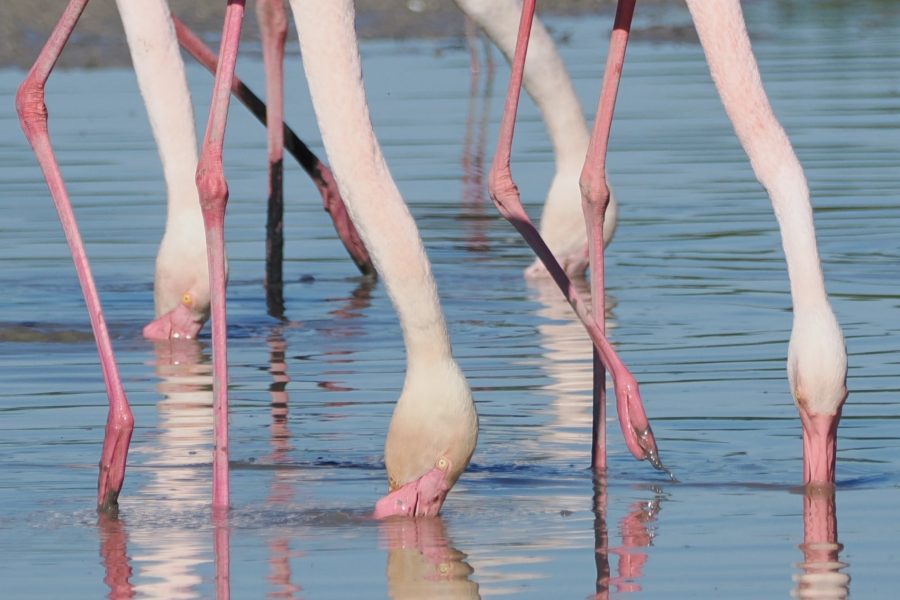
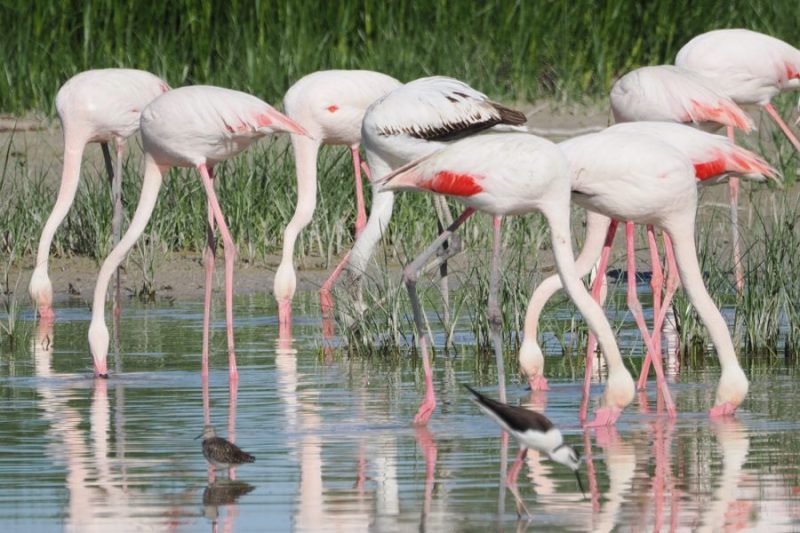
With around 300 species annually, the province offers unparalleled potential for birdwatching, where any outing can reveal everything from Greater Flamingoes to majestic raptors to exotic waders.
Ornithological tours in the province of Malaga.
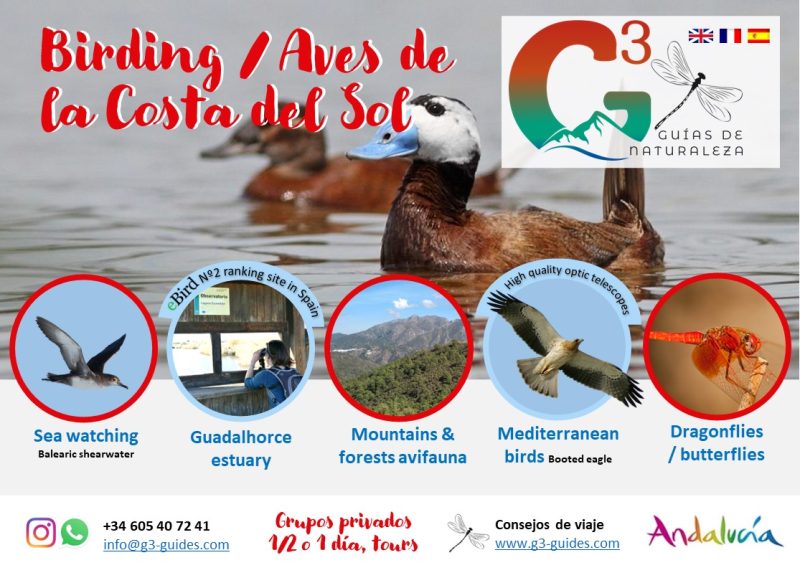
The estuaries and inland wetlands such as Fuente de Piedra, the cereal and olive groves, limestone mountain ranges with a variety of forests and rivers with their riparian galleries are home to outstanding ornithic communities. Located at the crossroads between the Mediterranean and the Strait of Gibraltar, Malaga also acts as a natural bridge for the main migratory routes between Europe and Africa.
The 8 best bird hotspots in Málaga
The province of Malaga hides a network of natural areas that function as true sanctuaries for Mediterranean birdlife.
This chapter covers the eight birding hotspots with the greatest diversity of birds and provides the keys to planning successful visits. It is worth remembering the bias towards wetlands, always very attractive for birdlife. A visit to the sierras is also a must to complete the discovery of the birds of southern Spain, with its unique species.
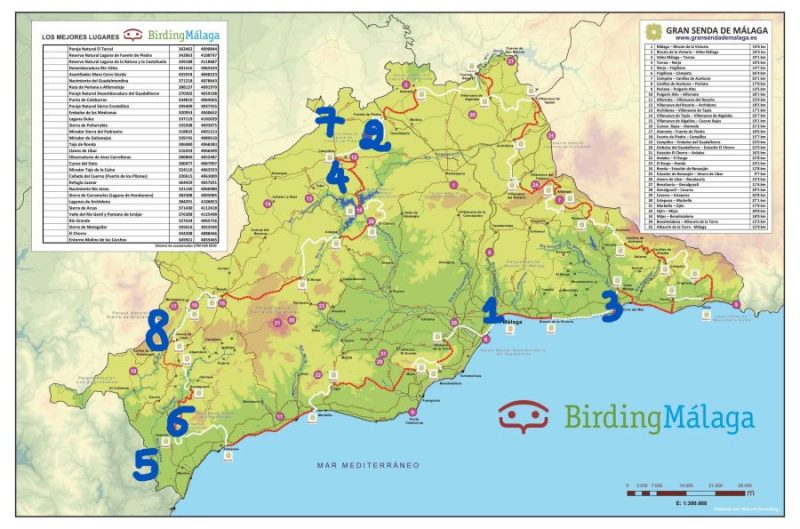
This coastal wetland, located at the mouth of the Guadalhorce River and only a few minutes from the city of Malaga, is an enclave of international importance for migratory and aquatic birds. Its system of lagoons, sand flats and reed beds acts as a critical stop on the migratory route. Among its most outstanding species are the Marbled Teal(Marmaronetta angustirostris), one of the most endangered anatidae in Europe, the Greater Flamingo(Phoenicopterus roseus), present throughout the year, and the Audouin’s Gull(Ichthyaetus audouinii), which finds a key resting area here. During migratory passages, it is an excellent place to observe waders such as Temminck’s Stint(Calidris temminckii), as well as raptors such as the Western Marsh Harrier(Circus aeruginosus). The presence of a network of observatories facilitates observation without causing disturbances.
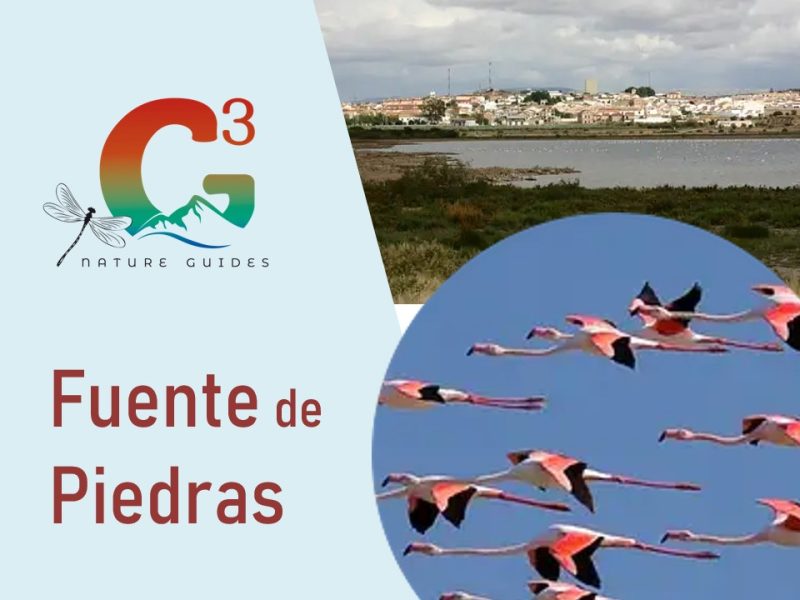
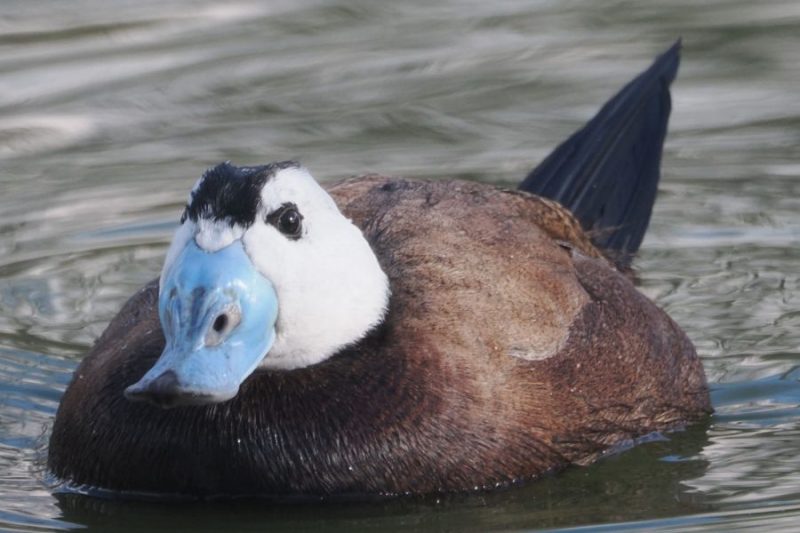
The Laguna de Fuente de Piedra is the largest inland saline wetland in Andalusia and the most important Greater Flamingo(Phoenicopterus roseus) breeding colony in the Iberian Peninsula and the second most important in Europe. Its ornithological value is exceptional. In addition to the thousands of flamingos it hosts between February and August, the lagoon is vital for other waterbirds such as the endangered White-headed Duck(Oxyura leucocephala), the Black-winged Stilt(Himantopus himantopus) and the Avocet(Recurvirostra avosetta). In its perimeters and surrounding crops you can observe valuable steppe birds, such as the Pin-tailed Sandgrouse(Pterocles orientalis) and the Stone Curlew(Burhinus oedicnemus). The José Antonio Valverde visitor center and the perimeter observatories offer an immersive observation experience in this unique landscape of the Antequera countryside.
This space, located in the Axarquia, combines a final stretch of river, a coastal lagoon, a riparian forest and a wide beach, creating a mosaic of habitats of high productivity. It is a hot spot for the observation of coastal waders, highlighting the Kentish Plover(Charadrius alexandrinus), which nests on the beach, and the Grey Plover(Pluvialis squatarola) during wintering. The lagoon attracts ducks such as the Red-crested Pochard(Netta rufina) and ardeids such as the Squacco Heron(Ardeola ralloides), a summer species with a restricted distribution. The Great Reed Warbler(Acrocephalus arundinaceus) is common in the riparian vegetation. Its proximity to the sea also makes it a good place to detect seabirds such as the Atlantic Northern Gannet(Morus bassanus) or the Great Skua (Stercorarius skua).
In the countryside of Malaga, the wetland complex of Campillos stands as an indispensable sanctuary for waterfowl and steppe birds of the Mediterranean hinterland. This archipelago of lagoons of different salinity is not only a landscape of serene beauty; it is a functional ecosystem of the highest ornithological value, where the presence or absence of species acts as a precise indicator of the health of the water and the seasonal cycles. The avifauna here are specialists: from the common cranes(Crane grus grus) that winter on its shores, to the Greater Flamingoes(Phoenicopterus roseus) that use the more saline lagoons as a feeding area, and the common Collared Pratincole (Glareola pratincola) that nest on its islets. The presence of birds in these temporary lagoons varies greatly depending on rainfall.
This mountain corner, where the rivers Genal and Guadiaro meet, is characterized by a gallery forest of poplars, ash and willows, surrounded by scrubland and Mediterranean forest. It is the ideal habitat for specialized forest species and birds linked to water courses. Also noteworthy are the common Kingfisher(Alcedo atthis), the European Golden Oriole(Oriolus oriolus) and the Great Sp. Woodpecker(Dendrocopos major). Among the birds of prey, the Booted Eagle(Hieraaetus pennatus) and the Sparrowhawk(Accipiter nisus) patrol the skies. It is an excellent place to listen and observe the varied community of forest passerines in an environment of great tranquility and scenic beauty.
Dominating the coast from the foothills of the Serranía de Ronda, the cliffs and crags around Casares Castle are a stronghold for rock birds. This is one of the best places in the province to observe the Griffon Vulture(Gyps fulvus), which has a breeding colony here, and the Egyptian Vulture(Neophron percnopterus), which uses the area during migration and summer. The rocky wall is also the domain of the Peregrine Falcon(Falco peregrinus) and the Black Wheatear(Oenanthe leucura), a muscciapidae endemic to the Iberian southwest and North Africa. The thermophilic scrublands on the slopes are home to Mediterranean specialists such as the Sardinian Warbler(Sylvia melanocephala) and the Dartford-winged Magpie(Sylvia undata). The panoramic views also allow censusing of migratory gliding birds on the days of passage through the nearby Strait of Gibraltar.
This extensive landscape of cereal crops and olive groves, with some patches of low scrubland, represents the traditional steppe and agricultural habitat of the interior of Málaga, although it is in full decline due to agricultural intensification. It is the area par excellence to look for some of the most endangered birds in Europe. The Little Bustard(Tetrax tetrax) and Montagu ‘ s Harrier(Circus pygargus) breed here, both species in steep decline. Other characteristic species are the Roller(Coracias garrulus), which nests in the hollows of old trees, the Stone Curlew(Burhinus oedicnemus) and the Lesser Kestrel(Falco naumanni). The conservation of this agricultural landscape is essential for the survival of this unique avian community.
The Mediterranean mountain combines high mountain pastures (the “plains”), dense forests and spectacular karst formations. Its avifauna is of great value and uniqueness. The grasslands are the kingdom of the Black-eared Wheatear(Oenanthe hispanica). The pinsapo forests are home to a specific forest community, with species such as the Blue Tit (Cyanistes caeruleus), the Great Tit(Periparus ater) and the Tree Creeper(Certhia brachydactyla). In the rocky cliffs nest the Griffon vulture(Gyps fulvus), the GoldenEagle (Aquila chrysaetos) and the Eurasian Eagle-Owl(Bubo bubo). It is also one of the few places where, with luck, you can observe the Common Rock Thrush(Monticola saxatilis) during the summer period. The combination of habitats and its excellent state of conservation make it a first class ornithological destination.
Bird diversity in Malaga
The diversity is not random, but responds to an altitudinal and humidity gradient that ranges from coastal and coastal wetlands to mountain systems above 1,500 meters.
Each of these environments-marine, coastal, inland wetlands, riverbanks, agricultural areas, shrublands, Mediterranean forests and rocky areas-supports a distinctive and specialized avian community, with species indicative of the health of each ecosystem.
The result is a territory that acts as a microcosm of the Mediterranean avifauna and as a biological corridor of continental importance, offering a field of study and observation of the first order for both scientists and ornithological enthusiasts.
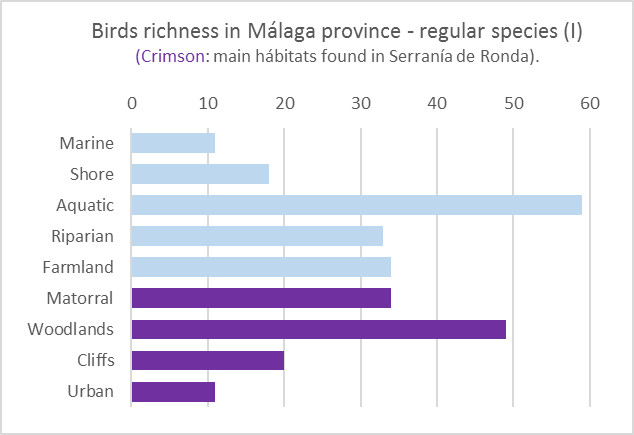
Diversity of bird species broken down by main habitat. The wetlands and associated habitats, as well as the ecosystems of the Mediterranean Mountains, stand out above all.
The deep waters off the coast of Málaga are a vital corridor for pelagic birds that rarely approach land. Observing them requires boat trips, although stormy days can drag some species close to the coast, offering exceptional opportunities from coastal viewpoints.
Procellariiformes (Shearwaters and European Storm Petrels)
- Balearic Shearwater(Puffinus mauretanicus) CRITICAL – Migratory passage
- Yelkouan Shearwater(Puffinus yelkouan) – Resident/Passover
- Scopoli’s Shearwater(Calonectris diomedea) – Summer/Nesting
- European Storm Petrel(Hydrobates pelagicus) – Estival
Others
- Atlantic Northern Gannet(Morus bassanus) – Wintering/Steppe
- Great Skua(Stercorarius skua) – Occasional passerby/winterer
The narrow coastal strip, where land and sea converge, is home to birds specialized in exploiting the resources of beaches, dunes and coastal rocks. These species are adapted to often extreme conditions and human pressure, and are some of the most endangered in the province.
Láridos
- Audouin’s Gull(Ichthyaetus audouinii) – Resident
- Mediterranean Gull(Ichthyaetus melanocephalus) – Wintering
- Sandwich Tern(Thalasseus sandvicensis) – Resident
Coastal waders
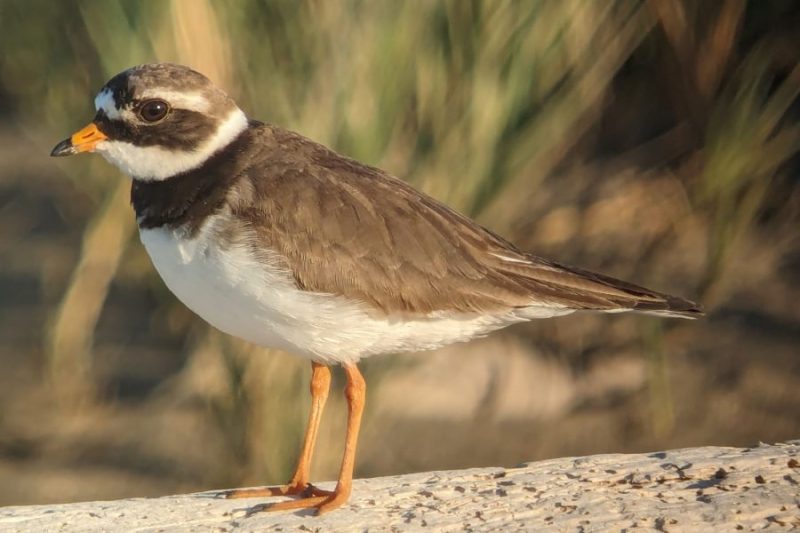
- Kentish Plover(Charadrius alexandrinus) – Resident/Nidificant THREATENED
- Sanderling(Calidris alba) – Resident
- Dunlin (Calidris alpina – Winter visitor
Sands and dunes
- Lesser Short-toed Lark(Calandrella rufescens) – Localized Resident
Malaga’s wetlands, from the vast Laguna de Fuente de Piedra to the coastal lagoons and reservoirs, are oases of biodiversity. They act as essential nodes for the reproduction, wintering and migratory rest of an extraordinarily rich and varied avian community.
Icon
- Greater Flamingo(Phoenicopterus roseus) – Resident/Producer EMBLEMA
Anatidae
- Mallard(Anas platyrhynchos) – Resident
- Red-crested Pochard(Netta rufina) – Wintering/Summering
- Common Spoonbill(Spatula clypeata) – Overwinterer
- Pochard(Aythya ferina) – Winter visitor
Rallids
- Common Coot(Fulica atra) – Resident
- Moorhen(Gallinula chloropus) – Resident
Herons and related
- Grey Heron(Ardea cinerea) – Resident
- Little Egret(Egretta garzetta) – Resident
- Cattle Egret(Bubulcus ibis) – Resident
- Glossy Ibis(Plegadis falcinellus) – Resident/Expanding
Wetland waders
- Avocet(Recurvirostra avosetta) – Winter visitor
- Black-winged Stilt(Himantopus himantopus) – Estival/Resident
- Common Greenshank/Common Redshank(Tringa totanus/nebularia) – Passing/wintering
Raptors
- Marsh Harrier(Circus aeruginosus) – Resident
The river courses and their gallery forests form green corridors that cross the province. This linear and dynamic habitat offers food, shelter and travel routes to a specialized group of birds intimately linked to fresh water.
Riparian specialists
- Common Kingfisher(Alcedo atthis) – SENSITIVE Resident
- White-throated Dipper(Cinclus cinclus) – Resident in mountain rivers VERY RARE
Associated passerines
- European Golden Oriole(Oriolus oriolus) – Estival
- Rufous Nightingale(Luscinia megarhynchos) – Estival
- Cetti’s Warbler(Cettia cetti) – Resident
- Nightingale Cetia(Cettia cetti) – Resident
Extensive agricultural landscapes and pseudo-steppe areas are home to some of Europe’s most emblematic and threatened birds. This open habitat, shaped by traditional human activity, is crucial for the conservation of species that have suffered drastic declines.
Steppe (Conservation Priorities)
- Little Bustard(Tetrax tetrax) – Resident VULNERABLE/IN DECLINE
- Montagu’s Harrier(Circus pygargus) – Summer VULNERABLE
- European Roller(Coracias garrulus) – Estival DECLIVE
Other associates
- Crested Lark(Galerida cristata) – Resident
- Corn Bunting(Emberiza calandra) – Resident
- Stone Curlew(Burhinus oedicnemus) – Resident
- Red-legged Partridge(Alectoris rufa) – Resident
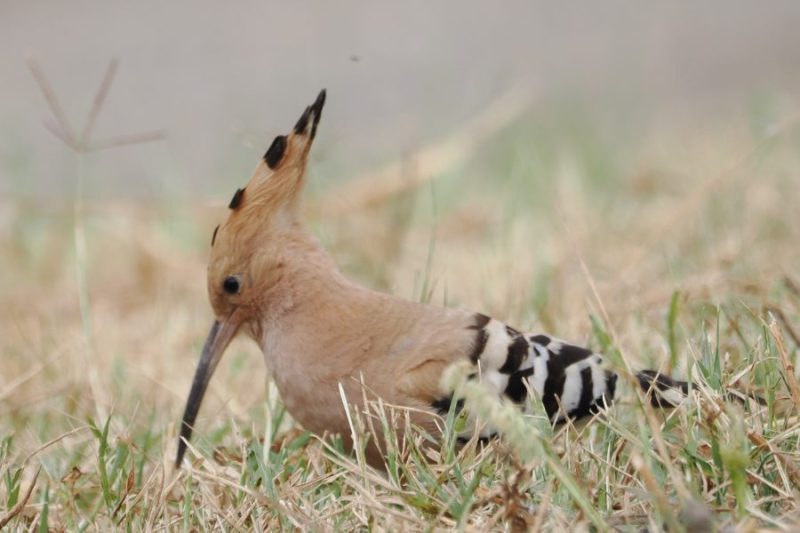
- Hoopoe(Upupa epops) – Summer/Resident
Raptors of open areas
- Lesser Kestrel(Falco naumanni) – Summer VULNERABLE
- Kestrel(Falco tinnunculus) – Resident
- Hen Harrier(Circus cyaneus) – Winter visitor
The Mediterranean scrubland, the result of evolution under a climate of dry summers and recurrent fires, is the most characteristic habitat of the region. It is home to an avian community adapted to the thicket and heat, with outstanding endemisms and specialists in insects and bush fruits.
Thermophilic specialists
- Sardinian Warbler(Sylvia melanocephala) – MEDITERRANEAN ENDEMIC Resident
- Dartford Warbler (Sylvia undata) – Resident
- Spectacled Warbler(Sylvia conspicillata) – Resident
- Garden Warbler(Sylvia hortensis) – Summer
- Common Stonechat(Saxicola rubicola) – Resident
Other
- Rufous Scrub Robin (Cercotrichas galactotes) – Summer DECLINE
- Black-eared Wheatear(Oenanthe hispanica) -Summer
- Red-legged Partridge(Alectoris rufa) – Resident
- Hoopoe(Upupa epops) – Summer/Resident
Malaga’s forests, from the world’s only pinsapares to the extensive pine and cork oak forests, offer a complex vertical structure that is exploited by forest birds specialized in different strata: from the ground to the treetops.
Coniferous forests
- Blue Tit(Cyanistes caeruleus) – Resident
- Great Tit(Periparus ater) – Resident
- Tree Creeper(Certhia brachydactyla) – Resident
- Chaffinch(Fringilla coelebs) – Resident
- Jay(Garrulus glandarius) – Resident
Sclerophyllous forests
- Eurasian Nuthatch(Sitta europaea) – Resident
- Great Sp. Woodpecker(Dendrocopos major) – Resident
- Iberian Green Woodpecker(Picus sharpei) – IBERIAN ENDEMIC Resident
- Wood pigeon(Columba palumbus) – Resident
Forest raptors
- Booted Eagle(Hieraaetus pennatus) – Summer
- Short-toed Eagle(Circaetus gallicus) – Estival
- Common Ghoshawk(Accipiter gentilis) – Resident
- Sparrowhawk(Accipiter nisus) – Resident
- Common Buzzard(Buteo buteo) – Resident
Nocturnal forestry
- European Scops Owl(Otus scops) – Summer
- Tawny Owl(Strix aluco) – Resident
The imposing rocky cliffs, both coastal and inland, provide impregnable nesting sites for some of the province’s most spectacular birds. These natural fortresses are vital for raptors and other species that find in the crevices and ledges their safe refuge.
Strict rupicolous
- Griffon vulture(Gyps fulvus) – Resident (colonies scattered)
- Egyptian Vulture(Neophron percnopterus) – Threatened Summer
- Golden Eagle(Aquila chrysaetos) – Resident
- Bonelli’s Eagle(Aquila fasciata) – VULNERABLE Resident
- Peregrine Falcon(Falco peregrinus) – Resident
- Alpine Swift(Apus melba) – Summer
- House Martin(Ptyonoprogne rupestris) – Summer/Resident
Other rupicolous
- Eurasian Eagle-Owl(Bubo bubo) – Resident
- Blue Rock-thrush(Monticola solitarius) – Resident
- Red-billed Chough(Pyrrhocorax pyrrhocorax pyrrhocorax) – Resident
- Black Wheatear(Oenanthe leucura) – IBERIAN/NORTH AFRICAN ENDEMIC RESIDENT
- Common Swift(Apus apus) – Estival
Marine colonies (Maro Cliffs-Cerro Gordo)
- European Shag(Phalacrocorax aristotelis) – Resident
Cities, towns and their surroundings have been colonized by a group of synanthropic birds that have been able to adapt and even thrive in the human environment. Parks, gardens and old buildings become substitutes for natural habitats, creating a surprising biodiversity next to us.
Synanthropic (adapted)
- Common Swift(Apus apus) – Summer (nests in buildings)
- House Martin (Delichon urbicum) – Summer
- Barn Swallow(Hirundo rustica) – Summer
- Lesser Kestrel(Falco naumanni) – Summer (colonies in historic buildings) VULNERABLE
- Spotless Starling(Sturnus unicolor) – Resident
Parks and gardens
- Blue Tit(Cyanistes caeruleus) – Resident
- Great Tit(Parus major) – Resident
- Blackbird(Turdus merula) – Resident
- House Sparrow(Passer domesticus) – Resident (declining)
- EurasianSerin (Serinus serinus) – Resident
Urban owls
- Western Barn Owl(Tyto alba) – Resident (steeples, abandoned buildings)
- European Scops Owl(Otus scops) – Summer (wooded parks)
Resources for birdwatchers in the province of Málaga
Ornithology has experienced an unprecedented democratization. Information, once specialized, is now immediate and collaborative.
At the same time, high-resolution telescopes and binoculars with stabilization allow observing details from a distance without disturbance, while digital cameras turn any amateur into a documentary filmmaker. This synergy has transformed an activity that once required years of experience into an immersive experience accessible to all, amplifying the pleasure of discovering, learning and preserving.
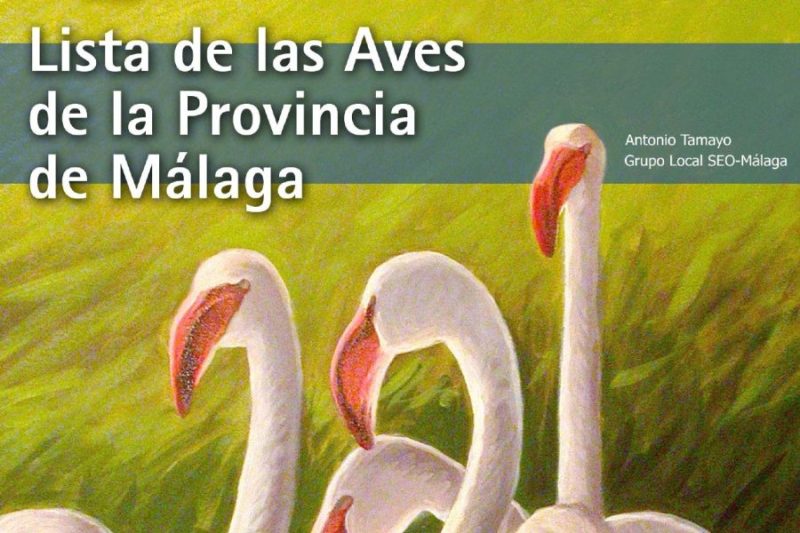
The List of the birds of the province of Malaga by Antonio Tamayo (2007), published by SEO/BirdLife, represents a fundamental and exhaustive resource for any birdwatcher or popularizer interested in Malaga’s avifauna, as it systematically compiles all the species recorded in the province up to that date, following the official nomenclature and taxonomy of the organization, with details on their status (sedentary, migratory, wintering, breeding), preferred habitats and degree of rarity, which facilitates not only the identification of ornithological richness -over 300 species per year in many cases- but also the planning of field trips by detailing key ecological contexts such as wetlands, mountains or countryside. This document, available in PDF format, serves as a reference base for local studies, birdwatching guides and conservation projects.
Garrido Sánchez (2008) examines the state of ornithology in Málaga during the 18th, 19th and first third of the 20th centuries in his historical notes on ornithology in Málaga and its province. Although there have been historical figures such as José Arévalo Baca (1844-1890), pioneer ornithologist from Málaga, and José Antonio Valverde (1926-2003), discoverer of the flamingo colony in Fuente de Piedra, and the influence of British ornithologists established in Gibraltar, birdwatching has taken off in the early 1980s largely under the influence of the programs of Félix Rodríguez de la Fuente. The Diputación de Málaga has played a driving role, highlighting the Revista Jábega with a list of publications: Aves capturados en la desembocadura del Guadalhorce (1980), Aves de las zonas húmedas malagueñas ( 1985), Aves necrófagas (1986), Aves de la desembocadura del río Guadalhorce (1986), Aves de la provincia de Málaga (1997), Aves acuáticas y marinas ( 2002), Atlas de las aves rapaces diurnas ( 2008). This dynamic culminated with the publication of a monograph (Jabega number 98 of 2008). A parallel milestone has been the publication of the Ornithological Yearbook of Malaga during the 1990s and early 2000s, which compiled the notable records of the province. A period of maximum activity of the local SEO/Malaga group followed, with the first website extensively dedicated to the birds of Malaga, although it has not been able to be maintained. Malaga ornithology is still very active, mainly organized around the national censuses of SEO/Birdlife, the Andalusian Bird Society, very popular with the English-speaking public, the eBird website (a modern Yearbook) and telephone messaging groups. Digital tools (platforms, photography) have greatly facilitated the dissemination of the hobby since 2010.
Málaga, Andalucía, Spain – eBird is a dynamic and indispensable resource for birders, thanks to Cornell Lab’s global citizen science platform. This now well-known tool offers real-time sightings and a wealth of information of interest to birders. The Malaga ornithological community has always been one of the most active in Spain and is very involved with eBird, offering the most updated inventory and complementing the provincial list of 2007. The shortcoming of eBird is that it only allows to incorporate information by area (local hotspot) without ever georeferencing precisely the observation, reducing its scientific interest. This is not a problem for small habitats with well-defined boundaries such as, for example, a lagoon, but it completely prevents the realization of transects that explore larger and more diffuse habitats.
Birding Málaga is a website, designed and maintained by the Diputación de Málaga, dedicated to ornithology and birdwatching in the province. It offers useful information to plan outings about the birds present in the province, briefly describing the natural areas of greatest interest, and announcing news about activities (courses, conferences) and informative materials that help to better understand the birds of Málaga. Its greatest interest lies possibly in the presentation of nearby local hotspots.

The attractiveness of Malaga for birdwatching
Did you know that Malaga is one of the best places in Europe for birdwatching? Between the Mediterranean and the mountains, the province is a crossroads for biodiversity, where the drama of migration, the majesty of raptors and the delicacy of wetland birds combine in landscapes of astonishing beauty.
Spain is one of the countries with the greatest bird biodiversity in Europe, and Andalusia concentrates a very significant part of that wealth. The region is already a consolidated destination for nature and ornithological tourism, with a wide network of protected areas, specialized companies and a growing birding culture. Malaga is located in the heart of this Andalusian context, with easy connections to other classic ornithological destinations in the region.
Malaga-Costa del Sol Airport is one of the most important airports in Spain in terms of passenger numbers, with numerous international and domestic connections. The constant flow of visitors to the Costa del Sol represents an opportunity to promote a tourism model that goes beyond sun and beach.
The province offers an exceptional mix of environments in a very short distance: coastline, coastal and inland wetlands, countryside, riverbanks, limestone mountain ranges, pinsapares (Mediterranean fir forests) and Mediterranean scrub. This diversity makes it possible to observe very different bird communities in one or two days. The sierras, relatively well preserved and with low population density, have great potential for nature tourism, hiking and birdwatching.
Among its ornithological jewels are the following:
- Fuente de Piedra Lagoon: Wetland of international reference for the reproduction of the Greater Flamingo and other aquatic birds.
- Desembocadura del Guadalhorce Natural Site: Key enclave on the coast for the migration and wintering of numerous species.
The proximity to the Strait of Gibraltar makes Malaga a passage corridor for millions of migratory birds crossing between Europe and Africa. This impressive flow is felt throughout the province, where almost any point can offer surprises during the passage season.
In Malaga you can observe species linked to the south of Spain and the Iberian-Maghrebi area, which are absent or very rare in the rest of Europe. These“specialties” (such as the Red-Necked Nightjar, the Sardinian Warbler or the White-rumped Swift) greatly increase the interest of the province for foreign observers. For many birders from central and northern Europe, Malaga is a first accessible contact with Mediterranean and North African birdlife without leaving the European Union.
In conclusion
Its main value lies in offering a complete synthesis of Mediterranean ecosystems in a minimum distance. In a single day, an observer can go from coastal wetlands such as the Desembocadura del Guadalhorce -vital for waders, waders and the Marbled Duck- to the high peaks of the Sierra Nevada with its alpine avifauna, crossing Mediterranean forests and mountain scrublands.
In addition, its proximity to the Strait of Gibraltar makes it an essential passage corridor, where any corner can offer surprises during migratory passages. In addition, an exceptional tourist infrastructure and a mild climate allow the practice of birdwatching throughout the year.
Malaga demonstrates that ornithological richness does not depend solely on size, but on concentrated diversity and ecological connectivity, offering a complete and accessible experience in the heart of the Costa del Sol.
Leave a Reply